


Koop 10 boeken voor 10 € hier!
Bookbot

Colin S. Gray

    29 december 1943 – 27 februari 2020

    Colin S. Gray was een Brits-Amerikaanse strategische denker en professor in Internationale Betrekkingen en Strategische Studies. Zijn werk verdiepte zich in militaire geschiedenis en strategisch denken, waarbij hij de aard van oorlog en strategie in internationale conflicten onderzocht. Gray stond bekend om zijn nadruk op concepten als strategische cultuur en zijn vermogen om langetermijntrends en machtsdynamiek te analyseren. Zijn uitgebreide publicaties bieden diepgaande inzichten in het begrip van oorlogsvoering en strategie in de moderne wereld.

    What Should the U.S. Army Learn from History? Recovery from a Strategy Deficit
    Always Strategic: Jointly Essential Landpower: Jointly Essential Landpower
    The Implications of Preemptive and Preventive War Doctrines
    Strategy in the Contemporary World
    The Future of Strategy
    Fighting Talk
    • Fighting Talk

      Forty Maxims on War, Peace, and Strategy

      4,2(129)Tarief

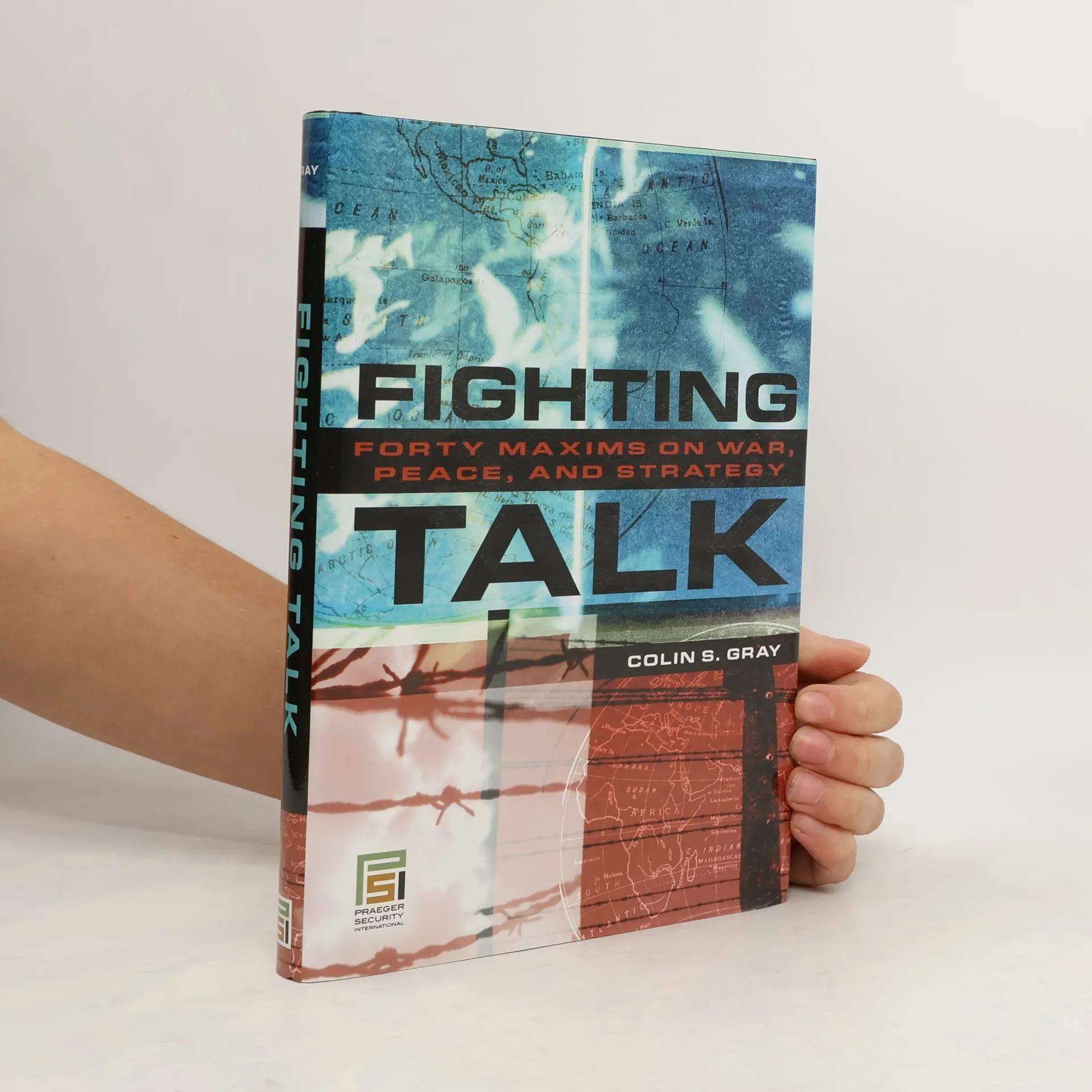
      Gray presents an inventive treatise on the nature of strategy, war, and peace, organized around forty maxims. This collection of mini-essays will forearm politicians, soldiers, and the attentive general public against many―probably most―fallacies that abound in contemporary debates about war, peace, and security. While one can never guarantee strategic success, which depends on policy, military prowess, and the quality of the dialogue between the two, a strategic education led by the judgments in these maxims increases the chances that one's errors will be small rather than catastrophic.The maxims are grouped according to five clusters. War and Peace tackles the larger issues of strategic history that drive the demand for the services of strategic thought and practice. Strategy presses further, into the realm of strategic behavior, and serves as a bridge between the political focus of part one and the military concerns that follow. In Military Power and Warfare turns to the pragmatic business of military operations, tactics, and logistics. Part four, Security and Insecurity examines why strategy is important, including a discussion of the nature, dynamic character, and functioning of world politics. Finally, History and the Future is meant to help strategists better understand the processes of historical change.

      Fighting Talk
    • The Future of Strategy

      • 188bladzijden
      • 7 uur lezen
      3,9(118)Tarief

      Strategy is not a modern invention. It is an essential and enduring feature of human history that is here to stay. In this original essay, Colin S.

      The Future of Strategy
    • Strategy in the Contemporary World

      • 456bladzijden
      • 16 uur lezen
      3,8(73)Tarief

      A complete introduction to strategy in the contemporary world, which explores the enduring, present and emerging issues dominating strategic debate.

      Strategy in the Contemporary World
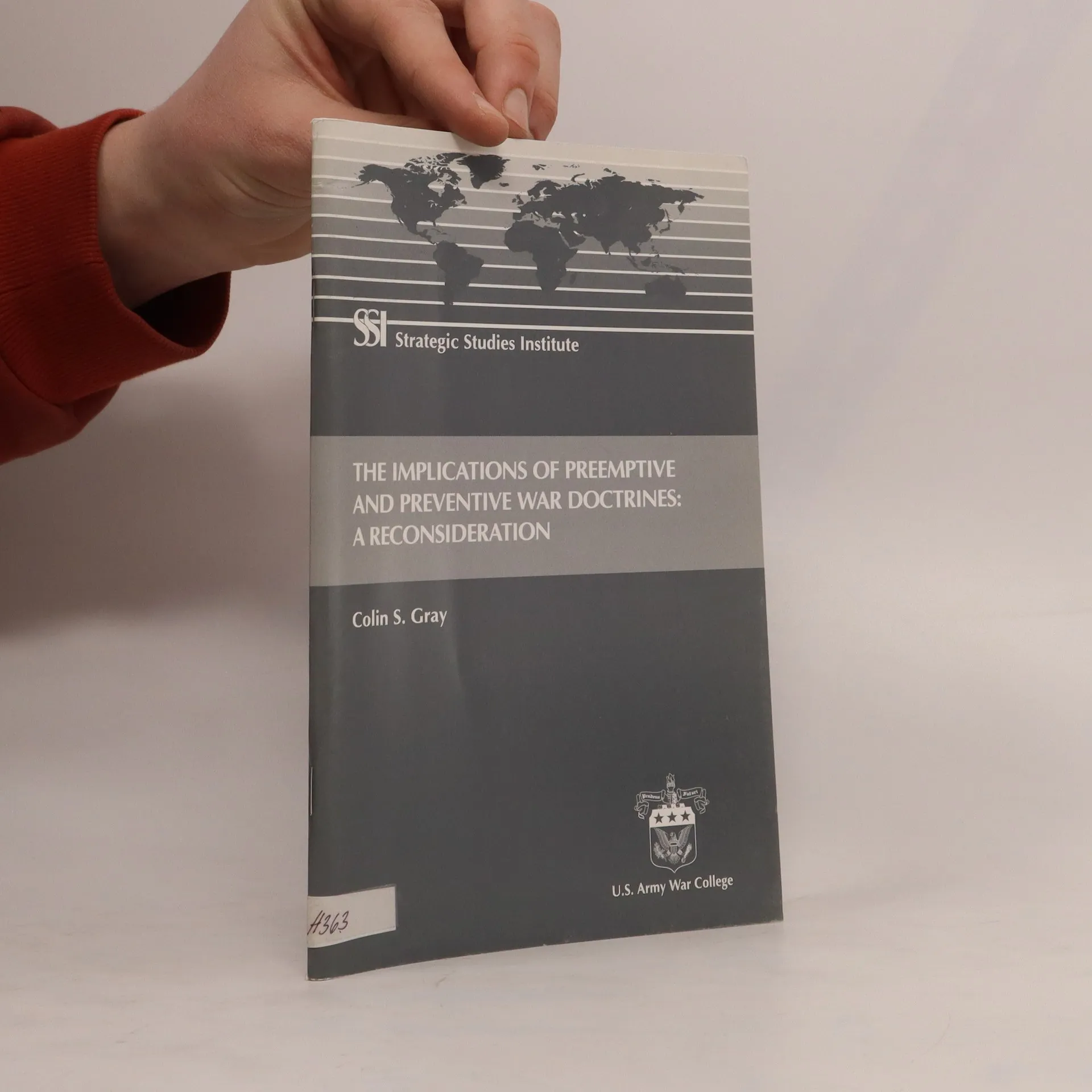
    • Preemption and prevention are different concepts. To preempt is to attempt to strike first against an enemy who is in the process of preparing, or is actually launching, an attack against you. Preemption is not controversial. The decision for war has been taken out of your hands. Prevention, however, is a decision to wage war, or conduct a strike, so as to prevent a far more dangerous context maturing in the future. To decide on preventive war is to elect to prevent a particular, very threatening strategic future from coming to pass. Despite much legal argument, there is no legal difficulty with either concept. The UN Charter, with its recognition of the inherent right of sovereign states to self-defense, as generally interpreted around the world does not require a victim or target state to suffer the first blow. To strike preventively in self-defense is legal, though it will usually be controversial. Preventive war is simply war, distinguishable only by its timing, and possibly its motivation.

      The Implications of Preemptive and Preventive War Doctrines
    • "American Landpower is a strategic instrument of state policy and needs to be considered as such. This monograph explores and explains the nature of Landpower, both in general terms and also with particular regard to the American case. The monograph argues that: (1) Landpower is unique in the character of the quality it brings to the American joint team for national security; (2) the U.S. has a permanent need for the human quality in Landpower that this element provides inherently; (3) Landpower is always and, indeed, necessarily strategic in its meaning and implications -- it is a quintessentially strategic instrument of state policy and politics; (4) strategic Landpower is unavoidably and beneficially joint in its functioning, this simply is so much the contemporary character of American strategic Landpower that we should consider jointness integral to its permanent nature; and, (5) notwithstanding the nuclear context since 1945, Landpower retained, indeed retains, most of the strategic utility it has possessed through all of history: this is a prudent judgment resting empirically on the evidence of 70 years' experience. In short, the strategic Landpower maintained today safely can be assumed to be necessary for security long into the future. No matter how familiar the concept of strategic Landpower is when identified and expressed thus, it is a physical and psychological reality that has persisted to strategic effect through all of the strategic history to which we have access"--Publisher's web site

      Always Strategic: Jointly Essential Landpower: Jointly Essential Landpower
    • Does history repeat itself? This monograph clearly answers "no," firmly. However, it does not argue that an absence of repetition in the sense of analogy means that history can have no utility for the soldier today. This monograph argues for a "historical parallelism," in place of shaky or false analogy. The past, even the distant and ancient past, provides evidence of the potency of lasting virtues of good conduct. This monograph concludes by offering four recommendations: Behave prudently. Remember the concept of the great stream of time. Do not forget that war nearly always is a gamble. War should only be waged with strategic sense. Related items: Ends, Means, Ideology, and Pride: Why the Axis Lost and What We Can Learn From Its Defeat can be found here: https: //bookstore.gpo.gov/products/ends-means-ideology-and-pride-why-axi... Armed Forces & Military Branches History publications can be found here: https: //bookstore.gpo.gov/catalog/armed-forces-military-branches-history United States Army History publications can be found here: https: //bookstore.gpo.gov/catalog/united-states-army-history

      What Should the U.S. Army Learn from History? Recovery from a Strategy Deficit