

Bookbot

Donald F. Kettl

    Donald F. Kettl is een vooraanstaand academicus op het gebied van openbaar beleid en management, die zich diepgaand bezighoudt met het begrijpen van de werking en het beheer van publieke organisaties. Zijn uitgebreide oeuvre, met talrijke boeken en monografieën, duikt in kritieke kwesties waarmee de hedendaagse overheid wordt geconfronteerd, het beheer van risico's en rampen, en de mondiale revolutie in publiek management. Kettl wordt erkend voor zijn inzichtelijke analyse van bestuursmechanismen en zijn vermogen om institutionele tekortkomingen te diagnosticeren en hervormingen voor te stellen. Zijn schrijven is vaak gebaseerd op praktische ervaring en biedt waardevolle inzichten voor zowel beleidsmakers als het grote publiek.

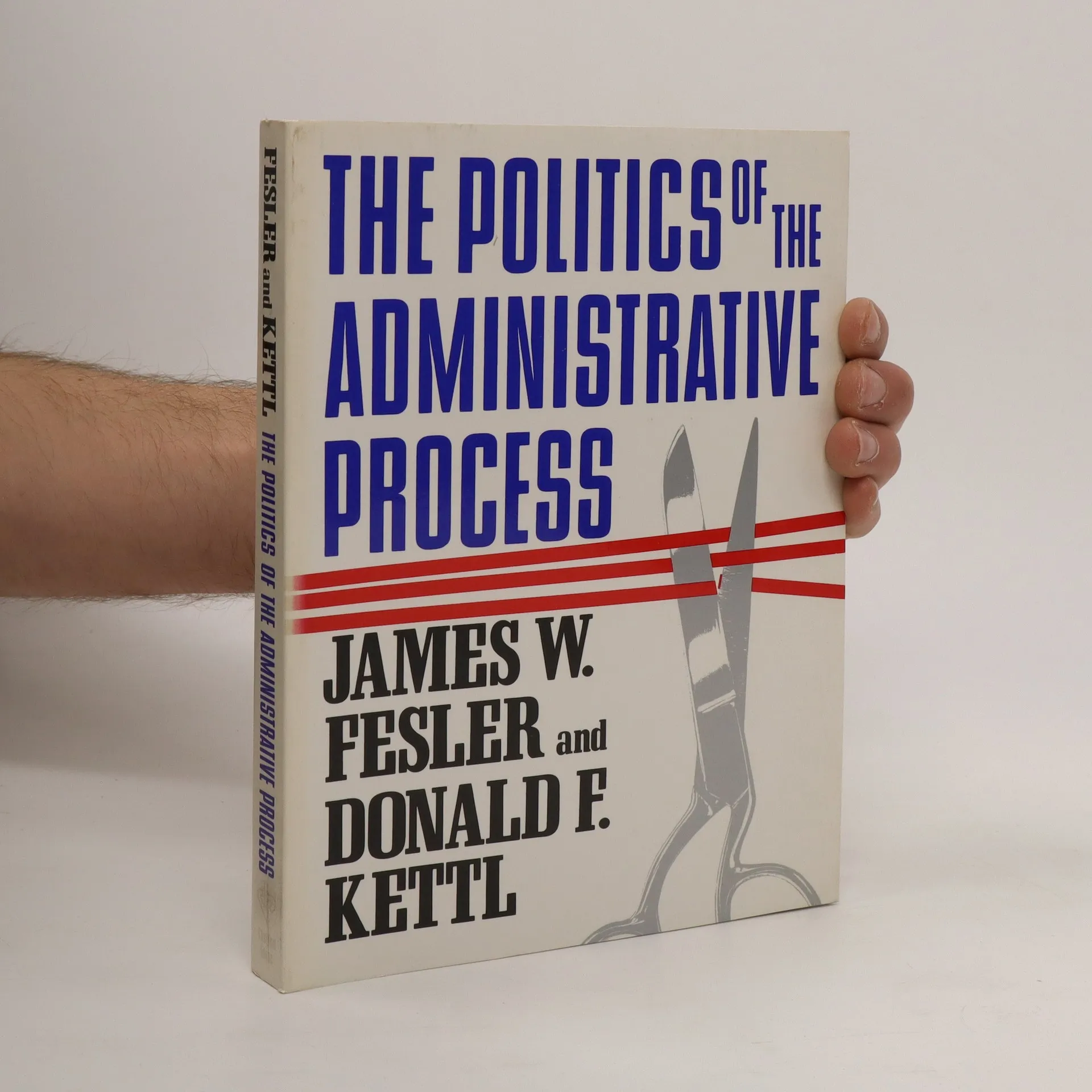
    The politics of the administrative process
    The Divided States of America
    The Little Guide to Writing for Impact
    The Divided States of America: Why Federalism Doesn't Work
    • 2024

      The Little Guide to Writing for Impact

      How to Communicate Research in a Way that People Will Read

      • 142bladzijden
      • 5 uur lezen

      Focusing on the writing process for researchers, the manual guides readers through creating impactful written work from inception to completion. It features a wealth of examples highlighting effective and ineffective writing, alongside the authors' personal experiences in transforming ideas into compelling narratives. This resource serves both as a comprehensive guide and a deep dive into specific writing challenges, making it invaluable for writers aiming to enhance their skills.

      The Little Guide to Writing for Impact
    • 2022

      The Divided States of America

      • 248bladzijden
      • 9 uur lezen

      Federalism, an innovative system of power sharing conceived by James Madison, was intended to balance national and state interests, uniting the colonies to form the United States. However, it inherently created inequalities based on geographic location, leading to significant divisions among states and rendering federalism unstable. In this exploration of American federalism's history, pivotal moments are highlighted, such as the Civil War, which nearly fractured the nation, and the civil rights era, when there was a consensus that inequality posed a threat to liberty and necessitated federal intervention. Despite this agreement, disparities among states have only intensified, affecting public services like health care, infrastructure, education, and the environment. The author critiques the flaws in Madison's design and suggests potential reforms inspired by Alexander Hamilton's writings. This urgent call for reform emphasizes the need to confront the crisis of inequality in America and offers pathways to address these systemic issues.

      The Divided States of America
    • 2020

      As James Madison led the effort to draft the Constitution, he introduced two pivotal concepts: the separation of powers and federalism. While the former is widely recognized, the latter was crucial for the formation of the United States. Federalism involves balancing power between the federal government and the states, centering on how much inequality the nation would tolerate to maintain peace among often-conflicting states. Throughout history, the U.S. has experienced phases of shifting power dynamics; at times, authority has leaned more towards the federal government, while at others, it has favored the states. This rebalancing has occasionally resulted in armed conflict, such as the Civil War, which nearly fractured the nation. Political struggles have also emerged. By the late 1960s, a consensus appeared to form around addressing inequality as a national priority, with the federal government taking the lead and states acting as administrative agents. However, as this agreement solidified, federalism faded from national discourse, allowing states to diverge in their administrative roles. Consequently, this shift has contributed to a growing inequality, with the very system that helped establish the nation increasingly driving it apart.

      The Divided States of America: Why Federalism Doesn't Work