Aleida und Jan Assmann
Friedenspreis des deutschen Buchhandels 2018. Ansprachen aus Anlass der Verleihung.


Hans Ulrich Gumbrecht onderzoekt de geschiedenissen van nationale literaturen in Romaanse talen en de Duitse literatuur, terwijl hij zich ook bezighoudt met de westerse filosofische traditie, met name de Franse en Duitse filosofie van de 19e en 20e eeuw. Zijn werk richt zich op de analyse van esthetische ervaringen in de alledaagse cultuur van de 21e eeuw, en biedt zo een uniek perspectief op de kruispunten van literatuur, filosofie en hedendaags leven. Gumbrecht wordt erkend als een publiek intellectueel wiens uitgebreide oeuvre wereldwijd weerklank heeft gevonden.


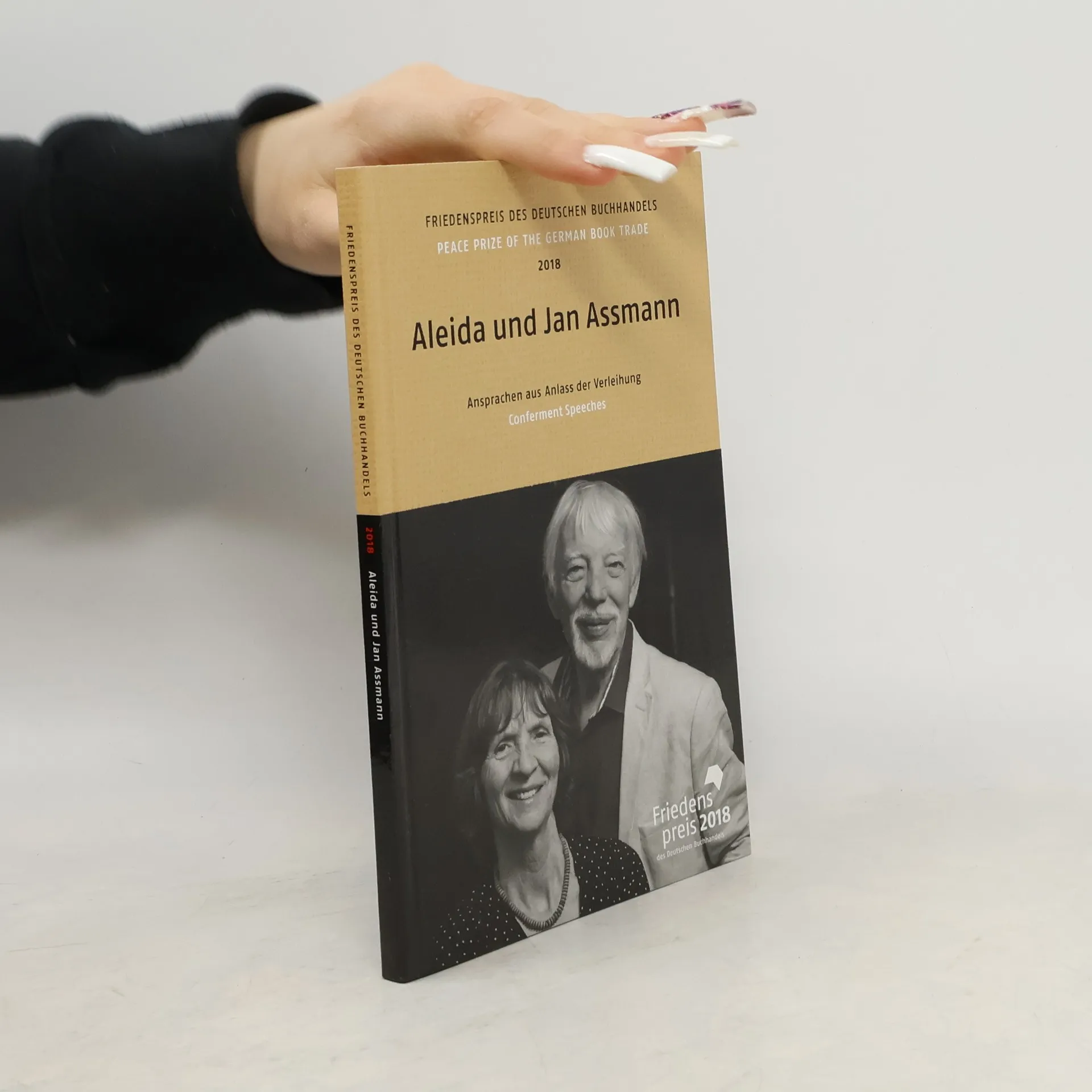
Friedenspreis des deutschen Buchhandels 2018. Ansprachen aus Anlass der Verleihung.
'A New History of German Literature' offers some 200 essays on events in German literary history.
Wenige deutsche Geisteswissenschaftler der letzten 50 Jahre haben die kulturelle Situation unserer Zeit, einschließlich ihrer akademischen Strukturen, so nachhaltig geprägt wie Friedrich Kittler. Seine Schriften trugen entscheidend dazu bei, dass Radios, Grammophone und Computer nicht nur zu einer kulturellen Faszination, sondern auch zum Gegenstand der philosophischen Reflexion geworden sind. Der Band versammelt Abhandlungen Kittlers aus 40 Jahren und zeigt das enorme Spektrum, die Intensität und die singuläre Kreativität seines Denkens.
Von Orten des Denkens und der Leidenschaft
Die Provinz hat keinen guten Ruf. Sie gilt als verschlafen, rückständig und piefig. »Provinziell« zu sein, lässt sich daher niemand gerne nachsagen. Wer hip, modern sein und am Puls der Zeit leben will, muss sich in Berlin oder einer der Metropolen dieser Welt herumtreiben. Vergessen wird jedoch oft, dass das geistige und kulturelle Leben Deutschlands jahrhundertelang in der Provinz stattfand und bis heute stattfindet – man denke nur an Weimar, Heidelberg, Tübingen oder Marburg. Eine Metropole gab es lange Zeit nicht. Die Provinz war Ort des Aufbruchs, des intellektuellen und wirtschaftlichen, aber auch des erotischen, wie die französische Literatur des 19. Jahrhunderts belegt. Von Würzburg über Bochum und Siegen nach Palo Alto: Der Weltbürger Hans Ulrich Gumbrecht hat fast ausschließlich in der Peripherie gelebt. Da, wo sich Hightech-Unternehmen, Forschungsinstitutionen und viele der besten Universitäten der Welt befinden. Das Silicon Valley steht paradigmatisch für diesen Trend. Ist die Provinz vielleicht doch besser als ihr Ruf?
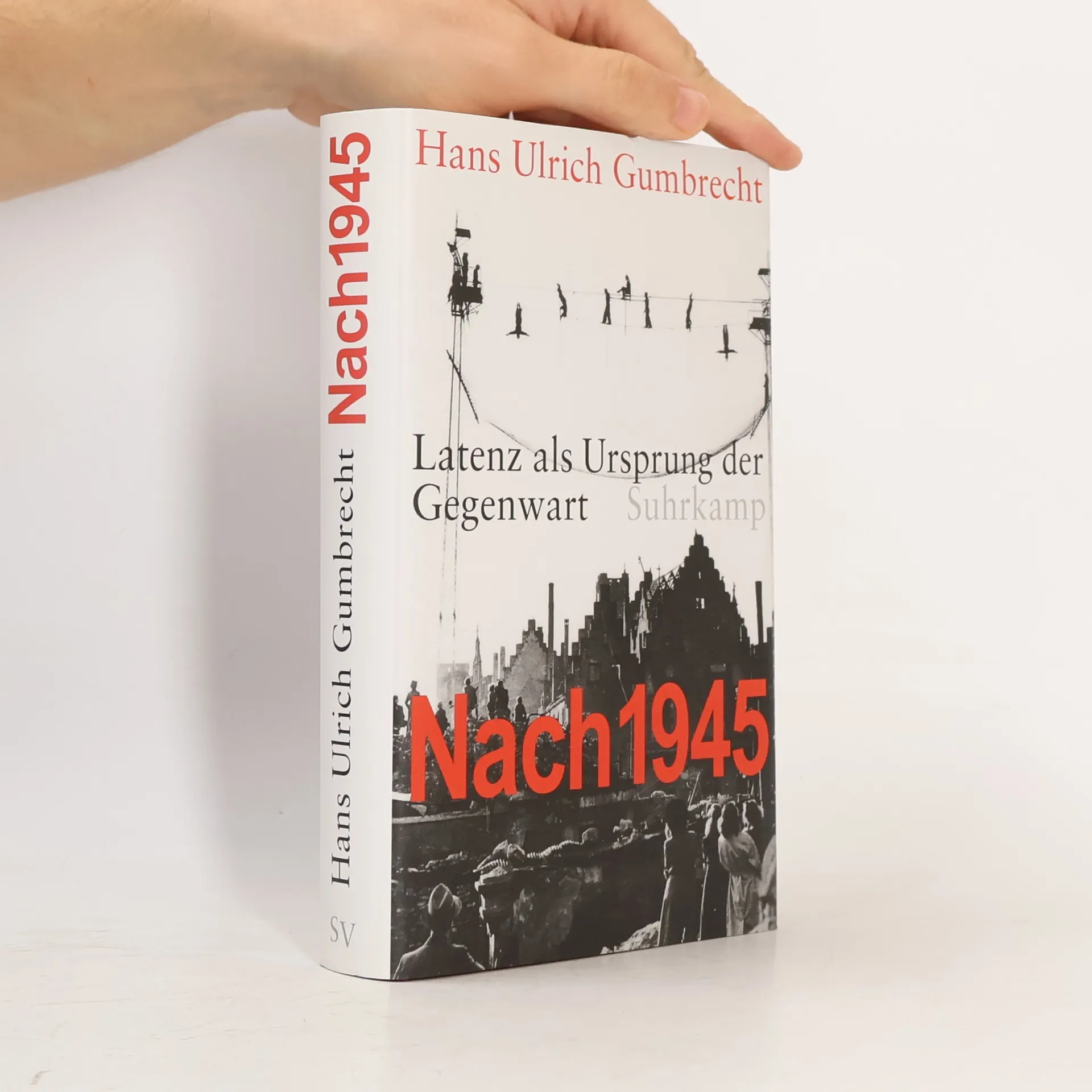
Die Atombombe und der Kalte Krieg, aber auch die Währungsreform und das Wunder von Bern kennzeichnen eine Epoche, in der die Vergangenheit unaussprechbar schien und die Zukunft bedrohlich. Das Gefühl, in einer Zeit ohne Ein- und Ausgang, ohne Richtung und ohne Schutz zu leben, beschreibt Hans Ulrich Gumbrecht in seinem neuen Buch als zentral für die Stimmung nach 1945: Er nennt es Latenz. In diesem Panorama der Nachkriegszeit begegnen wir nicht nur Beckett, Heidegger oder Camus, sondern auch einem Kind, das 1948 in einer zerbombten deutschen Stadt zur Welt kommt. Gumbrecht experimentiert mit einer Form der Darstellung, die persönliche Erinnerungen in Spannung zur Weltgeschichte setzt. So entdeckt er, warum jene Epoche unser Leben bis heute prägt. »Nach 1945« ist eine Genealogie der Gegenwart, die mit historischer Tiefenschärfe erklärt, wie wir wurden, was wir sind. Damit löst der Autor einmal mehr den Anspruch ein, zu den weltweit bedeutendsten Intellektuellen unserer Zeit zu gehören.
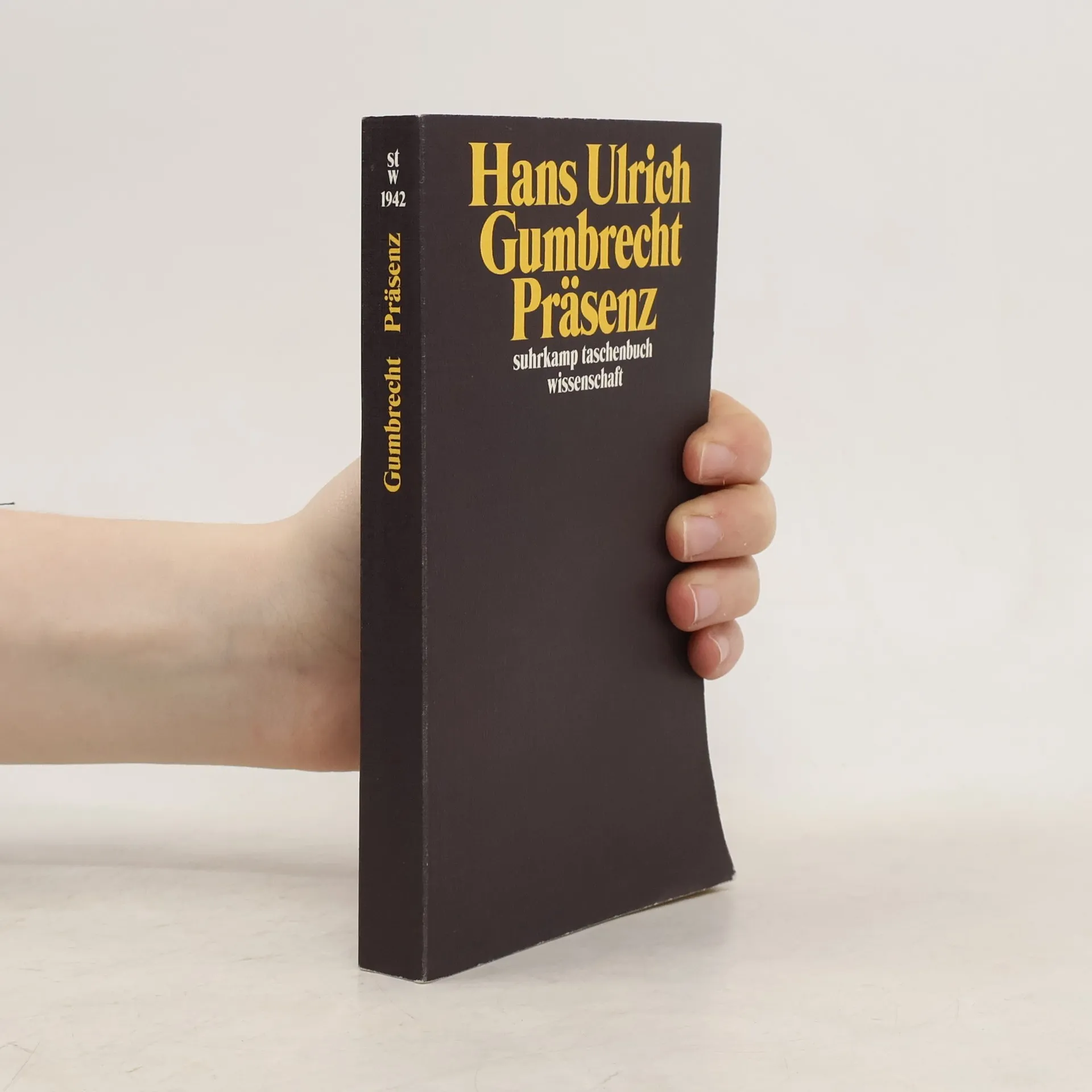
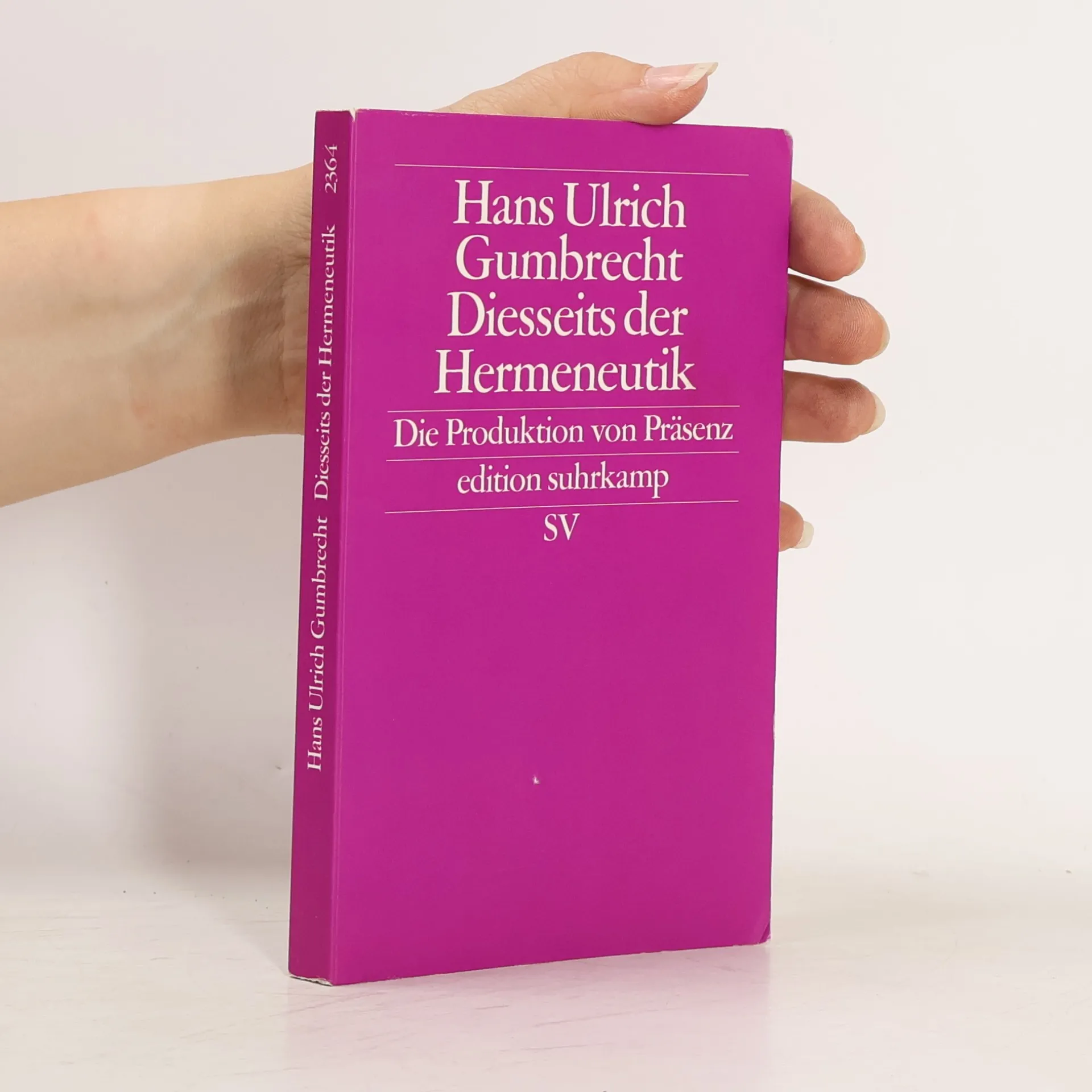
Daß die Geisteswissenschaften systematisch blind sind gegenüber jenen Schichten kultureller Welten, die nicht zur Dimension von Sinn und Bedeutung gehören und durch Interpretation zu erschließen sind, macht den Ausgangspunkt und die polemische Spitze dieses Buches aus. Was der Hermeneutik entgeht, sind Phänomene der Präsenz: »Dinge der Welt« setzen zu können. In diesem Sinn werden philosophische Begriffe entworfen und diskutiert, die über eine Rückwendung zu Phänomenen der Präsenz unser Verhältnis zur ästhetischen Erfahrung und zum Lernen neu bestimmen sollen und in einer Alltagswelt, die Jean-François Lyotard einmal als im Status »allgemeiner Mobilmachung« befindlich beschrieben hat, vielleicht dem Wunsch nach Momenten der Gelassenheit Raum schaffen.
"No intente empezar por el comienzo" dice Gumbrecht en la primera frase de este ensayo, que desafía las convenciones de la narrativa histórica. A diferencia de los relatos tradicionales que presentan una historia con inicio, nudo y desenlace, Gumbrecht cuestiona esta estructura, sugiriendo que la historiografía a menudo oculta factores sociales e ideológicos que influyen en la interpretación de los eventos. Esto plantea la pregunta de si el trabajo del historiador refleja más sobre su propia perspectiva que sobre el objeto de estudio. En un contexto donde la fe en el progreso universal ha disminuido, Gumbrecht se pregunta sobre la relevancia de seguir escribiendo Historia. Su respuesta es que el deseo de revivir el pasado persiste, aunque sea una quimera. Para explorar esta idea, Gumbrecht elige el año 1926, un año sin la carga de eventos decisivos, y se propone revivirlo a través de una serie de entradas alfabéticas que presentan objetos, fenómenos y modas de la época, utilizando documentos contemporáneos. Este enfoque innovador permite que las voces y hechos de 1926 cobren vida, sin seguir una narrativa lineal. La selección de fuentes abarca desde periodismo hasta ficción, creando una curiosa colección que incluye obras como "El castillo" de Kafka y "Ser y tiempo" de Heidegger. Gumbrecht ofrece un trabajo excepcional y original, accesible para un amplio público, aunque la traducción al español de 2004 es difícil de encontrar
Was heißt es, Amerikaner zu sein, und was heißt es, Europäer zu sein? Hans Ulrich Gumbrecht lebt seit zwanzig Jahren in Kalifornien und hat seit zehn Jahren einen amerikanischen Pass. In „California Graffiti“ erzählt der Wahlamerikaner vom Mythos der Vereinigten Staaten, von American Football, New York und San Francisco, von Disneyland und Damenblusen. Mit seinen treffsicheren Skizzen und prägnanten Alltagsszenen fängt er das Besondere der Kultur der Westküste ein, die ihn immer wieder überrascht und fasziniert. Präzise beschreibt er die Unterschiede zwischen dem Leben in Europa und dem Leben in Amerika.
Was soll der Staat regeln – und was nicht? Diese Diskussion bekommt neue Qualität und Dringlichkeit: Was kann und darf der Staat in Situationen kollektiver Herausforderung überhaupt (noch) leisten? Und was muss er leisten können, wenn er heute im Spannungsfeld zwischen Freiheit und Sicherheit, zwischen Bürgerbeteiligung und Digitalisierung, bestehen soll?Dieser Band dokumentiert eine von Hans Ulrich Gumbrecht und René Scheu angeregte Debatte – mit Essays von Miriam Meckel, Fred Turner, Melanie Möller, Dieter Grimm und vielen anderen.
Die Lichtkunst von Gerry Hofstetter verwandelt bekannte Strukturen in faszinierende Kunstwerke, indem er sie mit Licht beleuchtet. Seine Projekte reichen von ikonischen Schweizer Gebäuden bis hin zu spektakulären internationalen Orten, wie dem Tadsch Mahal oder der Titanic auf einem Eisberg. Diese logistisch anspruchsvollen und oft riskanten Unternehmungen zeigen, wie Licht das Wahrnehmen von Architektur und Natur verändert. Die Du-Ausgabe bietet einen Einblick in seine beeindruckenden Werke, ergänzt durch zahlreiche Fotografien und Dokumentationen seiner einzigartigen Kunstprojekte.
Sechzehn Intellektuelle des langen 20. Jahrhunderts
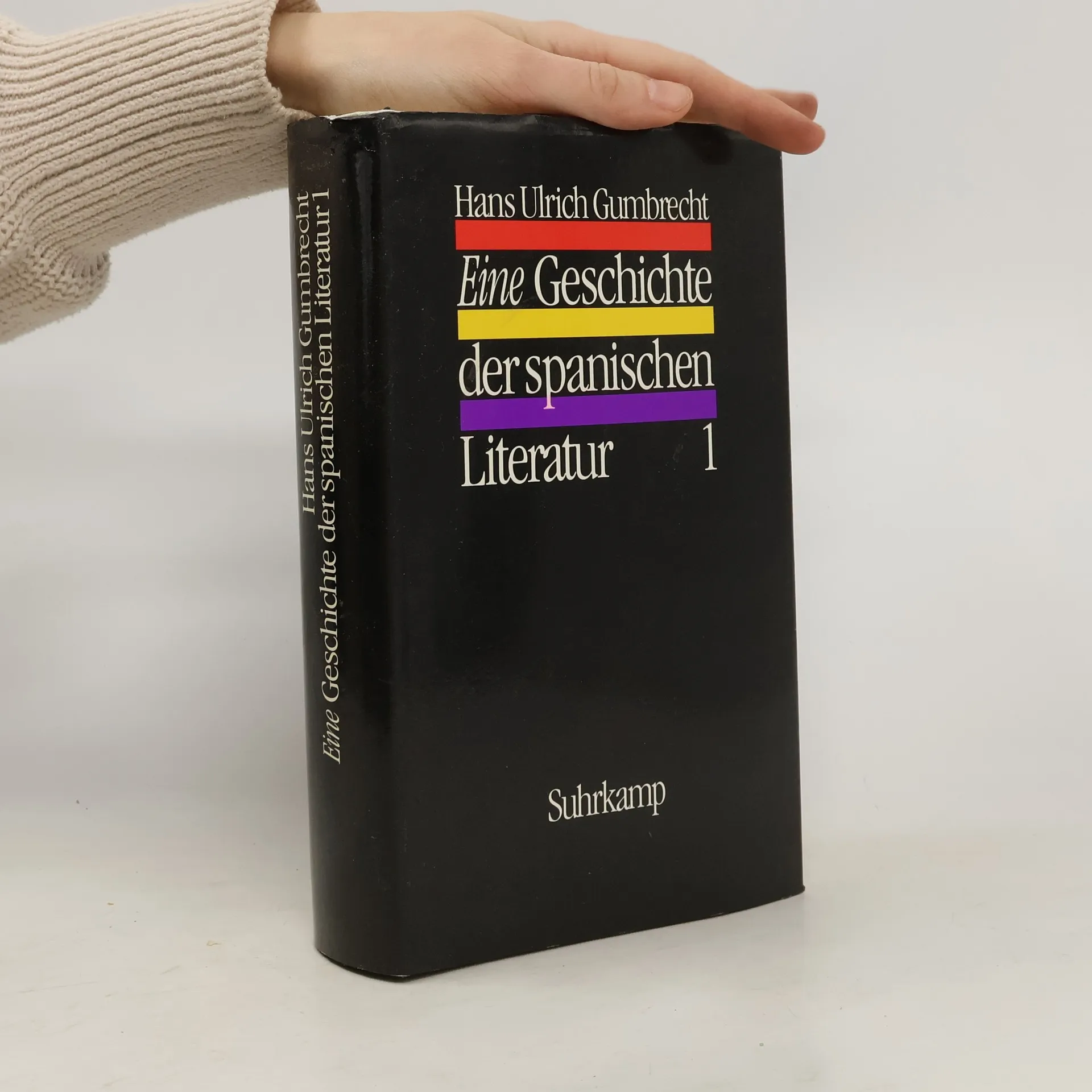
Im Buch beleuchtet Hans Ulrich Gumbrecht die Lebensleistungen bedeutender Intellektueller des 20. Jahrhunderts, von Martin Heidegger bis Judith Butler. Durch persönliche Profile und stilistisch brillante Skizzen bietet er Einblicke in deren Denkwege und deren Einfluss auf die Gegenwart, und zeichnet eine fesselnde intellektuelle Geschichte.
Philosoph und Übersetzer, Kritiker und Schriftsteller, Kunstagent und Enzyklopädist: Denis Diderot, 1713 in der Champagne geboren, 1784 in Paris gestorben, war eine der prägenden Figuren jener Bewegung, die als europäische Aufklärung in die Geschichte eingegangen ist. Doch was ist der Fluchtpunkt seines vielgestaltigen Œuvre, das anders als die Werke seiner Zeitgenossen Voltaire und Rousseau, Schiller, Kant und Hume von einer geradezu zentrifugalen Dynamik gekennzeichnet ist? Entlang von Szenen aus Diderots bewegtem und bewegendem Leben und in genauen Lektüren seiner Schlüsselwerke geht Hans Ulrich Gumbrecht in seinem eleganten Buch dieser Frage nach und entwickelt einen neuen Zugang zu diesem außergewöhnlichen Intellektuellen. Als Kontrastfolie dient ihm dabei das Systemdenken Hegels, der von Diderots Texten ebenso irritiert wie fasziniert war und sie unter den Begriff einer »Prosa der Welt« brachte. Gumbrecht zeigt, wie radikal sich Diderot auf die Konkretheiten und Kontingenzen der Welt eingelassen hat und dadurch ins Zentrum einer intellektuellen Peripherie gelangt ist, in die es noch andere zog: Goya zum Beispiel, aber auch Lichtenberg und Mozart. Die Denkbewegungen dieser Peripherie erreichen uns heute als die von Zeitgenossen.
Die von Hans Ulrich Gumbrecht in Gang gebrachte »Philosophie der Präsenz« revidierte die Zentralstellung von Praktiken der Sinnzuschreibung und ihrer hermeneutischen Reflexion innerhalb der Geisteswissenschaften. Die in »Präsenz« versammelten Aufsätze dokumentieren die Entstehung jener Bewegung aus einer Transformation der Konstruktion von Zeit, in der sich unsere Gegenwart artikuliert und versteht, sowie aus der Selbstkritik einer auf die Begriffe »Gesellschaft« und »Bewußtsein« konzentrierten Generation von Geisteswissenschaftlern. Sie zeigen zugleich die Transformation der Präsenz-Philosophie in eine neue Ästhetik der Epiphanie und der Gelassenheit, welche die etablierten Paradigmen der Geisteswissenschaften hinter sich läßt.
Hans Ulrich Gumbrecht wurde 1948 in Würzburg geboren. Er studierte Romanistik, Germanistik, Philosophie und Soziologie in München, Regensburg, Salamanca (Spanien) und Pavia (Italien). Nach seiner Habilitation 1974 war er von 1975-1982 Professor in Bochum und von 1983-1989 an der Universität in Siegen. Von 1989 bis 2018 hatte er den Lehrstuhl für Komparatistik an der Stanford University inne. Gegenwärtig ist er ständiger Gastprofessor an der Université de Montréal, am Collège de France sowie an der Zeppelin Universität in Friedrichshafen. Für sein Werk erhielt er zahlreiche Auszeichnungen, zuletzt 2015 den Kulturpreis der Stadt Würzburg. Hans Ulrich Gumbrecht wurde 1948 in Würzburg geboren. Er studierte Romanistik, Germanistik, Philosophie und Soziologie in München, Regensburg, Salamanca (Spanien) und Pavia (Italien). Nach seiner Habilitation 1974 war er von 1975-1982 Professor in Bochum und von 1983-1989 an der Universität in Siegen. Von 1989 bis 2018 hatte er den Lehrstuhl für Komparatistik an der Stanford University inne. Gegenwärtig ist er ständiger Gastprofessor an der Université de Montréal, am Collège de France sowie an der Zeppelin Universität in Friedrichshafen. Für sein Werk erhielt er zahlreiche Auszeichnungen, zuletzt 2015 den Kulturpreis der Stadt Würzburg.
Wer verspürt nicht Endzeitmelancholie, wenn liebgewonnene Traditionen verschwinden und den sprichwörtlichen Bach hinuntergehen? In neun prägnanten Einzelbetrachtungen und einem übergreifenden Essay beleuchtet Hans Ulrich Gumbrecht kenntnisreich wie kurzweilig den tatsächlichen Niedergang einzelner Phänomene – vom samstäglichen Fernsehabend über ausufernd-körperliche Leidenschaft, Gelehrtheit, das Rauchen, Bargeld und Geisteswissenschaften bis hin zum Stierkampf: scharfsinnige, stilistisch brillante Kommentare auf unsere Gegenwart.
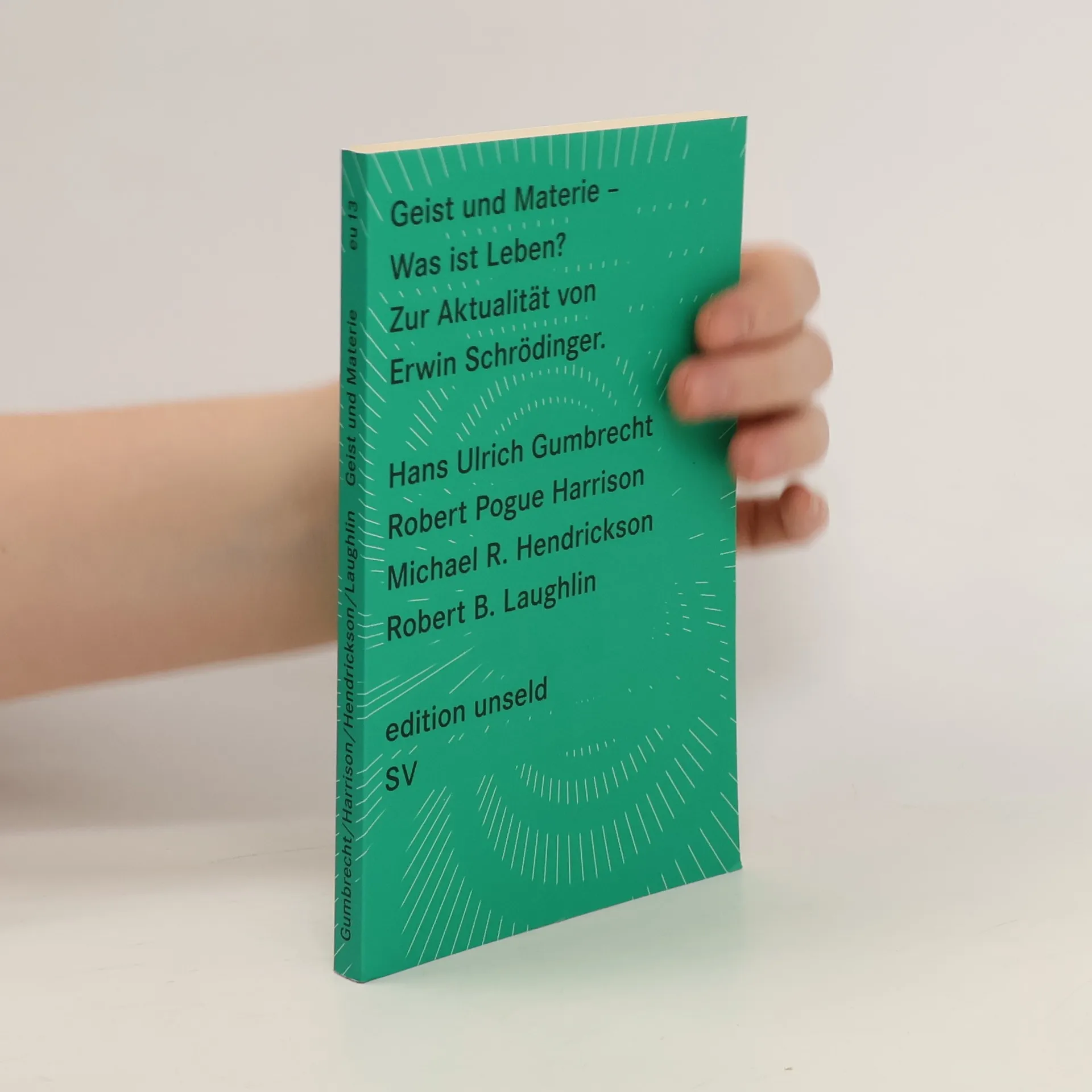
Erwin Schrödinger (1887-1961) gilt als einer der Väter der Quantenphysik; 1933 erhielt er zusammen mit Paul Dirac den Nobelpreis. Schrödingers Schriften regen auch heute noch an zu einem neuen Blick auf die Welt – und sie haben nicht nur in der Physik weitreichende Folgen gehabt. Schrödinger gilt vielen Experten heute als ein Vordenker des Bioengineering, der Entwicklung von Techniken, mit denen sich Zellen, Gewebe und Lebewesen effizient manipulieren lassen. Und Philosophen attestieren ihm eine orientierende und provozierende Wirkung auf eine neue ökologisch motivierte Philosophie der Natur. In diesem Band entfalten führende amerikanische Naturwissenschaftler und Geisteswissenschaftler das kontroverse Potential von Schrödingers Denken und belegen die anhaltende philosophische und technisch-praktische Bedeutung der Erkenntnisse eines epochalen Wissenschaftlers. „Die Welt ist ein Konstrukt aus unseren Empfindungen, Wahrnehmungen, Erinnerungen. Zwar ist es bequem, sie uns an und für sich einfach schlechthin vorhanden zu denken. Aber sie ist anscheinend nicht schon durch ihr bloßes Vorhandensein auch wirklich manifest.“ Aus: Erwin Schrödinger, Geist und Materie
Hans Ulrich Gumbrecht wurde 1948 in Würzburg geboren. Er studierte Romanistik, Germanistik, Philosophie und Soziologie in München, Regensburg, Salamanca (Spanien) und Pavia (Italien). Nach seiner Habilitation 1974 war er von 1975-1982 Professor in Bochum und von 1983-1989 an der Universität in Siegen. Von 1989 bis 2018 hatte er den Lehrstuhl für Komparatistik an der Stanford University inne. Gegenwärtig ist er ständiger Gastprofessor an der Université de Montréal, am Collège de France sowie an der Zeppelin Universität in Friedrichshafen. Für sein Werk erhielt er zahlreiche Auszeichnungen, zuletzt 2015 den Kulturpreis der Stadt Würzburg.
Über einen verborgenen Impuls im wissenschaftlichen Umgang mit Texten
Die Anerkennung der Macht der Philologie gleicht dem Genuß eines sprengenden und faszinierenden, eines wunderschönen und intellektuell herausfordernden Feuerwerks mit all seinen special effects.
Ein Jahr am Rand der Zeit - Ein vielschichtiges Panorama eines Jahres zwischen Aufbruch und Abgrund
Viele überlieferte Gewissheiten aus den Traditionen von »Aufklärung« und »Moderne« sind brüchig geworden – es scheint, als ob sich unser gewohntes Weltbild gerade auflöst. Andererseits haben wir den Kopf noch nicht frei für den Entwurf von Alternativen. Diesen Befund spiegeln Hans Ulrich Gumbrechts Glossen und Artikel aus NZZ und FAZ, etwa über Muhammad Ali, Armut in Indien, Kinderkriegen, Liebe im Alter, die Ästhetik des Selfies, Political Correctness, den Tod der eigenen Mutter, Freiheit oder Gewalt.
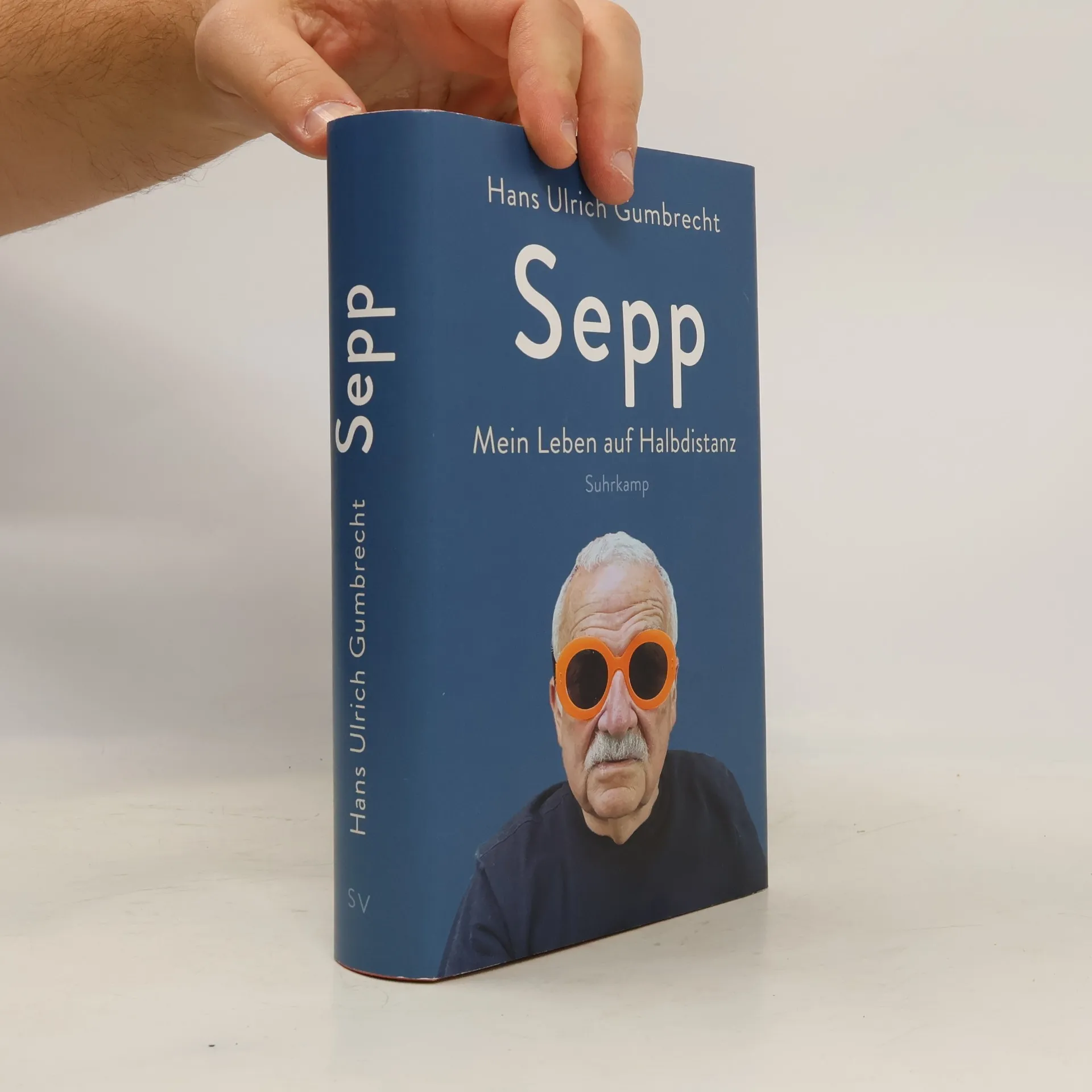
Mein Leben auf Halbdistanz | Eine intellektuelle Autobiographie | Begegnungen mit Stars der Geisteswissenschaften und weltbekannten Sportlern
Weder für das Lesen noch für das Schreiben habe er eine Leidenschaft, behauptet Hans Ulrich Gumbrecht, und doch gehört er zu den bedeutendsten und produktivsten Geisteswissenschaftlern der Gegenwart. In ironischer Halbdistanz blickt der emeritierte Stanford-Professor auf mehr als ein halbes Jahrhundert Lebensgeschichte zurück. Alles beginnt 1948 im zerbombten Würzburg, aber schon bald lockt ihn sein Ehrgeiz auf eine atemberaubende Reise rund um den Globus. Am berühmten Lycée Henri IV eifert er im Paris der 1960er Jahre dem Habitus französischer Intellektueller nach, in Salamanca beginnt er zu schreiben, an der Copacabana spürt er die Präsenz der Vergangenheit und im Silicon Valley erlebt er die Geburt einer neuen Form des Denkens. Mit charmanter Unbescheidenheit und in strahlender Intensität beschwört Gumbrecht Szenen für die Ewigkeit herauf: einen Sündenfall vor der Erstkommunion, Lunch mit Michel Foucault, drei Sätze mit Neymar, eine Gefängnisnacht in San José und einen Puma im Schnee der Anden. So entsteht das Bild eines Intellektuellenlebens, dessen Kraft sich am Ende nicht in abstrakten Urteilen verdichtet, sondern in einem Namen, der diesseits und jenseits des Atlantiks leicht über die Lippen geht: Sepp.
German
Die Dauerausstellung im Literaturmusuem der Moderne
Vorwort von Heike Gfrereis und Ulrich Raulff Eine Marbacher Marginalie von Hans Magnus Enzensberger ZEITLICHKEIT Karl Heinz Bohrer Die Zeitlichkeit der modernen Literatur Ulrike Draesner Das Zeit-Erzählen BILDLICHKEIT Horst Bredekamp Die Bruderschaft von Schrift und Bild ÖRTLICHKEIT Wilhelm Genazino Exklusive Trivialität. Benn, Horváth und Weiss in ihren Sehnsuchtsräumen SE(E)LIGKEIT Hans Ulrich Gumbrecht Vom beseelenden Hauch der Literatur Heike Gfrereis Die Ausstellung Das virtuelle Literaturmuseum des 21. Jahrhnderts
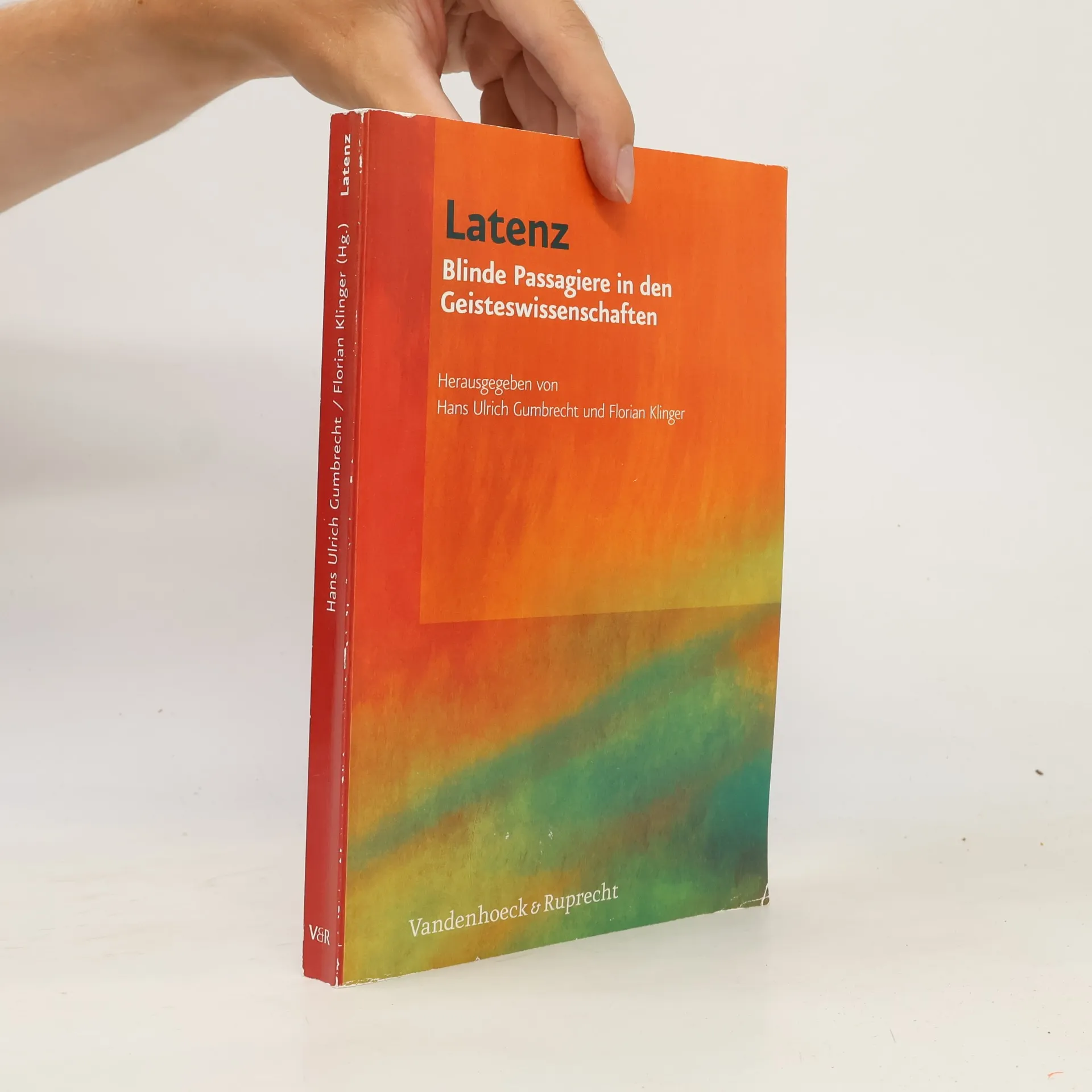
The dimension of Latency has emerged as a significant yet unresolved aspect of historical research in the Humanities and Arts. Latent phenomena are those whose existence we acknowledge, but whose identity and location remain unknown. This volume compiles twenty diverse responses to this concept from some of the most prominent figures in the Humanities today, including Carolyn Abbate, Horst Bredekamp, Roger Chartier, and others. The contributors aim to explore and elaborate on the concept of Latency across various contexts and directions, seeking to establish a new pragmatics for its application. The result is a powerful convergence of ideas that transcends mere disciplinary application, revealing a new epistemological landscape responding to the concept of Latency, which is still in the process of articulation. This collection highlights the complexity and richness of Latency, providing a platform for further exploration and understanding within the field. The text is presented in German, reflecting its intellectual depth and the contributions of its distinguished authors.