

Warum überlassen wir Klimaschutz, Gesundheit oder digitale Infrastruktur Kräften, die vor allem auf Profit zielen – und wundern uns dann, wenn zentrale Aufgaben liegen bleiben? Mariana Mazzucato zeigt: Märkte sind kein Naturgesetz. Sie werden politisch gestaltet – und können so ausgerichtet werden, dass sie dem Gemeinwohl dienen. Ob beim weltweiten Zugang zu Impfstoffen oder beim Umbau zu klimaneutralen Städten: Entscheidend ist nicht nur, was produziert wird, sondern wie Risiken, Wissen und Gewinne verteilt werden. Mazzucatos Buch ist der dringend nötige Aufruf, in unserer Wirtschaft gemeinsame Ziele ins Zentrum zu stellen – statt Probleme erst im Nachhinein zu reparieren. »Eine der einflussreichsten Ökonominnen der Welt ... auf einer Mission, den Kapitalismus vor sich selbst zu retten.« Quartz
Mariana Mazzucato Volgorde van de boeken (chronologisch)
Mariana Mazzucato is een vooraanstaand econoom, gespecialiseerd in de economie van innovatie en publieke waarde. Haar werk onderzoekt kritisch de dynamiek van bijdragen van de publieke en private sector en verkent hoe waarde werkelijk wordt gecreëerd en vastgelegd binnen de wereldeconomie. Mazzucato daagt conventioneel economisch denken uit en pleit voor een model dat prioriteit geeft aan duurzame en inclusieve groei. Haar inzichten zijn cruciaal voor het begrijpen van de complexiteit van het kapitalisme en de vitale rol van de publieke sector bij het bevorderen van innovatie.
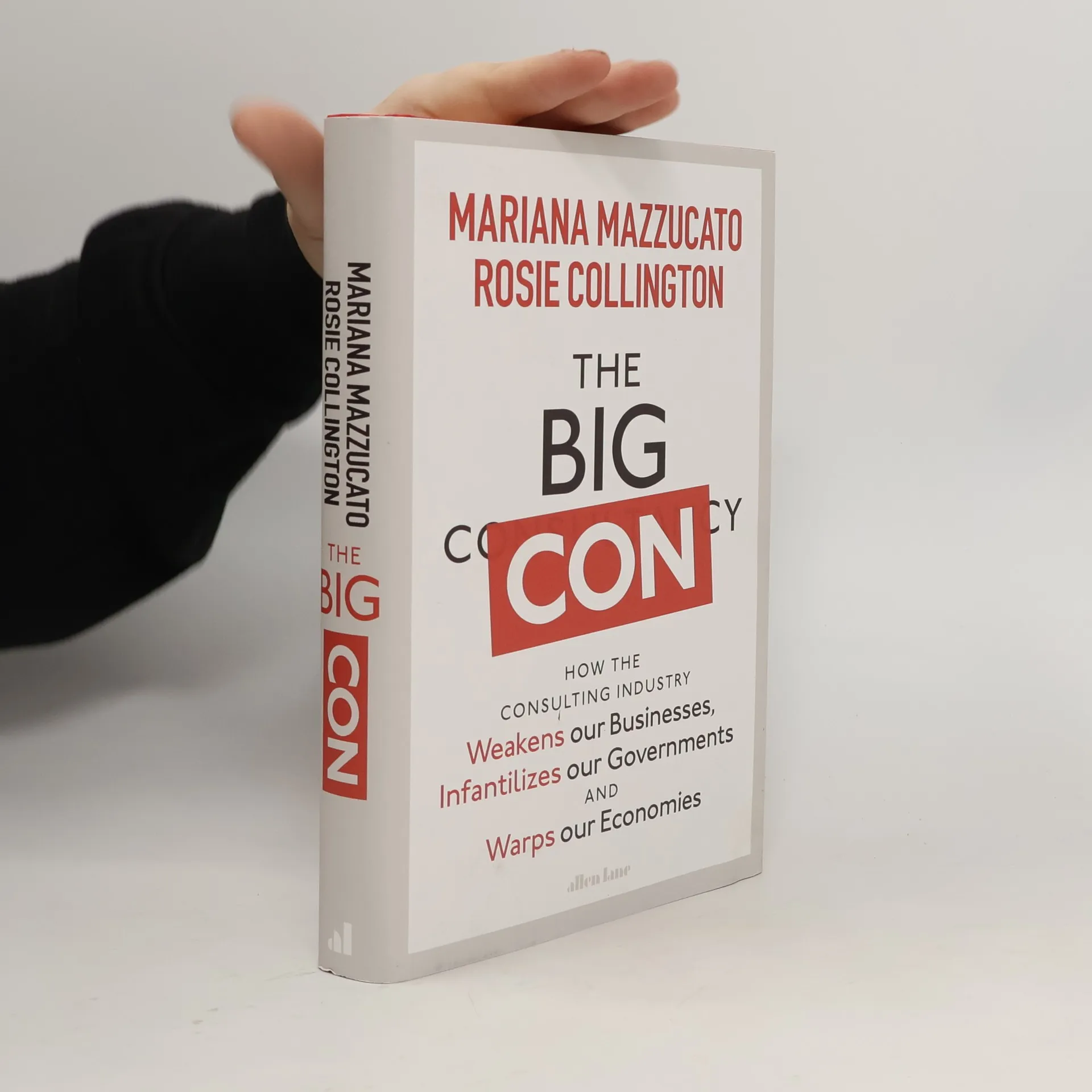


The Big Con
- 368bladzijden
- 13 uur lezen
There is an entrenched relationship between the consulting industry and hollowed-out, risk-averse governments and shareholder value-maximizing firms. Mariana Mazzucato and Rosie Collington show that our economies' reliance on companies such as McKinsey, Boston Consulting Group, Bain & Company, PwC, Deloitte, KPMG and EY stunts innovation, obfuscates corporate and political accountability and impedes our collective mission of halting climate breakdown. The 'Big Con' is possible in today's economies because of the unique power that consultancies wield through extensive contracts and networks - as advisors, legitimators and outsourcers - and the illusion that they are objective sources of expertise and capacity. The Big Con weakens our businesses, infantilizes our governments and warps our economies. Mazzucato and Collington expertly debunk the myth that consultancies always add value to the economy. With a wealth of original research, they argue brilliantly for investment and collective intelligence within all organizations and communities, and for a new system in which public and private sectors work innovatively for the common good. We must recalibrate the role of consultants and rebuild economies and governments that are fit for purpose.
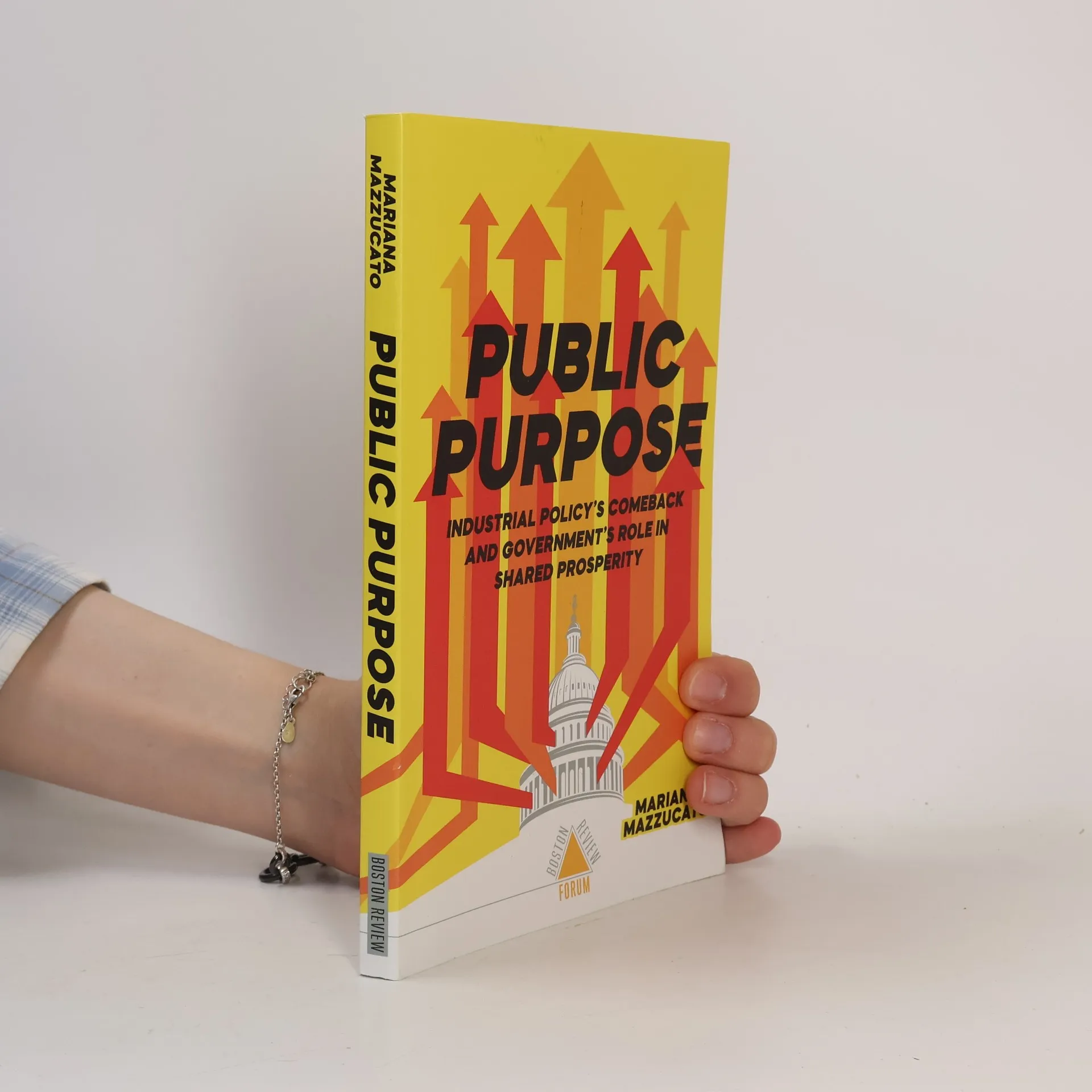
Public Purpose
- 160bladzijden
- 6 uur lezen
How governments can spur growth and innovation to solve their greatest challenges—from green energy to national security to building resilient health systems.Known around the world for challenging mainstream economics, economist Mariana Mazzucato believes, as the Financial Times writes, that “the public sector can and should be a cocreator of wealth that actively steers growth to meet its goals.” In Public Purppse, she calls on governments to create the economies we need today.Mazzucato's challenge leads off a debate on the revival of industrial policy—roughly defined as deliberate government action to re(shape) the economy. Industrial policy has fallen out of favor in recent decades as economists defer to free markets to produce innovation and growth. Yet today, thinkers across the political spectrum have begun expressing new interest in industrial policy as a way to address the most serious problems of our times: from national security and climate change, to the market's underfunding of public goods, to sluggish economic growth and labor market dysfunction.Public Purpose makes a compelling case for industrial policy—what it is, and why we need it now. Addressing investment, innovation, supply chains, and growth, it provides a robust vision of a renewed industrial policy, and what it can offer the US economy in the face of climate change and a global pandemic.
Moonshot. Grootse missies voor de hervorming van het kapitalisme
- 249bladzijden
- 9 uur lezen
Ruim vijftig jaar geleden ging de mens naar de maan. Deze ongekende gebeurtenis was veel meer dan een wetenschappelijke topprestatie van de ruimtevaart. Zonder nieuwe vormen van samenwerking tussen de publieke en private sector was dit niet gelukt.Topeconoom Mariana Mazzucato vindt dat we de problemen van deze tijd, zoals stagnerende economische groei, klimaatverandering en toenemende ongelijkheid, met hetzelfde lef te lijf moeten gaan. En de coronacrisis zou nu voor overheden hét moment moeten zijn om op zoek te gaan naar een nieuw, permanent evenwicht tussen staat, bedrijfsleven en burger; naar een verandering van het huidige kapitalistische systeem.In Moonshot daagt Mazzucato economen, politici en ondernemers uit om na te denken over ambitieuze maatschappelijke doelstellingen, gedurfde langetermijninvesteringen en vernieuwende publiek-private samenwerking. Het is niet voldoende om fouten in de huidige economische markten en systemen te repareren. Toekomstgericht denken en een innovatieve economie zijn noodzakelijk voor een fundamentele transformatie van economie en samenleving.
The value of everything. Making and taking in the global economy
- 256bladzijden
- 9 uur lezen
A scathing indictment of our current global financial system, 'The Value of Everything' rigorously scrutinizes the way in which economic value has been accounted and reveals how economic theory has failed to clearly delineate the difference between value creation and value extraction. Mariana Mazzucato argues that the increasingly blurry distinction between the two categories has allowed certain actors in the economy to portray themselves as value creators, while in reality they are just moving around existing value or, even worse, destroying it.
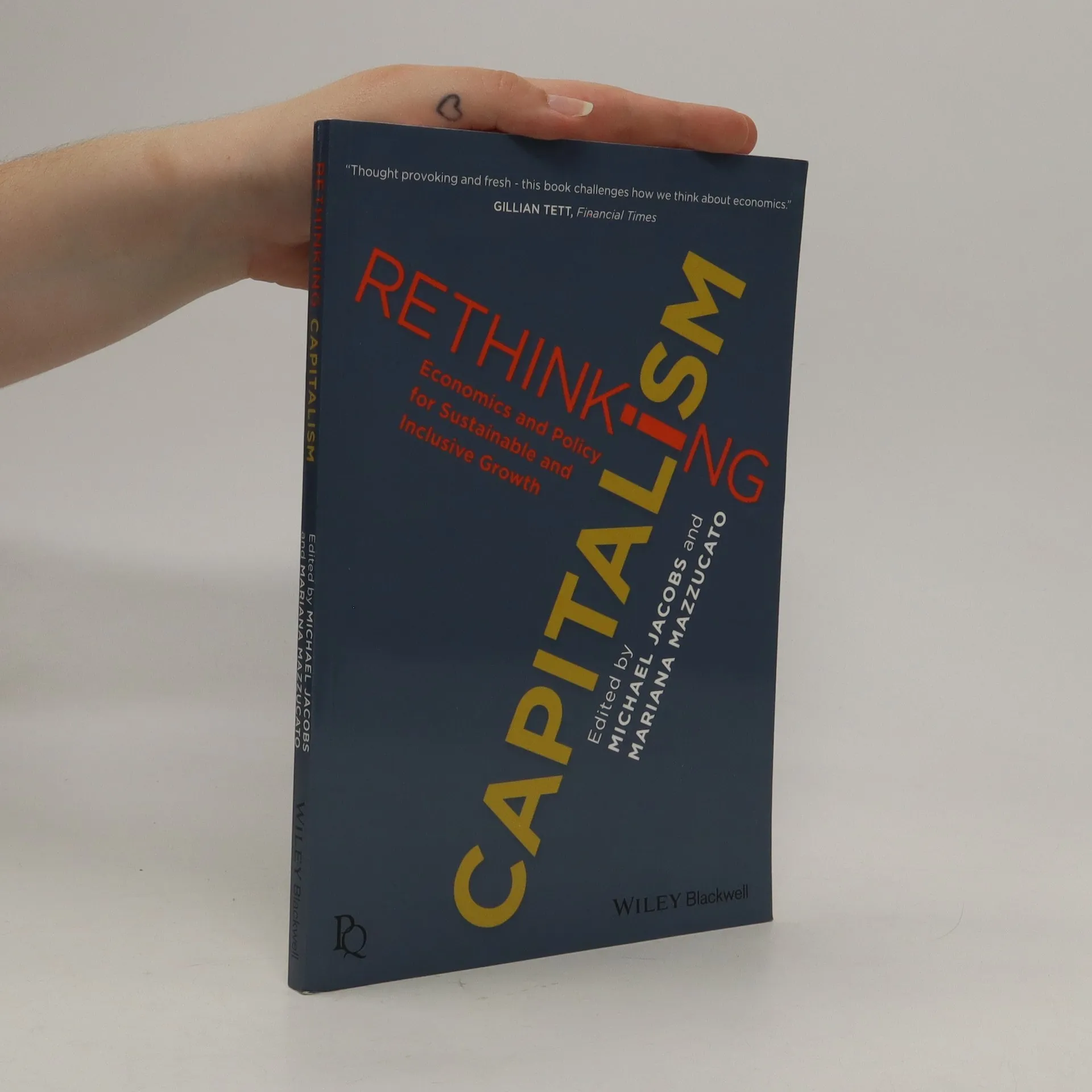
Rethinking capitalism : economics and policy for sustainable and inclusive growth
- 224bladzijden
- 8 uur lezen
"Thought provoking and fresh - this book challenges how we think about economics. Economic policy has neither reformed the financial system nor restored stable growth. Climate change meanwhile poses increasing risks to future prosperity. In this book some of the world’s leading economists propose new ways of thinking about capitalism. In clear and compelling prose, each chapter shows how today’s deep economic problems reflect the inadequacies of orthodox economic theory and the failure of policies informed by it. The chapters examine a range of contemporary economic issues, including fiscal and monetary policy, financial markets and business behaviour, inequality and privatisation, and innovation and environmental change. The authors set out alternative economic approaches which better explain how capitalism works, why it often doesn’t, and how it can be made more innovative, inclusive and sustainable. Outlining a series of far-reaching policy reforms, Rethinking Capitalism offers a powerful challenge to mainstream economic debate, and new ideas to transform it.
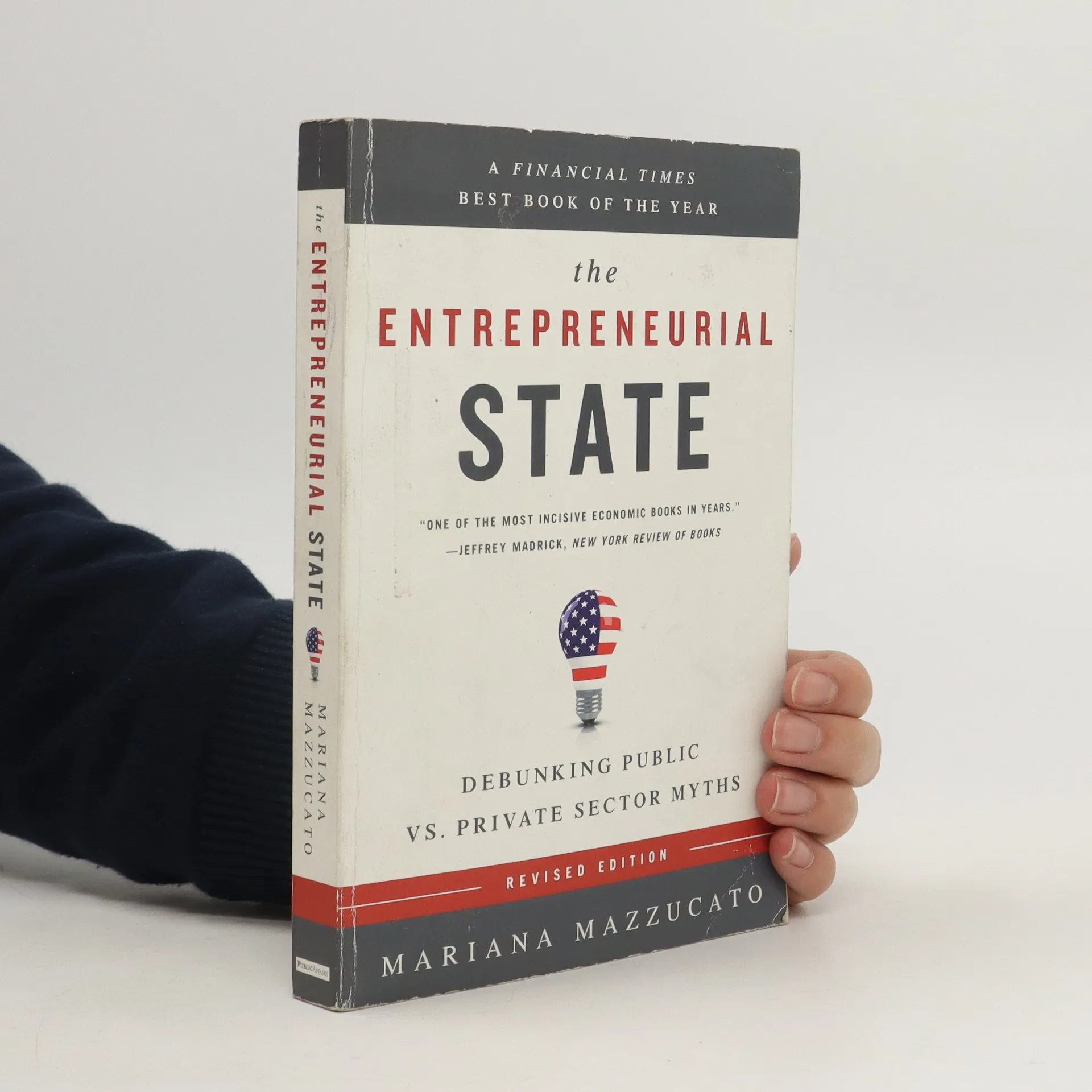
The Entrepreneurial State
- 260bladzijden
- 10 uur lezen
Argues that the American government, often perceived as a hindrance to technology, has in fact been a great innovator, responsible for such breakthroughs as GPS, the Internet, and search engine algorithms

