

This scholarly edition of Malthus' Essay on Population is presented in two volumes, tailored for students. It offers an in-depth exploration of Malthus' theories on population dynamics, providing critical insights and context that enhance understanding of his influential work. The edition is designed to facilitate academic study and engagement with Malthus' arguments and their implications.
Thomas Robert Malthus Boeken
13 februari 1766 – 23 december 1834
Robert Malthus was een invloedrijke Engelse denker wiens werk zich richtte op politieke economie en demografie. In zijn baanbrekende essay observeerde hij dat de bevolkingsgroei onvermijdelijk botst met beperkte middelen, wat leidt tot beperkingen zoals hongersnood en ziekte. Malthus ging fel in tegen het heersende 18e-eeuwse optimisme over maatschappelijke verbetering en perfectibiliteit. Hij betoogde dat de gevaren van overbevolking de vooruitgang naar een utopische samenleving belemmerden en goddelijk waren opgelegd om deugdzaam gedrag te onderwijzen. Zijn ideeën, die de nadruk legden op economische stabiliteit op lange termijn boven kortetermijnrendement en de Arme wetten bekritiseerden, beïnvloedden het economische, politieke en wetenschappelijke denken en blijven onderwerp van intens debat.


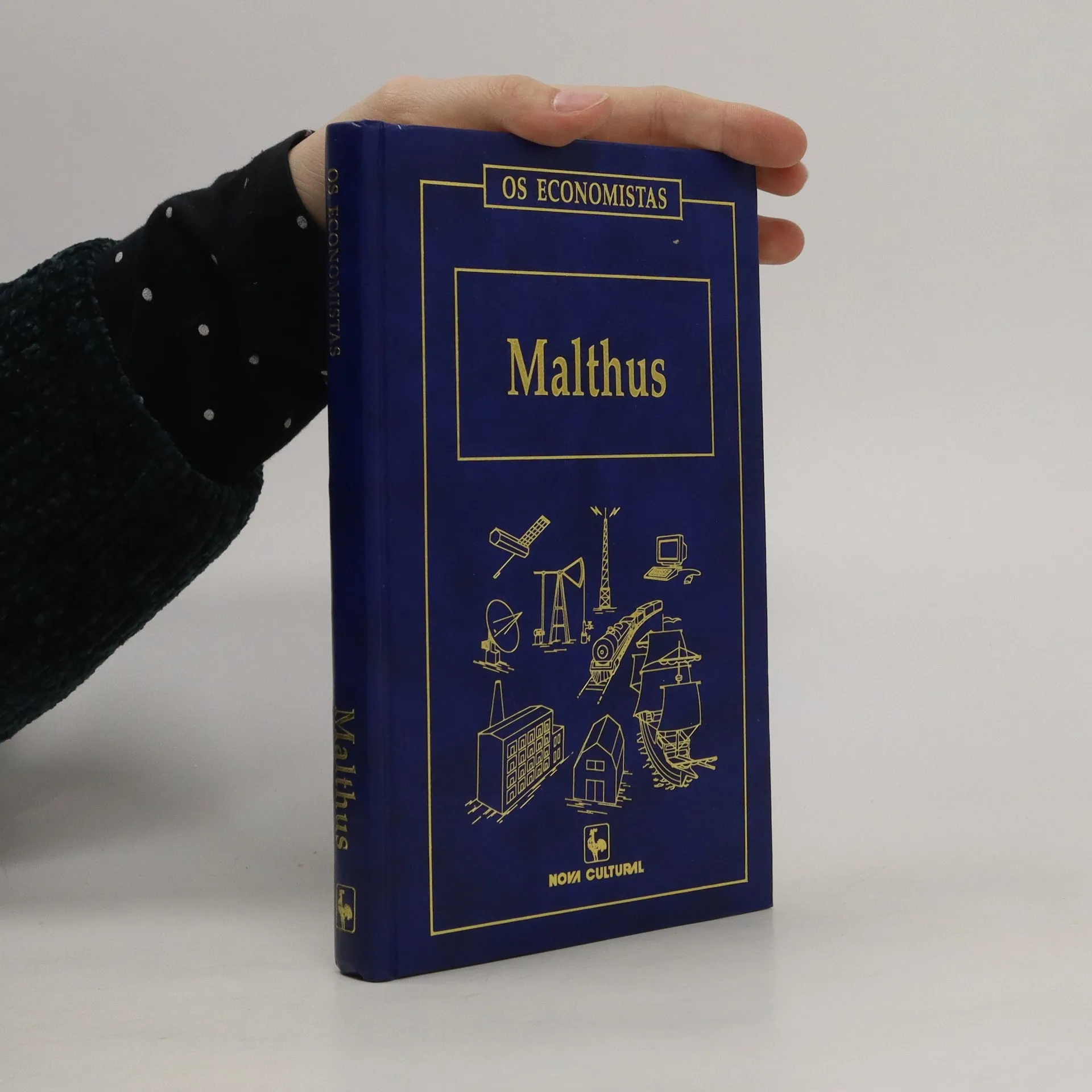

An Essay on the Principle of Population, Volume I
- 324bladzijden
- 12 uur lezen
Set in 1796, the narrative revolves around Mr. Malthus, who believes in the inevitability of human progress, contrasting sharply with his son Thomas's skepticism. Thomas challenges the optimistic view of perpetual advancement, prompting a father-son dialogue that explores their differing beliefs. Mr. Malthus encourages Thomas to articulate his objections, setting the stage for a thoughtful examination of the concepts of progress and the potential limitations of human development.
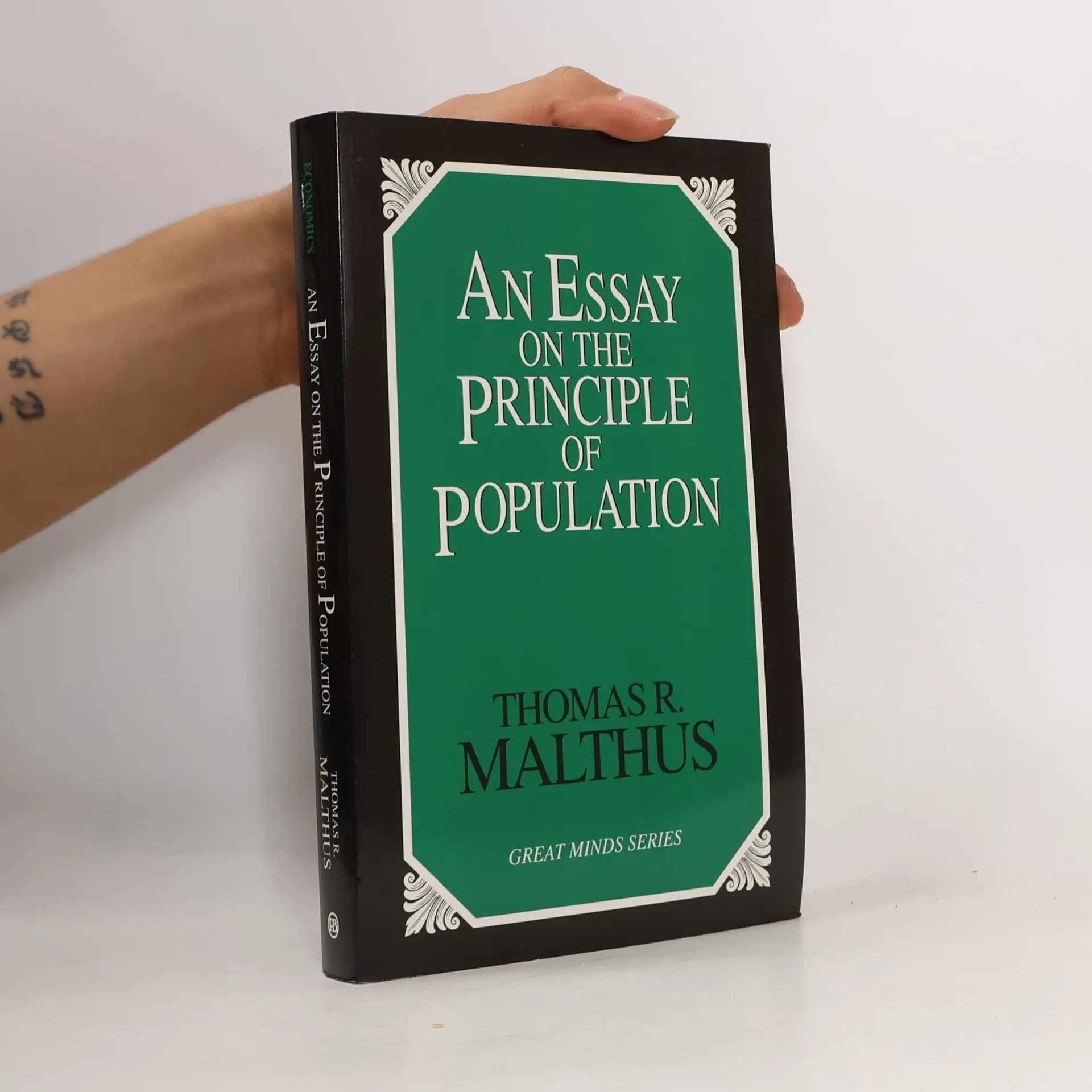
Great Minds Series: An Essay on the Principle of Population
- 400bladzijden
- 14 uur lezen
Focusing on the critical theme of population dynamics, the book presents Thomas R. Malthus's argument that unchecked population growth outpaces food supply, leading to dire societal consequences. Through mathematical proofs and scientific evidence, Malthus contends that preventive measures are essential to avoid overcrowding, disease, war, and poverty. His pessimistic outlook on humanity's future sparked significant debate among contemporary optimists and laid foundational ideas that influenced Charles Darwin's research.
Princípios de economia política
- 382bladzijden
- 14 uur lezen
Das Bevölkerungsgesetz
- 218bladzijden
- 8 uur lezen
Der Entdecker der »Bevölkerungsfalle« neu gelesen: ein Klassiker der Nationalökonomie aus dem Giftschrank der Ideengeschichte. Seinen Kritikern galt er als Vertreter eines brutalen Sozialdarwinismus, seinen Bewunderern als wirtschaftswissenschaftlicher Realist. Die einen beschimpften ihn als Apologeten einer Ausbeutung bis zum Tode, andere sahen ihn als Vordenker des staatlichen Interventionismus gegen die Willkür der Marktgesetze. Von seinen Zeitgenossen Darwin, Ricardo und Shelley, über Marx und Keynes bis Foucault ist die Auseinandersetzung mit Malthus ein konstanter Topos der kritischen Sozialwissenschaften. Gleichzeitig hat jede Generation des soziologischen und ökonomischen Diskurses auch ihre Neomalthusianer, die beharrlich auf das Wachstum als Heilsbringer setzen. In Zeiten der Klimakrise und zunehmender Migrationsbewegungen ist Malthus' Hauptwerk Das Bevölkerungsgesetz wieder brandaktuell. Nicht weil er die Antworten auf die Probleme unserer Gegenwart zu liefern vermag, sondern weil das berühmt-berüchtigte Paradigma vom Zusammenhang von Bevölkerungsgröße und Armut auf ihn zurückgeht. Ein gefährlicher Klassiker, der heute mehr denn je nach einer Neulektüre verlangt