

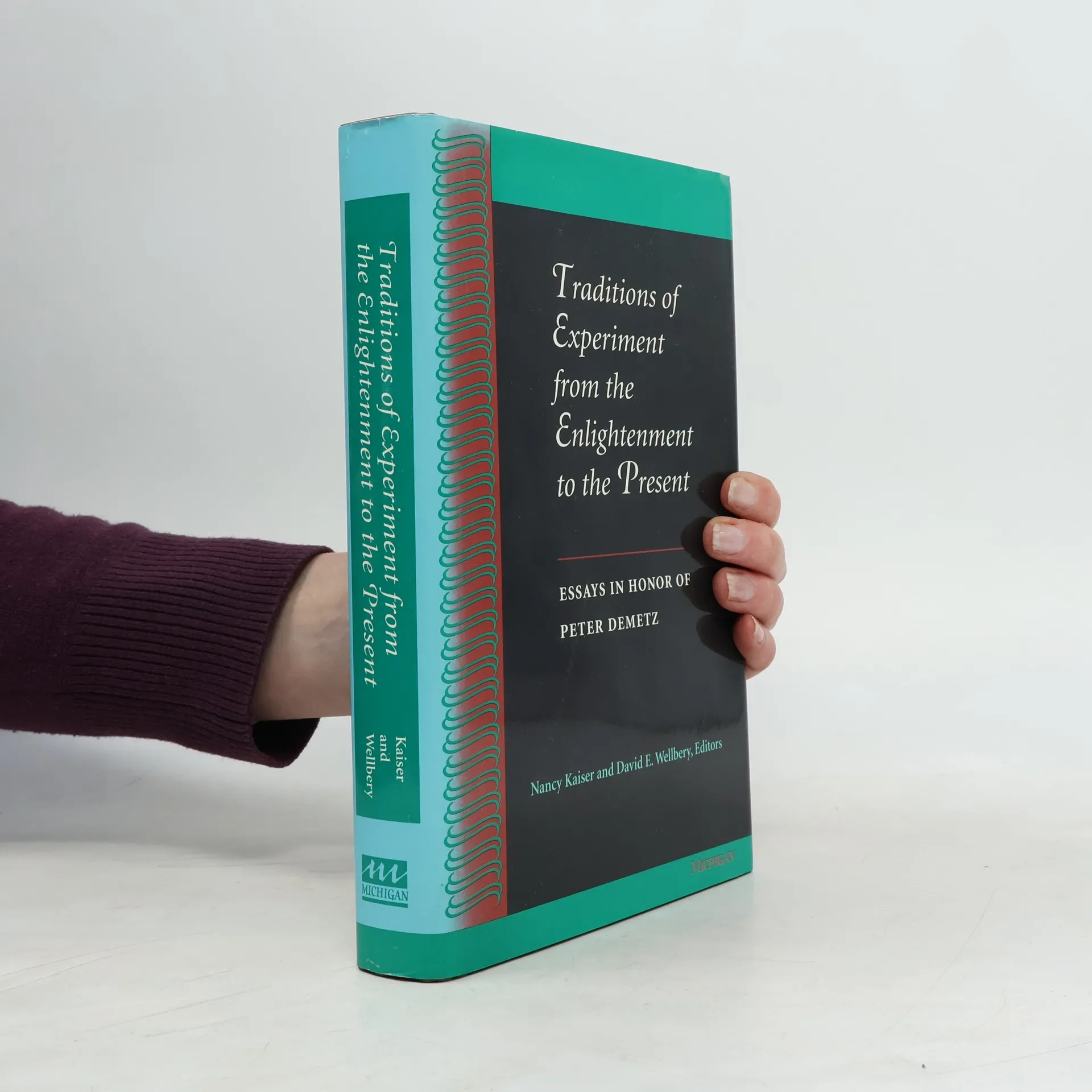
Traditions of Experiment from the Enlightenment to the Present
- 386bladzijden
- 14 uur lezen
This collection features a diverse range of essays that explore the intersections of literature, philosophy, and socio-political themes in German and comparative literature. Claudia Brodsky examines "Experimental Philosophy" and the literature of experience in the works of Diderot and Kleist. Gisela Brude-Firnau delves into Alexander von Humboldt's sociopolitical intentions, merging science and poetics. Thomas P. Saine critiques Johann Gottfried Seume's views on traditional society at the end of the eighteenth century. Michael T. Jones discusses Friedrich Schlegel's "Lucinde" as an experimental novel. James Rolleston analyzes the allegorical dimensions of freedom in Lenau's poetry. Jeffrey L. Sammons investigates innovation and intertextuality in Charles Sealsfield's work. Peter Gay offers a reading of the Gartenlaube from 1890, while Brigitte Peucker connects German cinema with the sister arts through Wegener's "The Student of Prague." Ruth V. Gross reflects on György Kurtág's "Kafka Fragmente." Amy Colin refigures the female body through Romanian avant-gardists. Walter Hinderer explores the role of foreign elements in Brecht's "In the Jungle of the Cities." Mark Harman addresses German translations of Joyce's "Ulysses." Ellis Shookman investigates Arno Schmidt's relationship with James Fenimore Cooper. Marilyn Sibley Fries examines the historical debris in the works of Bachmann and Benjamin. Dorrit Cohn analyzes Wolfgang Hil