

The American anticommunist movement has often been dismissed as a product of right-wing hysteria that left deep scars on society and institutions. This work repositions the struggle against communism within the broader context of American history. Richard Gid Powers illustrates that McCarthyism, red-baiting, and blacklisting were merely facets of a larger movement involving a diverse coalition of Americans—Jews, Protestants, blacks, Catholics, Socialists, union leaders, businessmen, and conservatives. Their motivations stemmed from informed knowledge and direct experiences with the Communist system, rather than ignorance or fear. Critics have praised the book for its superb writing and rich detail, noting its perceptive and thoughtful analysis. David J. Garrow highlights its thoroughness, while Sean Wilentz commends the revival of forgotten segments of anti-Communist opinion. Powers extensively utilizes primary sources, revealing new insights and vividly depicting the intricate relationships among various ethnic and radical communities in the U.S., shaped by their firsthand encounters with communism. The depth and breadth of his research significantly enhance our understanding of this complex topic, making it a valuable contribution to the field. Richard M. Fried describes it as a well-executed study that weaves together the many threads of a vast subject into a rich tapestry.
Richard Gid Powers Boeken
Richard Gid Powers is een auteur van omvangrijke werken over de Amerikaanse geschiedenis, met een specifieke focus op het Federal Bureau of Investigation (FBI) en de anticommunistische beweging van het midden van de twintigste eeuw. Zijn schrijven duikt in cruciale aspecten van de Amerikaanse identiteit en politiek. Powers onderzoekt de vorming van het moderne Amerika door een analyse van zijn instellingen en ideologische strijd. Zijn aanpak biedt diepgaande inzichten in de krachten die de Verenigde Staten hebben gevormd.
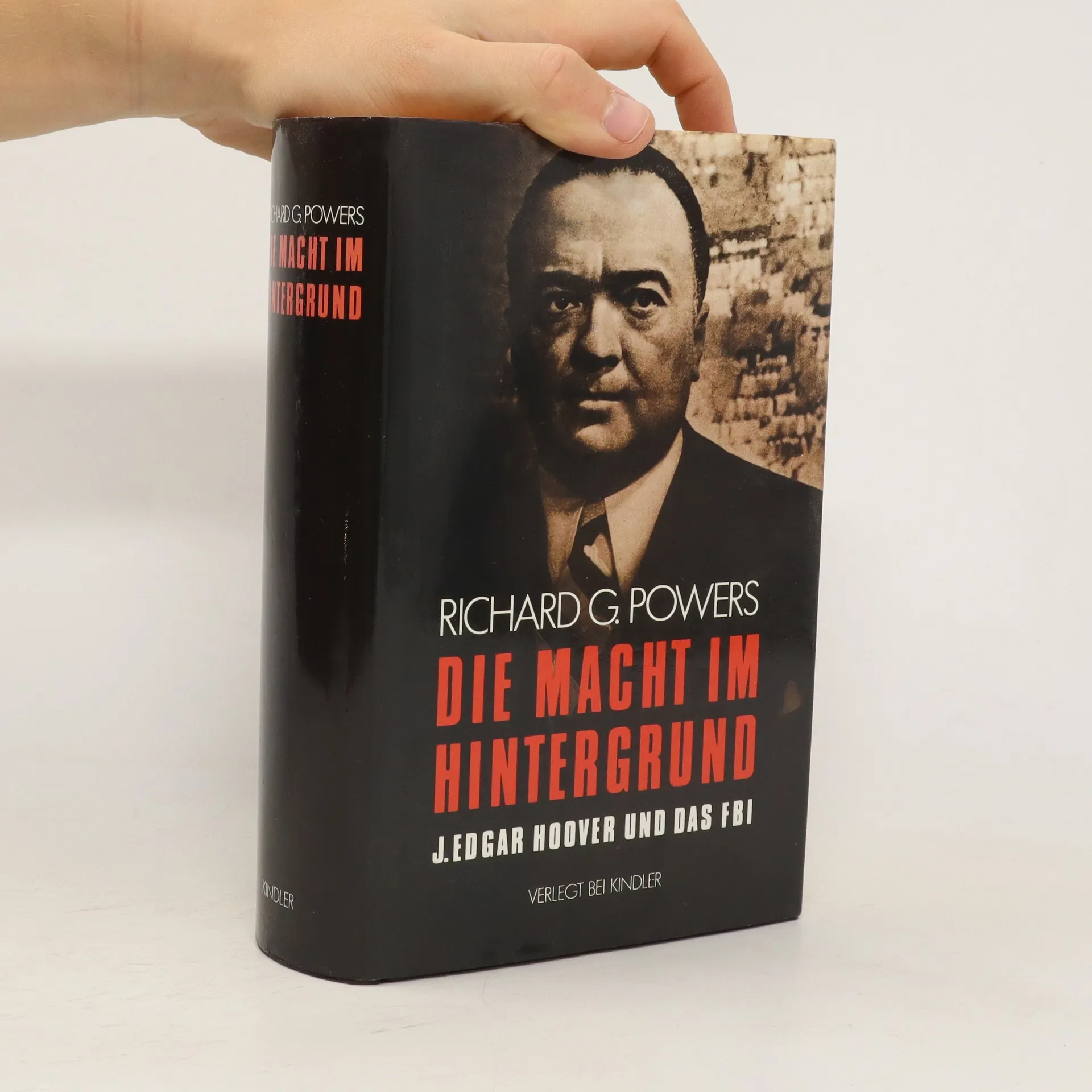

Die Macht im Hintergrund
- 607bladzijden
- 22 uur lezen
Als Chef des FBI spielte J. Edgar Hoover von 1924 bis zu seinem Tod im Jahre 1972 eine einzigartige Rolle in den Vereinigten Staaten: In den 48 Jahren seiner Amtszeit erwies er sich unter wechselnden Präsidenten als die eigentliche Macht im Staate. Richard Powers beschreibt in seiner Biografie des FBI-Direktors den Werdegang eines Mannes, der sich im Laufe der Jahre von seiner Hauptaufgabe, der Verbrechensbekämpfung, abwandte und immer bestimmender und unheilvoller in die amerikanische Innenpolitik eingriff. Gestützt auf zahlreiche bislang geheim gebliebene Dokumente aus dem Privatleben Hoovers wie aus den Archiven des FBI, schildert Richard Powers den beruflichen Werdegang und herausragende Ereignisse im Leben dieser komplexen Persönlichkeit. Powers legt die fesselnde Lebensgeschichte eines Mannes vor, der gnadenlos alle Landsleute verfolgte, die nicht seinem konservativen Weltbild entsprachen, der ihm mißliebige Prominente diffamierte und nichts unversucht ließ, einflußreiche Kontrahenten (beispielsweise Martin Luther King) als Kommunisten zu denunzieren und mundtot zu machen.