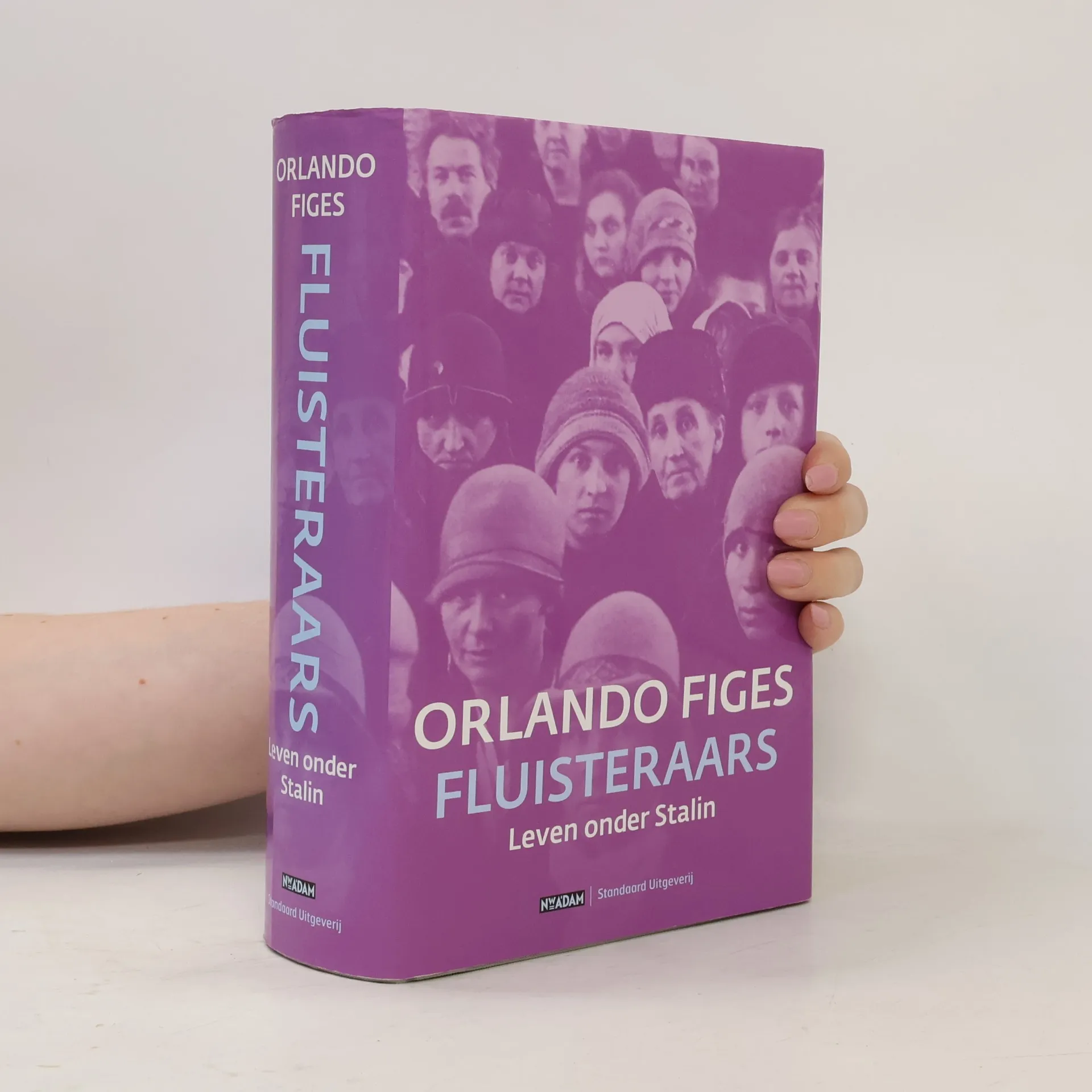

Fluisteraars
Leven onder Stalin
Orlando Figes is een Britse historicus gespecialiseerd in Rusland, die zich verdiept in de Russische geschiedenis en samenleving. Zijn schrijven kenmerkt zich door een gedetailleerd onderzoek naar de complexe sociale, politieke en culturele krachten die de Russische natie hebben gevormd. Figes brengt lezers niet alleen de belangrijkste gebeurtenissen bij, maar ook het dagelijks leven en de gedachten van gewone mensen, waardoor een levendig en inzichtelijk beeld van het verleden ontstaat. Zijn aanpak biedt een boeiend en diepgaand begrip van een van 's werelds meest invloedrijke naties.


Leven onder Stalin
100th Anniversary Edition
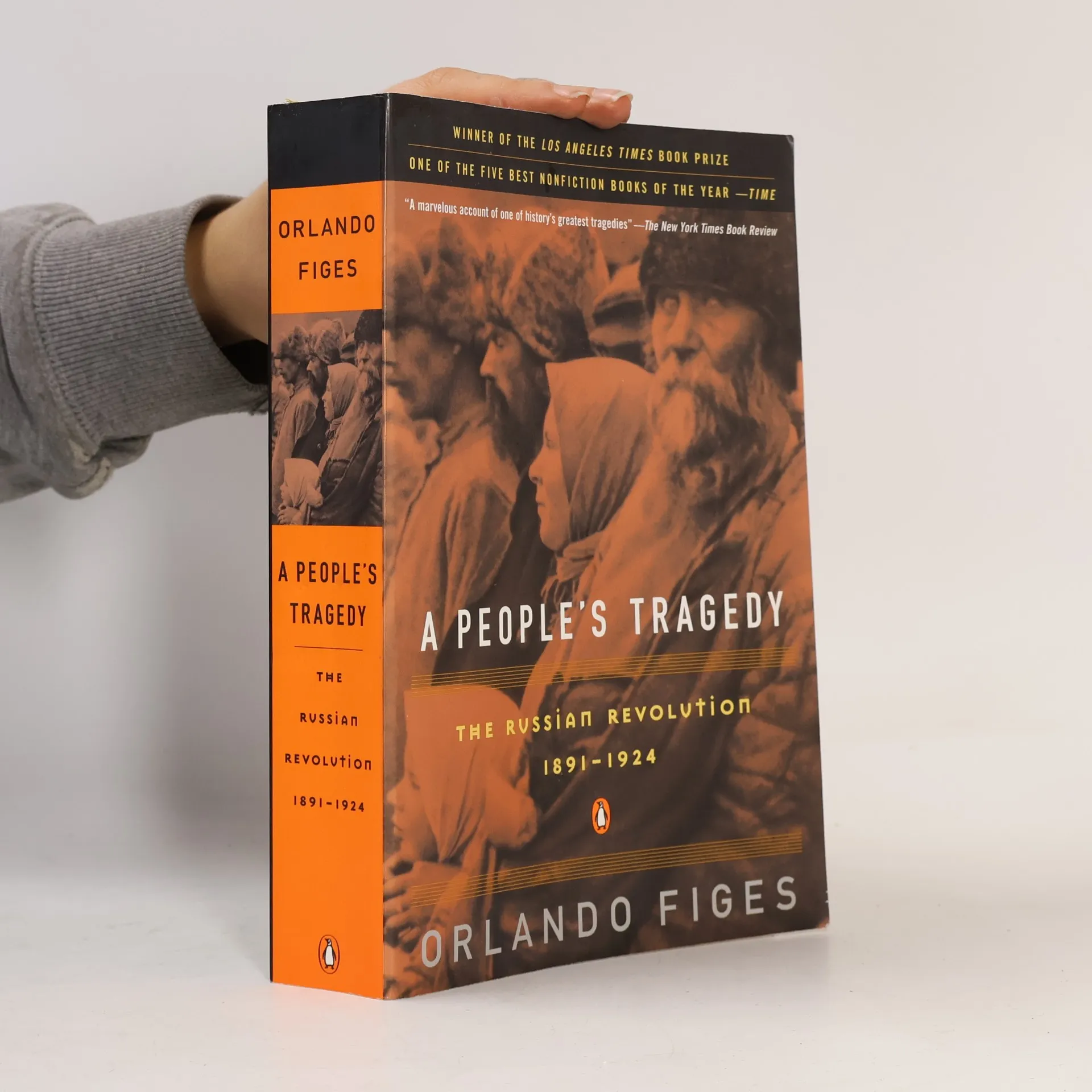
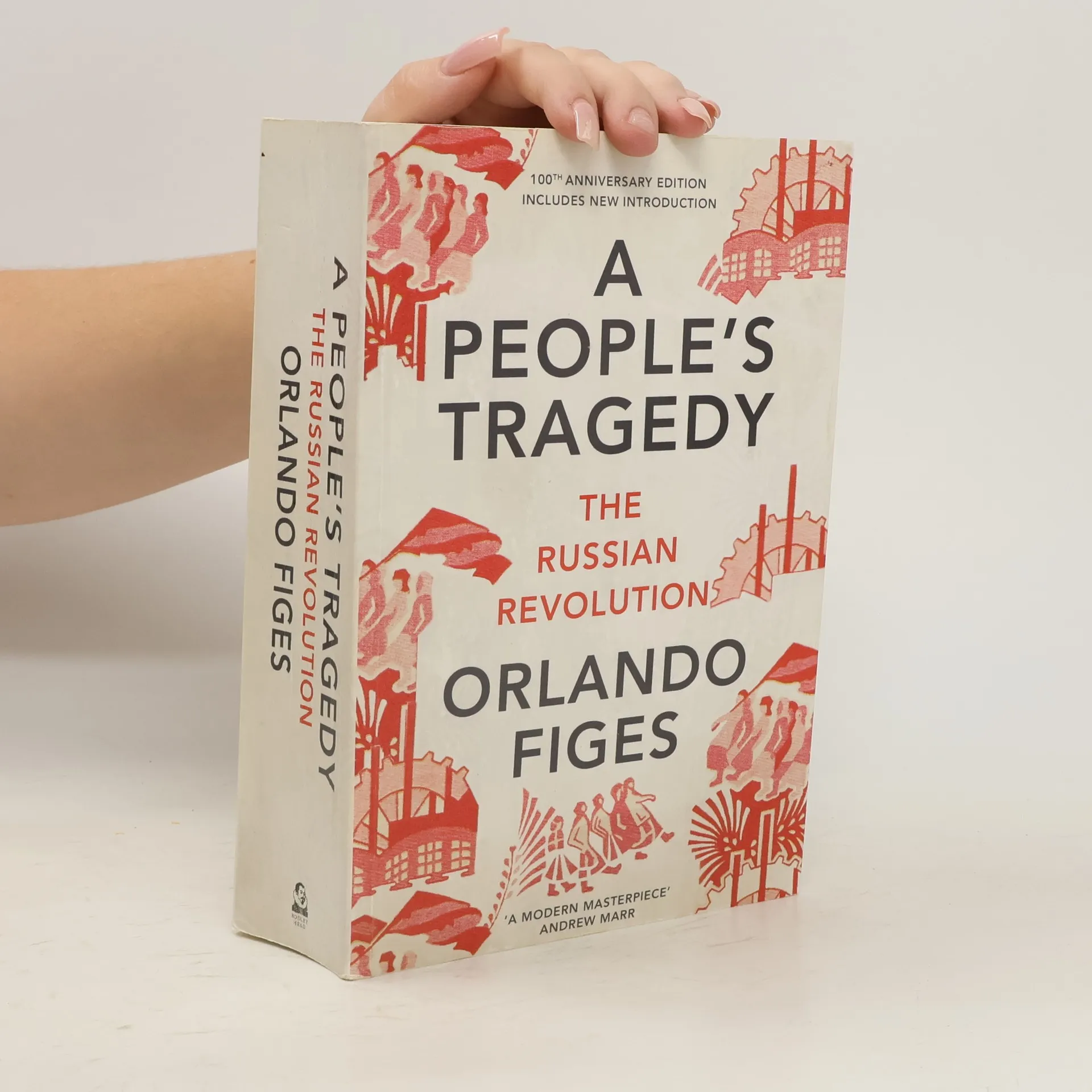
Unrivalled in scope and brimming with human drama, A People's Tragedy is the most vivid, moving and comprehensive history of the Russian Revolution available today. 'A modern masterpiece' Andrew Marr 'The most moving account of the Russian Revolution since Doctor Zhivago' Independent Opening with a panorama of Russian society, from the cloistered world of the Tsar to the brutal life of the peasants, A People's Tragedy follows workers, soldiers, intellectuals and villagers as their world is consumed by revolution and then degenerates into violence and dictatorship. Drawing on vast original research, Figes conveys above all the shocking experience of the revolution for those who lived it, while providing the clearest and most cogent account of how and why it unfolded. Illustrated with over 100 photographs and now including a new introduction that reflects on the revolution's centennial legacy, A People's Tragedy is a masterful and definitive record of one of the most important events in modern history.
Russia under the old regime - The crisis of authority - Russia in revolution (February 1917-March 1918) - The civil war and the making of the Soviet system (1918-24); Lenin - Marx - Stalin - Kerensky - Trotskysk_____________
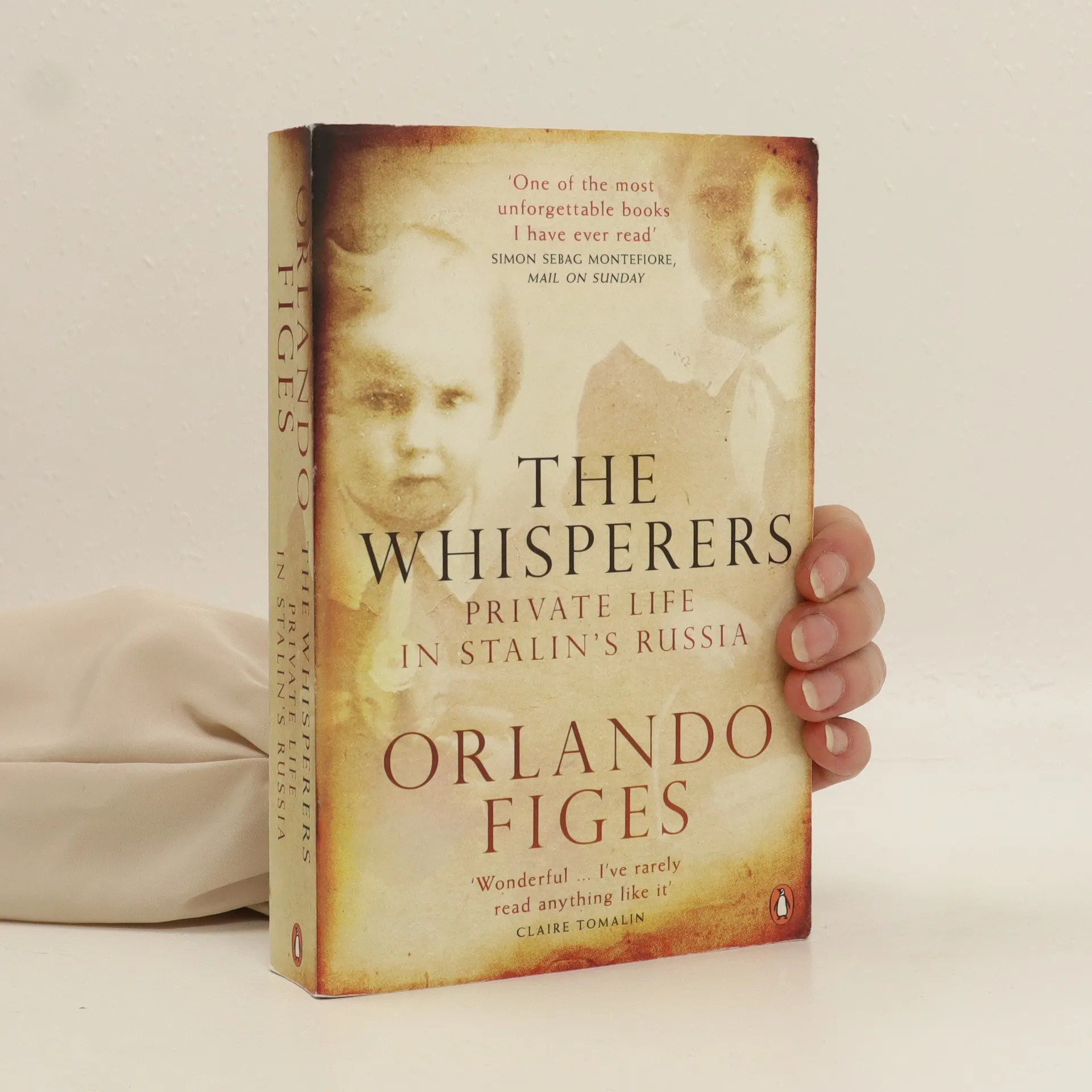
Drawing on a huge range of sources - letters, memoirs, conversations - Orlando Figes tells the story of how Russians tried to endure life under Stalin. Those who shaped the political system became, very frequently, its victims. Those who were its victims were frequently quite blameless. The Whisperers recreates the sort of maze in which Russians found themselves, where an unwitting wrong turn could either destroy a family or, perversely, later save it- a society in which everyone spoke in whispers - whether to protect themselves, their families, neighbours or friends - or to inform on them.
Vast in scope, based on exhaustive original research, and written with passion, narrative skill and human sympathy, this book offers an account of the Russian Revolution for a new generation.
Magnificent and beautifully written, this book offers an absorbing exploration of how Europe's cultural life transformed throughout the 19th century. It is a massively impressive work that combines enjoyment with deep knowledge, providing insights into the mechanisms of history and the individuals who shape it. The narrative revolves around the intertwined lives of three remarkable figures: the great singer Pauline Viardot, the esteemed writer Ivan Turgenev, and Pauline's husband, Louis. Their ambitious lives intersected with a vibrant array of artists navigating a prosperous, pan-European culture born from significant economic and technological changes. Innovations like trains, telegraphs, and printing enabled artists to exchange ideas and thrive across the continent, from the British Isles to Imperial Russia, in a new cosmopolitan age. This masterpiece reveals huge cultural shifts through intimate details and lesser-known stories, particularly highlighting the touching and complex love triangle involving Turgenev and the Viardots. The book refreshes our understanding of pivotal moments in European high culture, allowing readers to appreciate the precariousness of the salons, premieres, and bestsellers that defined the era.
Natasha's Dance conjures up the whole panorama of Russia's mighty culture, in a way that is fresh, intimate and immediate. Whether talking about music or novels, buildings or paintings, Orlando Fige's narrative should sweep the reader along through a series of set-piece chapters.
The Europeans is a richly enthralling, panoramic cultural history of nineteenth-century Europe, told through the intertwined lives of three remarkable people- a great singer, Pauline Viardot, a great writer, Ivan Turgenev, and a great connoisseur, Pauline's husband Louis. Their ambitious lives and complex loves were bound up with an astonishing array of writers, composers and painters all trying to make their way through the exciting, prosperous European cultural landscape that came about as a result of huge economic and technological change. This culture - through trains, telegraphs and printing - allowed artists of all kinds to exchange ideas and make a living, as they travelled across the whole continent from the British Isles to Imperial Russia. The Europeans is Orlando Figes' masterpiece. It describes huge changes through intimate details, little-known stories and through the lens of Turgenev and the Viardots' touching, strange love triangle. Events which we now see as central to European high culture are made completely fresh, allowing the reader to revel in the sheer precariousness with which the great salons, premieres and bestsellers came into existence.
No other country has been so divided over its own past as Russia. None has changed its story so often. How the Russians came to tell their story, and to reinvent it as they went along, is a vital aspect of their history, their culture and beliefs. To understand what Russia's future holds - to grasp what Putin's regime means for Russia and the world - we need to unravel the ideas and meanings of that history.0In The Story of Russia, Orlando Figes brings into sharp relief the vibrant characters that comprise Russia's rich history, and whose stories remain so important in making sense of the world's largest nation today - from the crowning of sixteen-year-old Ivan the Terrible in a candlelit cathedral, to Catherine the Great, riding out in a green uniform to arrest her husband at his palace, to the bitter last days of the Romanovs.0Beautifully written and based on a lifetime of scholarship, The Story of Russia is a major and definitive work from the great storyteller of Russian history: sweeping, suspenseful, masterful