This synthesis of Greek religion aims to provide a structured survey for classical scholars and students, and provides an account of a polytheistic religious system. The text builds up a picture of the current state of knowledge about the religion of the Ancient Greeks.
Walter Burkert Boeken
2 februari 1931 – 11 maart 2015
Walter Burkert was een Duitse geleerde van de Griekse mythologie en cultuur. Als Emeritus Hoogleraar Klassieke Talen aan de Universiteit van Zürich, Zwitserland, doceerde hij ook in het Verenigd Koninkrijk en de VS. Zijn werk dook in de diepe wortels van religieuze rituelen en hun verband met mythen. Hij onderzocht archetypische patronen in de Griekse religie en hun invloed op het latere denken.


Violent Origins
- 292bladzijden
- 11 uur lezen
Includes papers and conversations that derive from a conference that pursued the possibility and utility of a general theory of religion and culture, especially one based on violence.
Savage energies
- 152bladzijden
- 6 uur lezen
We often think of classical Greek society as a model of rationality and order. Yet as Walter Burkert demonstrates in these influential essays on the history of Greek religion, there were archaic, savage forces surging beneath the outwardly calm face of classical Greece, whose potentially violent and destructive energies, Burkert argues, were harnessed to constructive ends through the interlinked uses of myth and ritual. For example, in a much-cited essay on the Athenian religious festival of the Arrephoria, Burkert uncovers deep connections between this strange nocturnal ritual, in which two virgin girls carried sacred offerings into a cave and later returned with something given to them there, and tribal puberty initiations by linking the festival with the myth of the daughters of Kekrops. Other chapters explore the origins of tragedy in blood sacrifice; the role of myth in the ritual of the new fire on Lemnos; the ties between violence, the Athenian courts, and the annual purification of the divine image; and how failed political propaganda entered the realm of myth at the time of the Persian Wars.
Homo Necans
- 360bladzijden
- 13 uur lezen
Blood sacrifice, the ritual slaughter of animals, has been basic to religion through history, so that it survives in spiritualized form even in Christianity. How did this violent phenomenon achieve the status of the sacred? This study examines this question.
Babylon, Memphis, Persepolis
- 192bladzijden
- 7 uur lezen
Traverses the ancient world's three great centres of cultural exchange - Babylonian Nineveh, Egyptian Memphis, and Iranian Persepolis - to situate classical Greece in its proper historical place, at the Western margin of a Near Eastern-Aegean cultural community that emerged in the Bronze Age and... číst celé
Ancient Mystery Cults
- 192bladzijden
- 7 uur lezen
The foremost historian of Greek religion providers the first comprehensive, comparative study of a little-known aspect of ancient religious beliefs and practices.
Creation of the Sacred
- 272bladzijden
- 10 uur lezen
Sacrifice - ranging from the sacrifice of virgins to circumcision to giving up what is most valued - is essential to all religions. Could there be a natural, even biological, reason? This book explores the possibility of natural religion, providing insights into religious thought.
Walter Burkert ist einer der profiliertesten und bedeutendsten Forscher zur griechisch-römischen Antike der Gegenwart. Band V der Kleinen Schriften gilt wie der bereits vorliegende Band III (»Mystica, Orphica, Pythagorica«) und Band IV dem Zentrum von Burkerts wissenschaftlichem Schaffen, der antiken Religion. Band V konzentriert sich ausschließlich auf das Ritual, das seit »Homo Necans« (1972) Burkerts originellstes Anliegen war.
Řecké náboženství archaické a klasické doby
- 440bladzijden
- 16 uur lezen
Edice Světová náboženství. Vynikající kniha švýcarského religionisty prof. Waltera Burkerta představuje dnes v rámci zkoumání řeckého náboženství klasické dílo. Jejím významným přínosem je, že nepohlíží na předmět svého zájmu z hlediska historického či mytologického, nýbrž především s ohledem na náboženskou praxi - kult a rituály, které jsou pro archaické a klasické období doloženy. Zabývá se tedy skutečným náboženským životem starověkého člověka. Úvodní kapitola shrnuje poznatky o době minojské a mykénské, dále se pak autor orientuje spíše po tématech než po časové ose (odd. II. Rituál a svatyně, III. Bohové, IV. Mrtví, héroové a chtonická božstva, V. Polis a polytheismus, VI. Mystéria a askeze, VII. Filosofické náboženství). Burkertův výklad, kromě toho, že je doložen bohatými doklady a odkazy na primární i sekundární literaturu, je velmi čtivý, což jej činí oblíbenou příručkou studentů i badatelů v oblasti řeckého náboženství i náboženství obecně, o čemž svědčí i několik vydání v angličtině a dalších jazycích (naposledy vydání italské). Součástí knihy je důkladný aparát. Pro české vydání byla kniha doplněna o aktuální poznatky a odkazy na nově vyšlou literaturu.
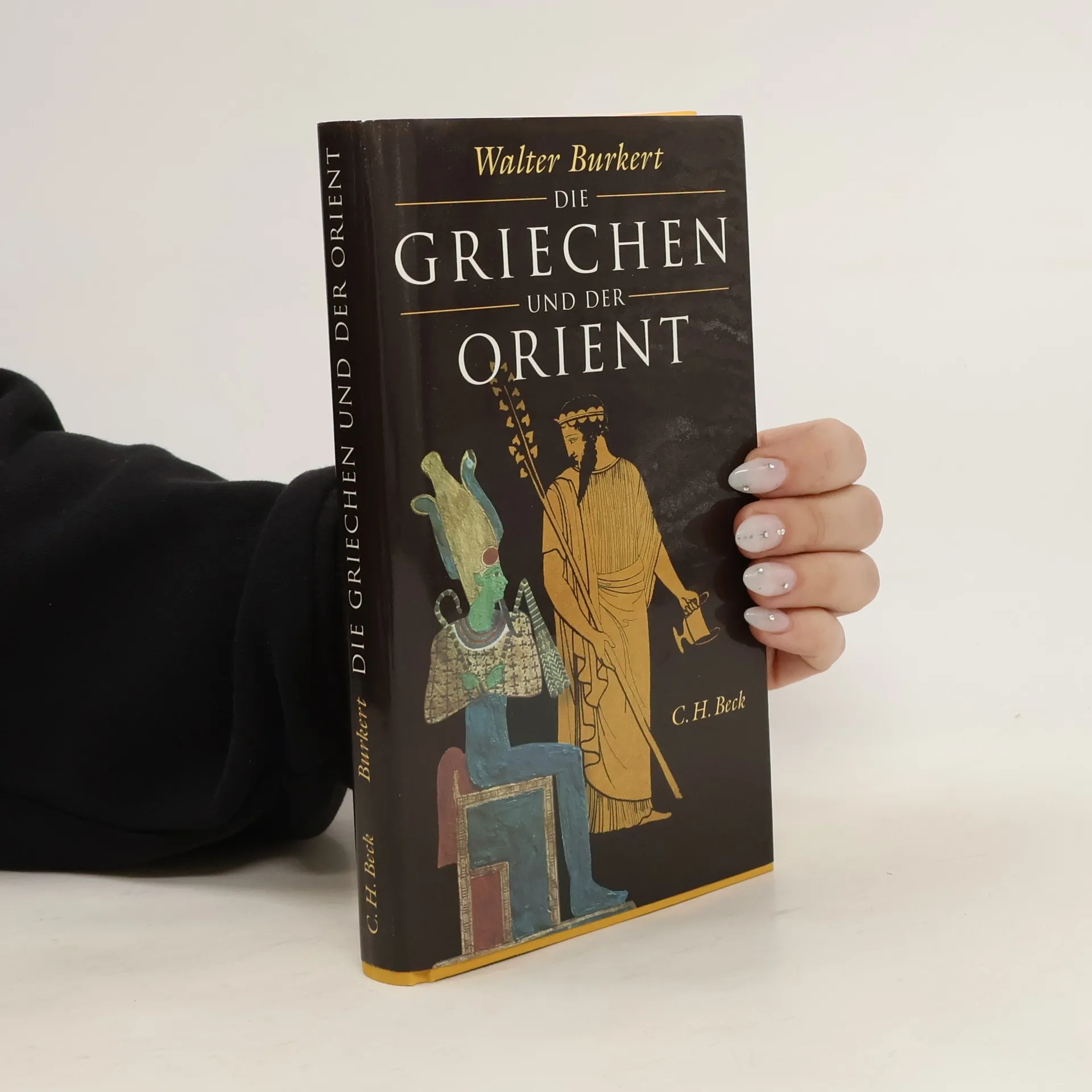
Die Griechen und der Orient
- 180bladzijden
- 7 uur lezen
Walter Burkert zeigt in seinem glänzend geschriebenen Werk, wann und über welchen Feldern ihrer Kultur den Griechen das Licht im Osten aufging: So beschreibt er die Rezeption des Alphabets und der orientalischen Schriftkultur durch die Griechen, die Anverwandlung orientalischer Mythen in den Werken Homers, ferner die Spuren orientalischer Weisheitslehren in der Gedankenwelt der Vorsokratiker, die Reflexe ägyptischer Heilsvorstellungen in der orphischen Religion und schließlich die Faszination der „Magier“ genannten persischen Priester für die Griechen. „Was immer die Griechen von den Barbaren übernehmen, arbeiten sie in schönerer Weise aus.“ Bevor man in Platons Schule diesen Satz formulieren konnte, hatten die Griechen bereits über Jahrhunderte in - nicht immer ganz ungefährlichem - Kontakt mit dem Orient gestanden. Und bevor die Griechen damit beginnen konnten, etwas besser zu machen als ihre Vorbilder, befanden sie sich erst einmal eine lange Zeit in der Rolle des Schülers, zumindest aber in der Rolle des Empfängers, was die Einflüsse der orientalischen Hochkulturen betrifft. Eine Vielzahl anschaulicher Beispiele verdeutlicht die Fülle der Bezüge zwischen griechischer und orientalischer Kultur und macht die Lektüre dieses Buches zu einer wahren Entdeckungsreise in die Anfänge der abendländischen Geisteswelt.
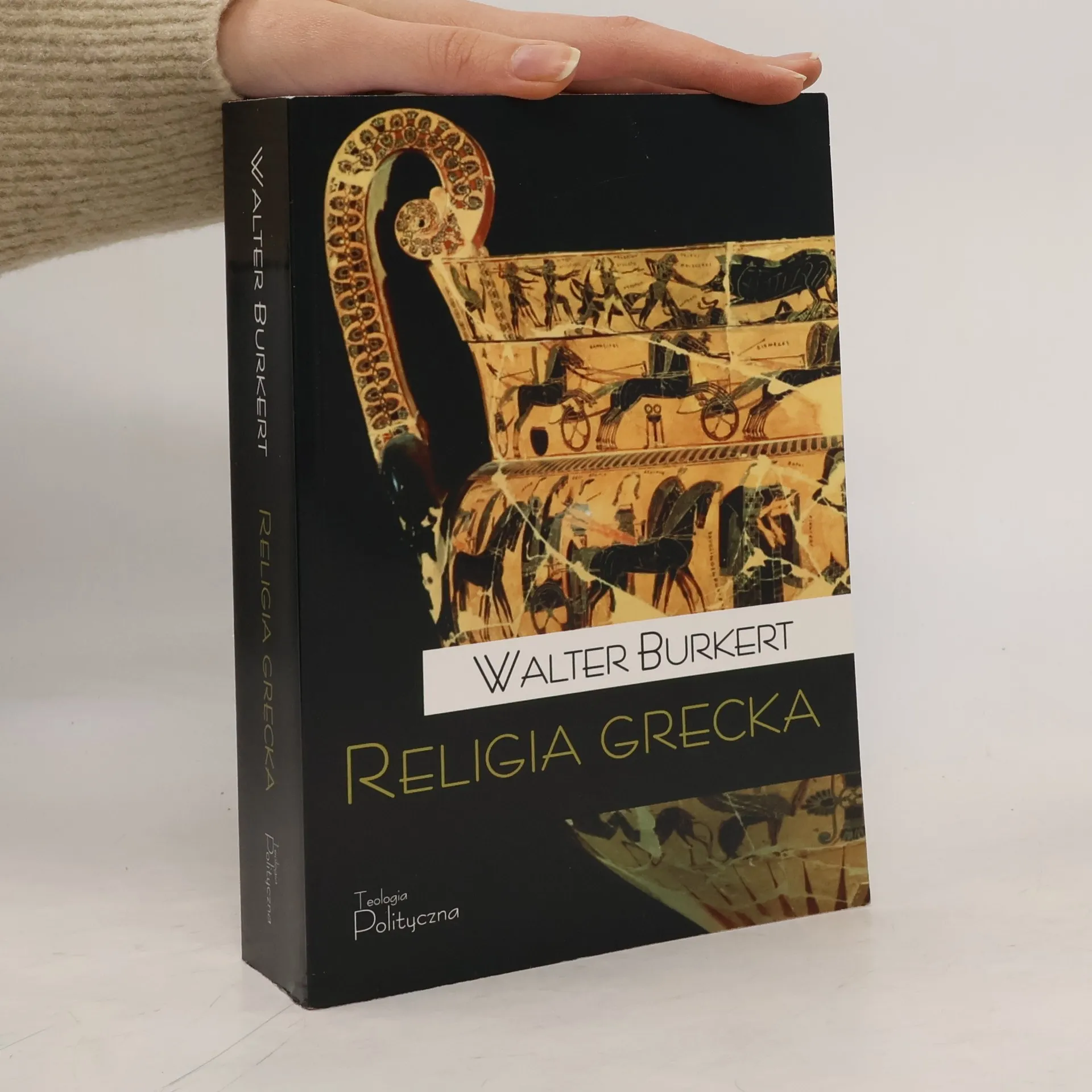
Religia grecka
- 944bladzijden
- 34 uur lezen
„Religia grecka” Waltera Burkerta to fundamentalne dzieło naukowe jednego z najważniejszych współczesnych badaczy dziejów religii starożytnych Greków, będące jego opus magnum. W książce tej, dotychczas niepublikowanej w języku polskim, Burkert dąży do uchwycenia szczególnego, lecz zarazem w pewien sposób paradygmatycznego dla badań z zakresu historii religii prowadzonych w kręgu kultury europejskiej, fenomenu religii greckiej od strony rytuału i mitu, śledząc zarówno praktyki religijne, jak i ich objaśnienia w formie opowieści.
Platon in Nahaufnahme
- 40bladzijden
- 2 uur lezen
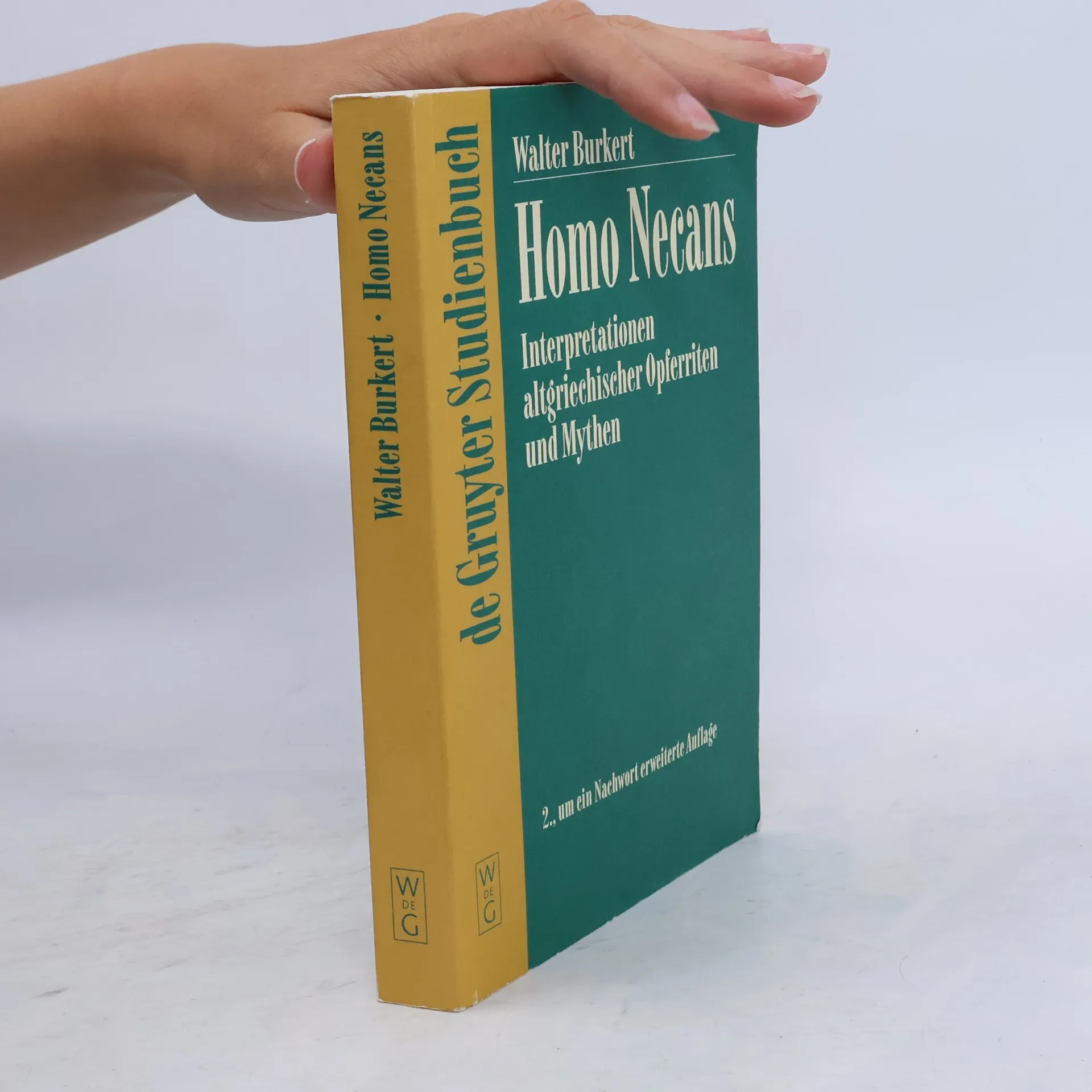
Homo Necans
Interpretationen altgriechischer Opferriten und Mythen
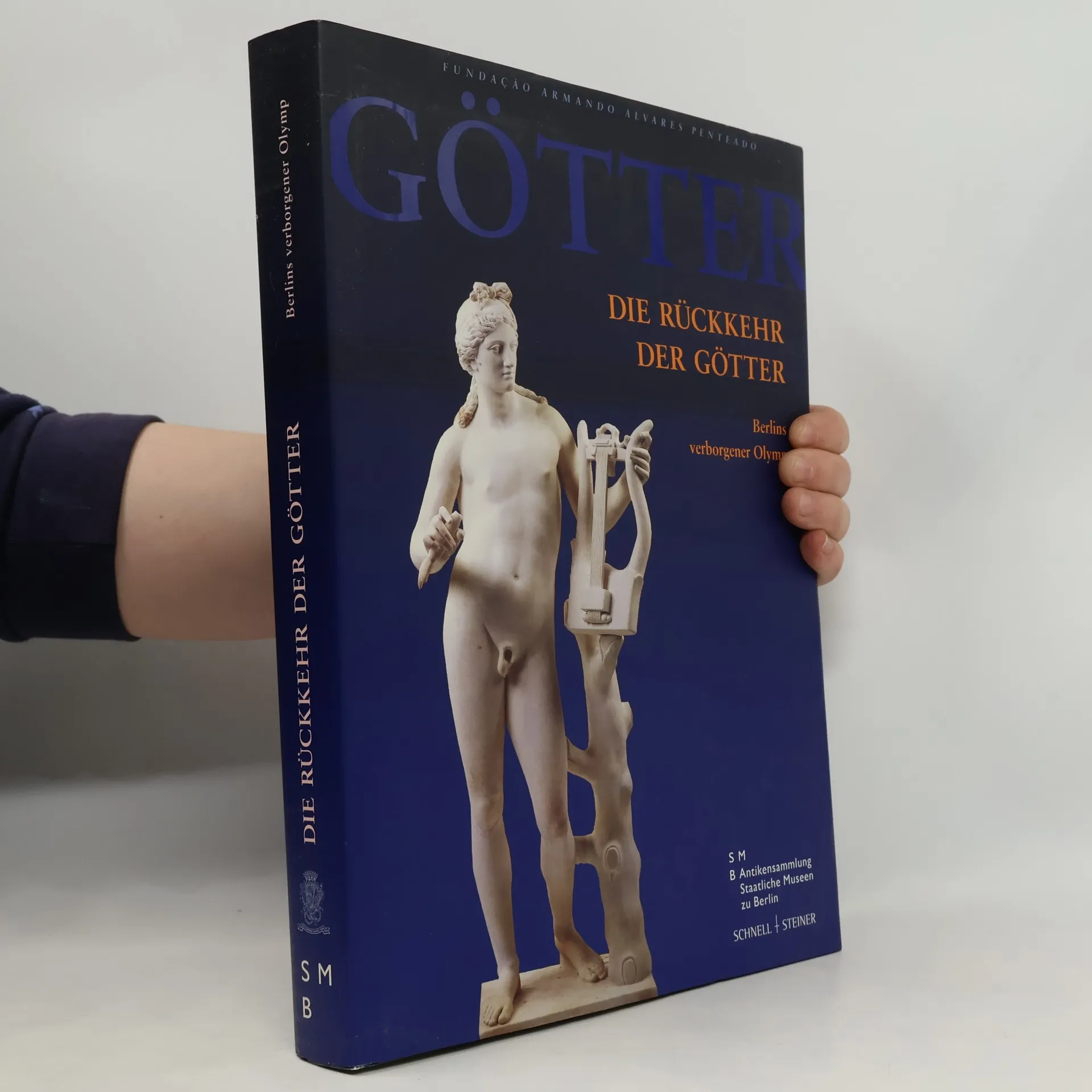
This splendid book accompanied an exhibition first shown in Sao Paolo (Brasil) in 2006 which is now on in the Berlin located Pergamon Museum. Almost 200 pieces of art from the Berlin antiques collection are featured in essays, concise short descriptions as well as brilliantly photographed. The catalogue opens a great insight into ancient Greek mythology and its transformation into the Roman Empire's time, as seen from the latest state in research. The different generations of Olympus gods and goddesses are introduced with the background of antique believe, cult practice and sacred locations. The Berlin Pergamon Museum is undoubtedly one of the best equipped and best displayed museums in the world on old Greek sculpture and culture.
German, French