

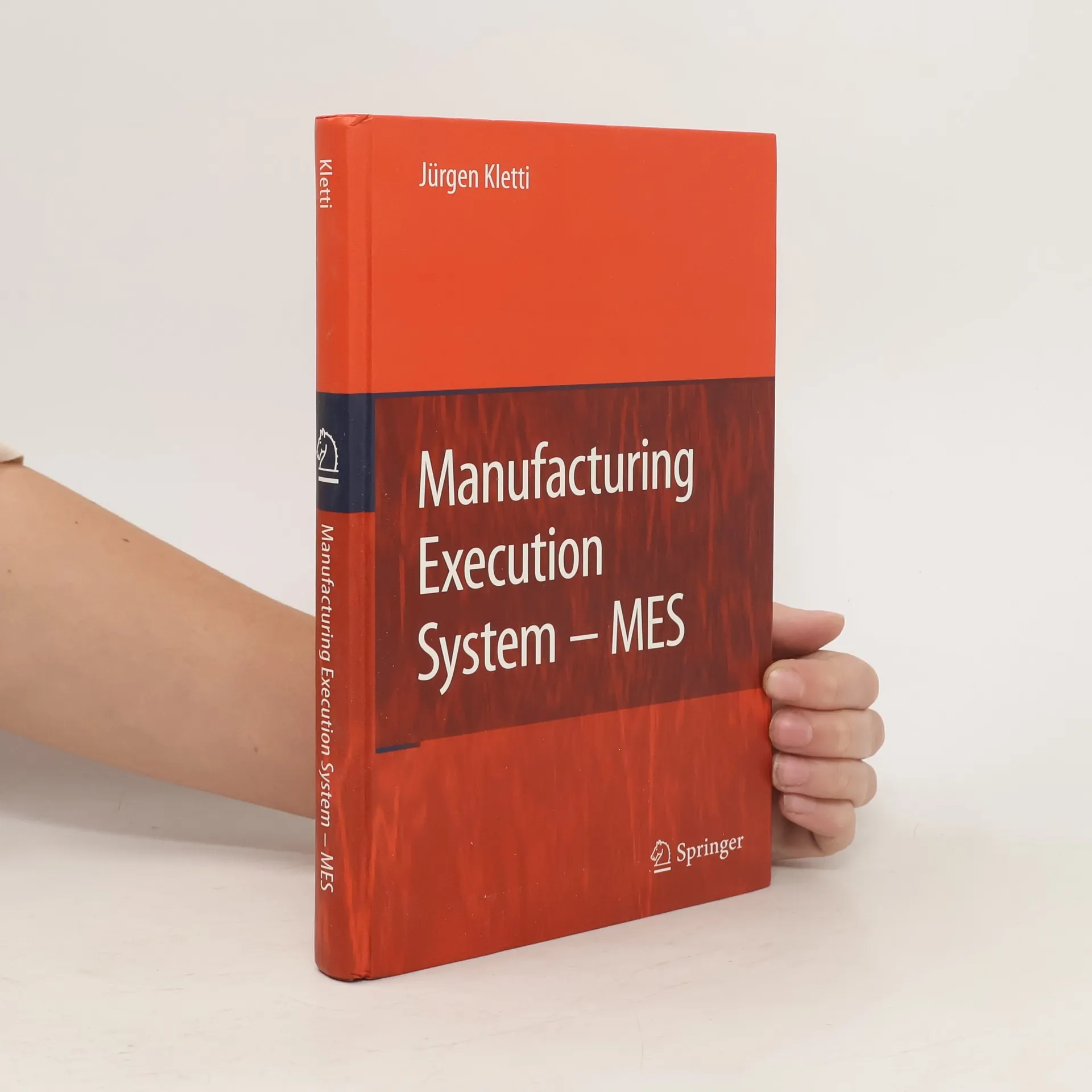


Meer over het boek
The transformation of traditional factories into modern service centers has created management challenges that many companies are unprepared for. Economic efficiency now hinges on process capability rather than just production capability. This shift emphasizes that a company's potential lies in its ability to optimize processes, aligning all value-adding activities with customer outcomes. Achieving process transparency is essential, requiring real-time mapping of the value stream without significant investment, a capability that surpasses current ERP systems. Modern manufacturing execution systems (MES) now provide real-time applications, generating both current and historical maps of production equipment, which serve as a foundation for optimization processes. Although efforts to enhance machine utilization began in the early 1980s with methods like production data acquisition, the focus has shifted to achieving real-time visibility of the entire value stream, including the supply chain. This evolution reflects the growing need for companies to adapt to a landscape where process efficiency is paramount for success.
Een boek kopen
Manufacturing execution systems - MES, Jürgen Kletti
- Taal

- Jaar van publicatie
- 2007
- Bindwijze
- (Hardcover)
Betaalmethoden
We missen je recensie hier.
- Titel
- Manufacturing execution systems - MES
- Taal
- Engels
- Auteurs
- Jürgen Kletti
- Uitgever
- Springer
- Jaar van publicatie
- 2007
- Formaat
- Hardcover
- Aantal pagina's
- 272
- ISBN10
- 3540497439
- ISBN13
- 9783540497431
- Reeks
- Categorieën
- Tags
- Handel
- Beoordeling
- 2,65 van 5
- Aantekening
- The transformation of traditional factories into modern service centers has created management challenges that many companies are unprepared for. Economic efficiency now hinges on process capability rather than just production capability. This shift emphasizes that a company's potential lies in its ability to optimize processes, aligning all value-adding activities with customer outcomes. Achieving process transparency is essential, requiring real-time mapping of the value stream without significant investment, a capability that surpasses current ERP systems. Modern manufacturing execution systems (MES) now provide real-time applications, generating both current and historical maps of production equipment, which serve as a foundation for optimization processes. Although efforts to enhance machine utilization began in the early 1980s with methods like production data acquisition, the focus has shifted to achieving real-time visibility of the entire value stream, including the supply chain. This evolution reflects the growing need for companies to adapt to a landscape where process efficiency is paramount for success.