



Meer over het boek
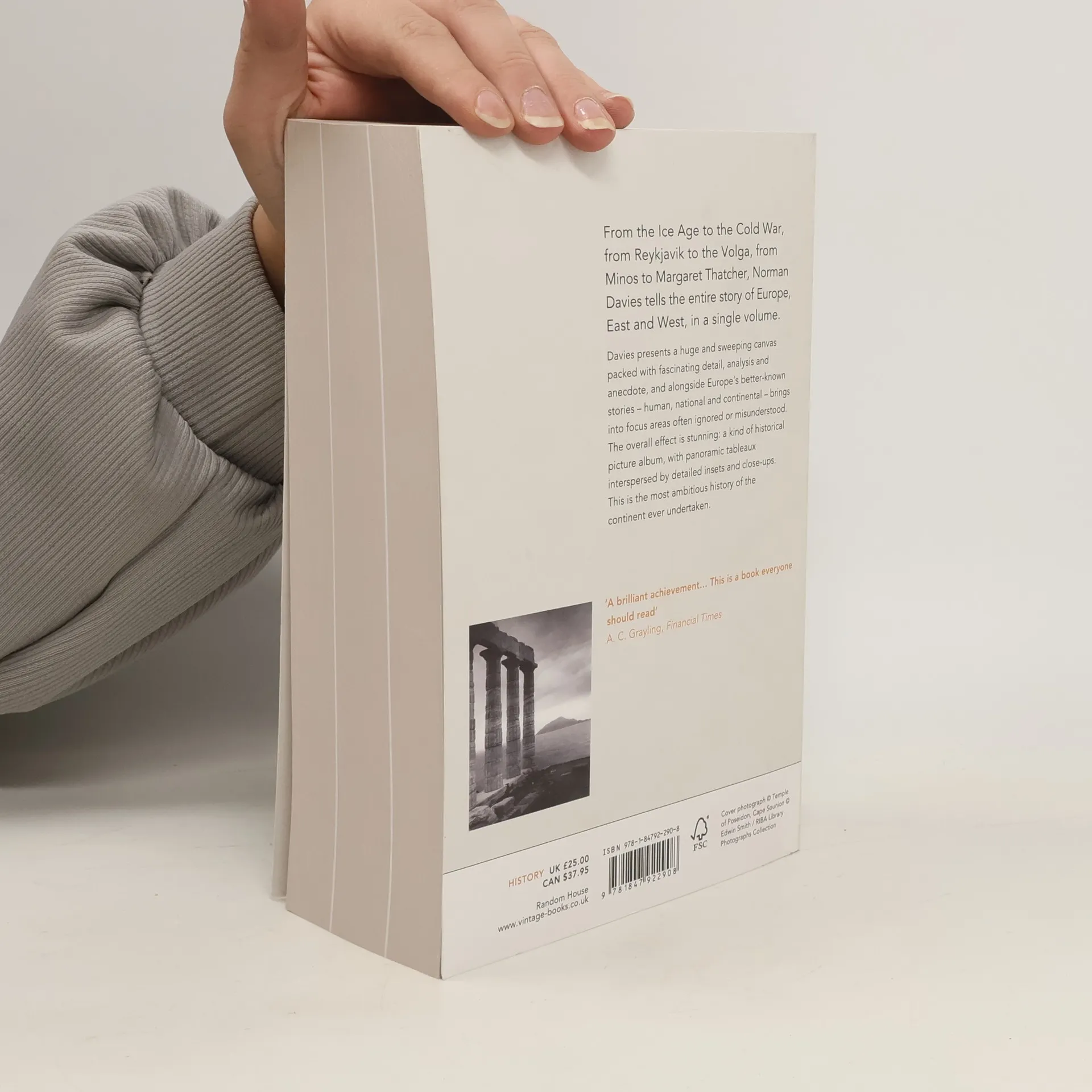
From the ice age to the Cold War, from Reykjavik to the Volga, from Minos to Margaret Thatcher, Norman Davies here tells the entire history of Europe in one single volume. The narrative zooms in from the distant focus of Chapter One, which explores the first five million years of the continent's development, to the close focus of the last two chapters, which cover the twentieth century at roughly one page per year. In between, Norman Davies presents a vast canvas packed with startling detail and thoughtful analysis. Alongside Europe's better-known stories - human, national and international - he examines subjects often spurned or neglected - Europe's stateless nations, for example, as well as the nation-states and great powers, and the minority groups from heretics and lepers to Romanies, Jews, and Muslims. He reveals not only the rich diversity of Europe's past but also the numerous prisms through which it can be viewed.




Een boek kopen
Europe: a history, Norman Davies
- Taal

- Jaar van publicatie
- 2014
- Bindwijze
- (Paperback)
Betaalmethoden
We missen je recensie hier.
- Titel
- Europe: a history
- Taal
- Engels
- Auteurs
- Norman Davies
- Uitgever
- Bodley Head
- Jaar van publicatie
- 2014
- Formaat
- Paperback
- Aantal pagina's
- 1392
- ISBN10
- 1847922902
- ISBN13
- 9781847922908
- Reeks
- Tags
- Non-fictie, Sociale Wetenschappen, Historisch thema, Geschiedenis, Politicologie & Politiek, Politiek, Europa, Geschiedenis van Europa
- Beoordeling
- 4,2 van 5
- Aantekening
- From the ice age to the Cold War, from Reykjavik to the Volga, from Minos to Margaret Thatcher, Norman Davies here tells the entire history of Europe in one single volume. The narrative zooms in from the distant focus of Chapter One, which explores the first five million years of the continent's development, to the close focus of the last two chapters, which cover the twentieth century at roughly one page per year. In between, Norman Davies presents a vast canvas packed with startling detail and thoughtful analysis. Alongside Europe's better-known stories - human, national and international - he examines subjects often spurned or neglected - Europe's stateless nations, for example, as well as the nation-states and great powers, and the minority groups from heretics and lepers to Romanies, Jews, and Muslims. He reveals not only the rich diversity of Europe's past but also the numerous prisms through which it can be viewed.