



Meer over het boek
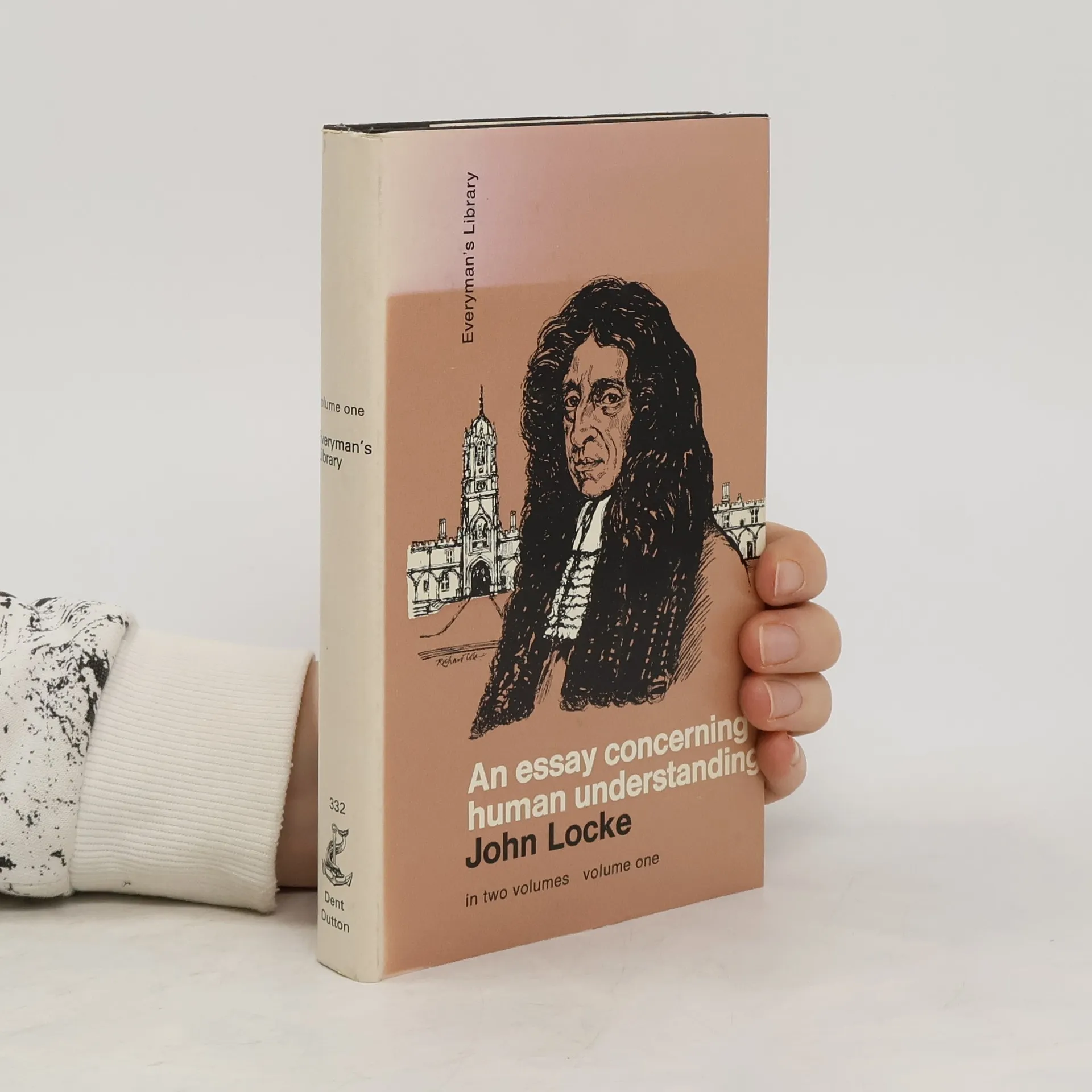
An Essay Concerning Human Understanding is a significant work by John Locke that explores the foundation of human knowledge. First published in 1689, it presents the mind at birth as a blank slate, later filled through experience. This essay is a key source of empiricism in modern philosophy and has influenced Enlightenment thinkers like David Hume and George Berkeley. In Book I, Locke refutes the rationalist idea of innate ideas. Book II elaborates on his theory of ideas, distinguishing between simple ideas, such as colors and shapes, and complex ideas, which include numbers and abstract concepts. He differentiates between primary qualities of objects, like shape and motion, and secondary qualities, such as color and taste, asserting that the latter depend on the former. Additionally, Locke presents a psychological criterion for personal identity. Book III focuses on language, while Book IV addresses knowledge, covering topics like intuition, mathematics, moral philosophy, natural science, faith, and opinion. Through these discussions, Locke lays the groundwork for understanding human cognition and the nature of knowledge, shaping future philosophical discourse.





Een boek kopen
An Essay Concerning Human Understanding, John Locke
- Taal

- Jaar van publicatie
- 1964
- Bindwijze
- (Hardcover)
Betaalmethoden
We missen je recensie hier.
- Taal
- Engels
- Auteurs
- John Locke
- Jaar van publicatie
- 1964
- Formaat
- Hardcover
- Aantal pagina's
- 380
- ISBN10
- 0460003321
- ISBN13
- 9780460003322
- Reeks
- Tags
- Non-fictie, Sociale Wetenschappen, Waargebeurde verhalen, Politicologie & Politiek, Psychologische thema’s, Filosofisch thema, Politiek, Opiniejournalistiek & Essays, Kennisleer
- Eerste editie
- 1690
- Oorspronkelijke titel
- An Essay Concerning Human Understanding
- Beoordeling
- 3,85 van 5
- Aantekening
- An Essay Concerning Human Understanding is a significant work by John Locke that explores the foundation of human knowledge. First published in 1689, it presents the mind at birth as a blank slate, later filled through experience. This essay is a key source of empiricism in modern philosophy and has influenced Enlightenment thinkers like David Hume and George Berkeley. In Book I, Locke refutes the rationalist idea of innate ideas. Book II elaborates on his theory of ideas, distinguishing between simple ideas, such as colors and shapes, and complex ideas, which include numbers and abstract concepts. He differentiates between primary qualities of objects, like shape and motion, and secondary qualities, such as color and taste, asserting that the latter depend on the former. Additionally, Locke presents a psychological criterion for personal identity. Book III focuses on language, while Book IV addresses knowledge, covering topics like intuition, mathematics, moral philosophy, natural science, faith, and opinion. Through these discussions, Locke lays the groundwork for understanding human cognition and the nature of knowledge, shaping future philosophical discourse.