



Parameters
- 1008bladzijden
- 36 uur lezen
Meer over het boek
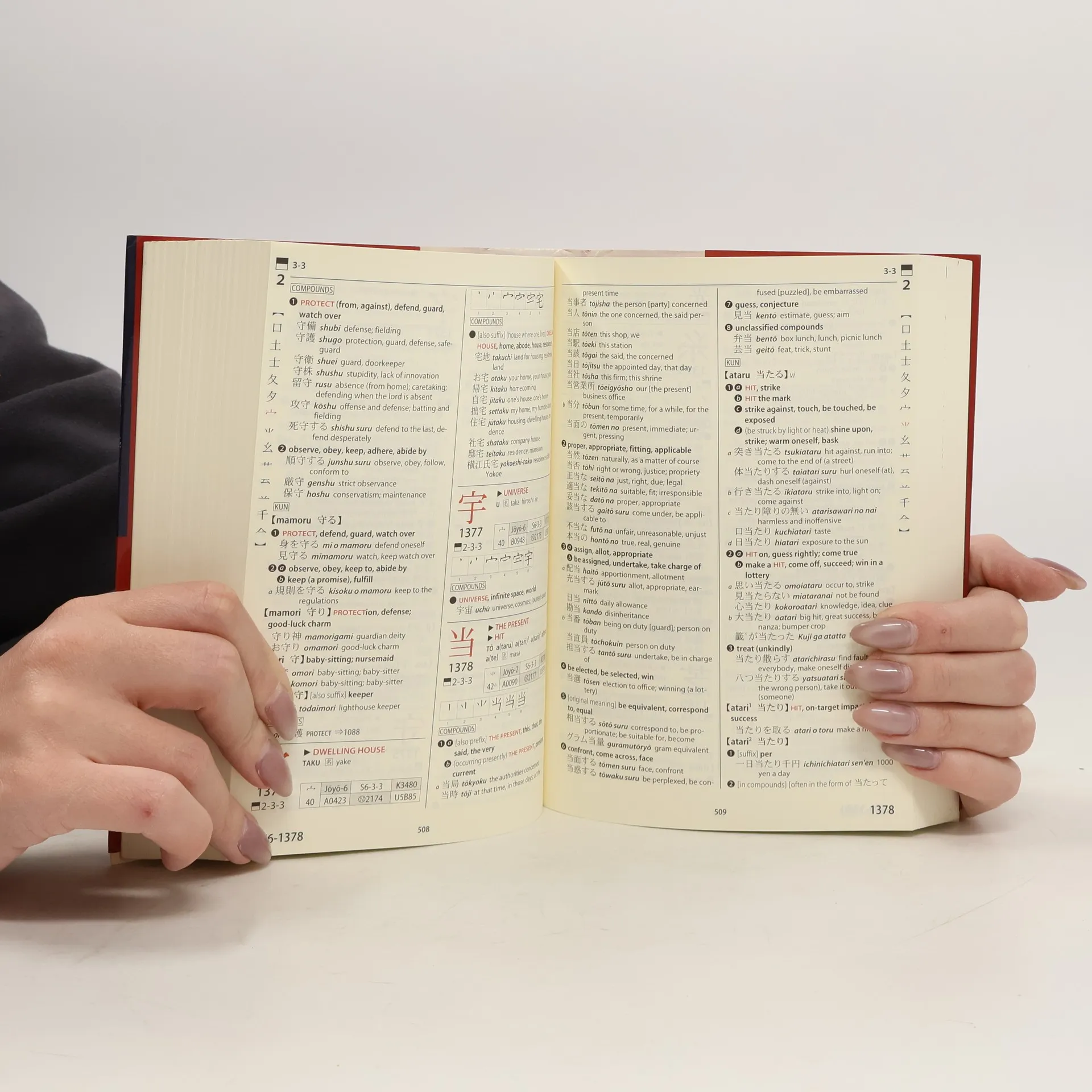
To read Japanese, students need to recognize over 2,000 kanji. This dictionary includes all these kanji and over 20,000 frequently used compounds formed from them. Unlike traditional kanji dictionaries, it is user-friendly, allowing for quicker and easier lookup using four patterns instead of 214. Kanji and their compounds are arranged by core meanings, helping students understand the interrelation of individual kanji meanings and their compounds. This approach aids in finding English equivalents and enhances comprehension of kanji functionality. Additionally, the dictionary offers various tools for students. There are five lookup methods, each serving a distinct purpose. Guides on the corners and margins of pages assist in locating specific kanji. Confusing kanji are cross-referenced for easy comparison. Stroke order is presented in sequential frames, and the frequency of each kanji's appearance in Japanese newspapers is noted. For digital users, JIS and Unicode numbers are also included, making this resource comprehensive and accessible for learners.


Een boek kopen
The Kodansha Kanji learner's dictionary, Jack Halpern
- Taal

- Jaar van publicatie
- 2001
- product-detail.submit-box.info.binding
- (Paperback)
Betaalmethoden
We missen je recensie hier.
- Taal
- Engels
- Auteurs
- Jack Halpern
- Uitgever
- Kodansha International
- Jaar van publicatie
- 2001
- Formaat
- Paperback
- Aantal pagina's
- 1008
- ISBN10
- 4770028555
- ISBN13
- 9784770028556
- Reeks
- Tags
- Non-fictie, Sociale Wetenschappen, Studieboeken, Handleidingen en Gidsen, Talen, Taalwoordenboeken, Japan, Japanse literatuur
- Beoordeling
- 4,45 van 5
- Aantekening
- To read Japanese, students need to recognize over 2,000 kanji. This dictionary includes all these kanji and over 20,000 frequently used compounds formed from them. Unlike traditional kanji dictionaries, it is user-friendly, allowing for quicker and easier lookup using four patterns instead of 214. Kanji and their compounds are arranged by core meanings, helping students understand the interrelation of individual kanji meanings and their compounds. This approach aids in finding English equivalents and enhances comprehension of kanji functionality. Additionally, the dictionary offers various tools for students. There are five lookup methods, each serving a distinct purpose. Guides on the corners and margins of pages assist in locating specific kanji. Confusing kanji are cross-referenced for easy comparison. Stroke order is presented in sequential frames, and the frequency of each kanji's appearance in Japanese newspapers is noted. For digital users, JIS and Unicode numbers are also included, making this resource comprehensive and accessible for learners.