



Meer over het boek
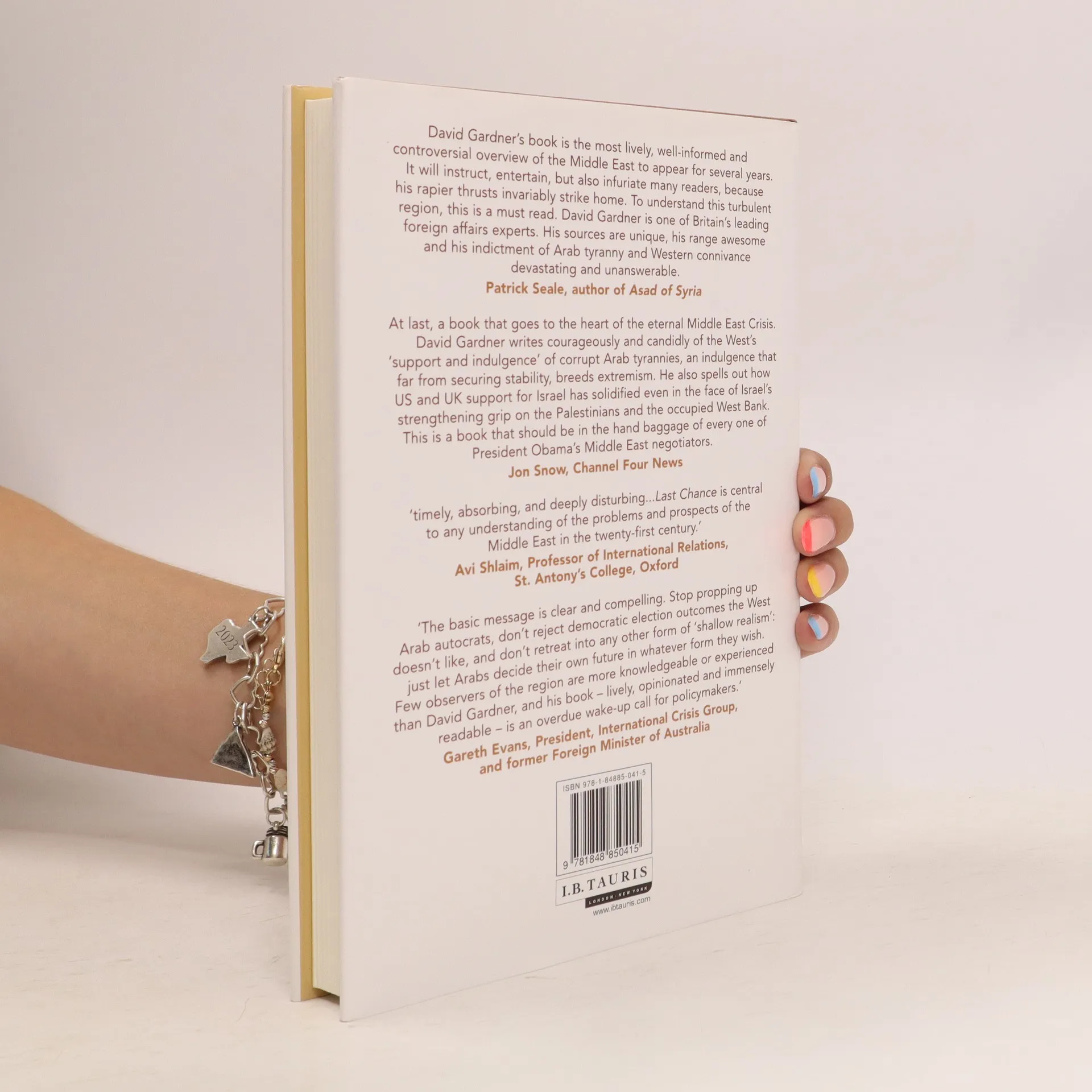
As Barack Obama seeks to chart a new course in American foreign policy, David Gardner addresses the controversial but urgent why is the Middle East so dysfunctional? And what can be done about it?Clear-sighted and never flinching from uncomfortable truths, Gardner draws on his acute grasp of history and decades of experience covering the region to look at why conflict, despotism and sectarianism continue to flourish in the Arab world whilst they decline elsewhere. The supposed ‘Middle East exception’ is in fact, he argues, a product of the West’s own making. By supporting tyrants, fuelling the Israeli-Palestinian conflict and demonizing democratically elected Islamist parties, the West has incubated a region inherently resistant to economic and political reform, and suppurating with resentment. Timely and insightful, Gardner makes the case for a foreign policy revolution for ntohing less than a total reappraisal of what realpolitik means.

Een boek kopen
Last chance. The Middle East in the Balance, David Gardner
- Taal

- Jaar van publicatie
- 2009
- Bindwijze
- (Hardcover)
Betaalmethoden
We missen je recensie hier.
- Titel
- Last chance. The Middle East in the Balance
- Taal
- Engels
- Auteurs
- David Gardner
- Uitgever
- I.B. Tauris
- Jaar van publicatie
- 2009
- Formaat
- Hardcover
- Aantal pagina's
- 288
- ISBN10
- 1848850417
- ISBN13
- 9781848850415
- Reeks
- Tags
- Oorspronkelijke titel
- Last chance
- Beoordeling
- 3,5 van 5
- Aantekening
- As Barack Obama seeks to chart a new course in American foreign policy, David Gardner addresses the controversial but urgent why is the Middle East so dysfunctional? And what can be done about it?Clear-sighted and never flinching from uncomfortable truths, Gardner draws on his acute grasp of history and decades of experience covering the region to look at why conflict, despotism and sectarianism continue to flourish in the Arab world whilst they decline elsewhere. The supposed ‘Middle East exception’ is in fact, he argues, a product of the West’s own making. By supporting tyrants, fuelling the Israeli-Palestinian conflict and demonizing democratically elected Islamist parties, the West has incubated a region inherently resistant to economic and political reform, and suppurating with resentment. Timely and insightful, Gardner makes the case for a foreign policy revolution for ntohing less than a total reappraisal of what realpolitik means.