




Parameters
- 128bladzijden
- 5 uur lezen
Meer over het boek
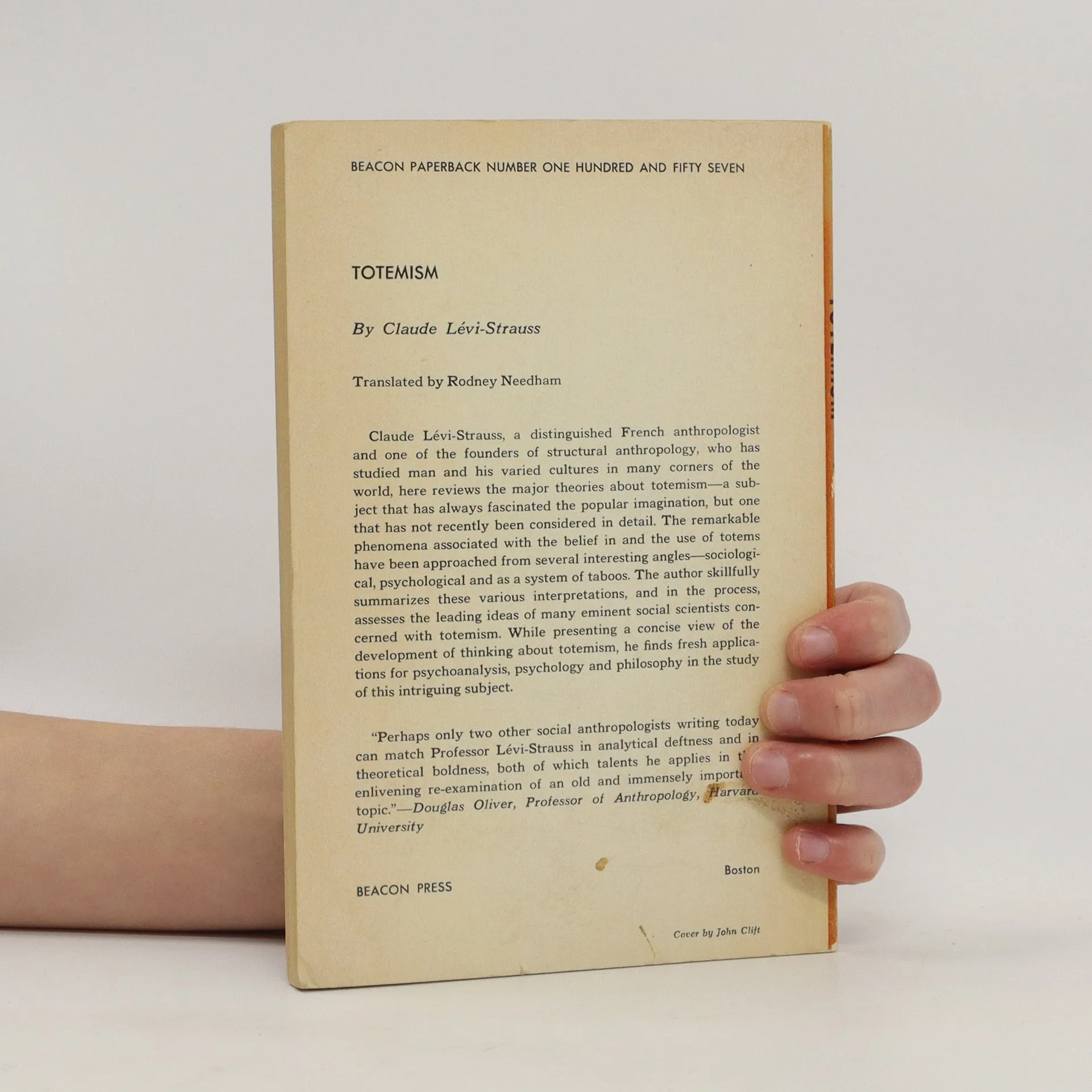
From the back cover: "This work is significant not only for students of anthropology but for students of philosophy and psychology as well. The distinguished anthropologist Claude Lévi-Strauss examines here the great variety of beliefs encompassed by totemism, the attacks to which it has been subject, and the constant attempts to restore useful meaning to it. His account deals with the views of such renowned anthropologists as Boas, van Gennep, Elkin, Fortes, Firth, Evans-Pritchard, and Radcliffe-Brown; it also brings to light some neglected observations by Bergson and Rousseau. In reviewing the major theories about totemism, the author notes that it has gradually come to be understood not as a distinctive institution, but as a way of thinking which is as characteristic of our own thinking as it is of the "primitives" for whom totemism was an integral part of life.




Een boek kopen
Totemism, Claude LéviStrauss
- Taal

- Jaar van publicatie
- 1963
- product-detail.submit-box.info.binding
- (Paperback)
Betaalmethoden
We missen je recensie hier.
- Titel
- Totemism
- Taal
- Engels
- Auteurs
- Claude LéviStrauss
- Uitgever
- Beacon Press
- Jaar van publicatie
- 1963
- Formaat
- Paperback
- Aantal pagina's
- 128
- ISBN10
- 080704671X
- ISBN13
- 9780807046715
- Reeks
- Tags
- Non-fictie, Sociale Wetenschappen, Psychologische thema’s, Filosofisch thema, Wetenschap, Mythologie, Antropologie, Totems
- Eerste editie
- 1962
- Oorspronkelijke titel
- Le Totémisme aujourd'hui
- Beoordeling
- 3,8 van 5
- Aantekening
- From the back cover: "This work is significant not only for students of anthropology but for students of philosophy and psychology as well. The distinguished anthropologist Claude Lévi-Strauss examines here the great variety of beliefs encompassed by totemism, the attacks to which it has been subject, and the constant attempts to restore useful meaning to it. His account deals with the views of such renowned anthropologists as Boas, van Gennep, Elkin, Fortes, Firth, Evans-Pritchard, and Radcliffe-Brown; it also brings to light some neglected observations by Bergson and Rousseau. In reviewing the major theories about totemism, the author notes that it has gradually come to be understood not as a distinctive institution, but as a way of thinking which is as characteristic of our own thinking as it is of the "primitives" for whom totemism was an integral part of life.