

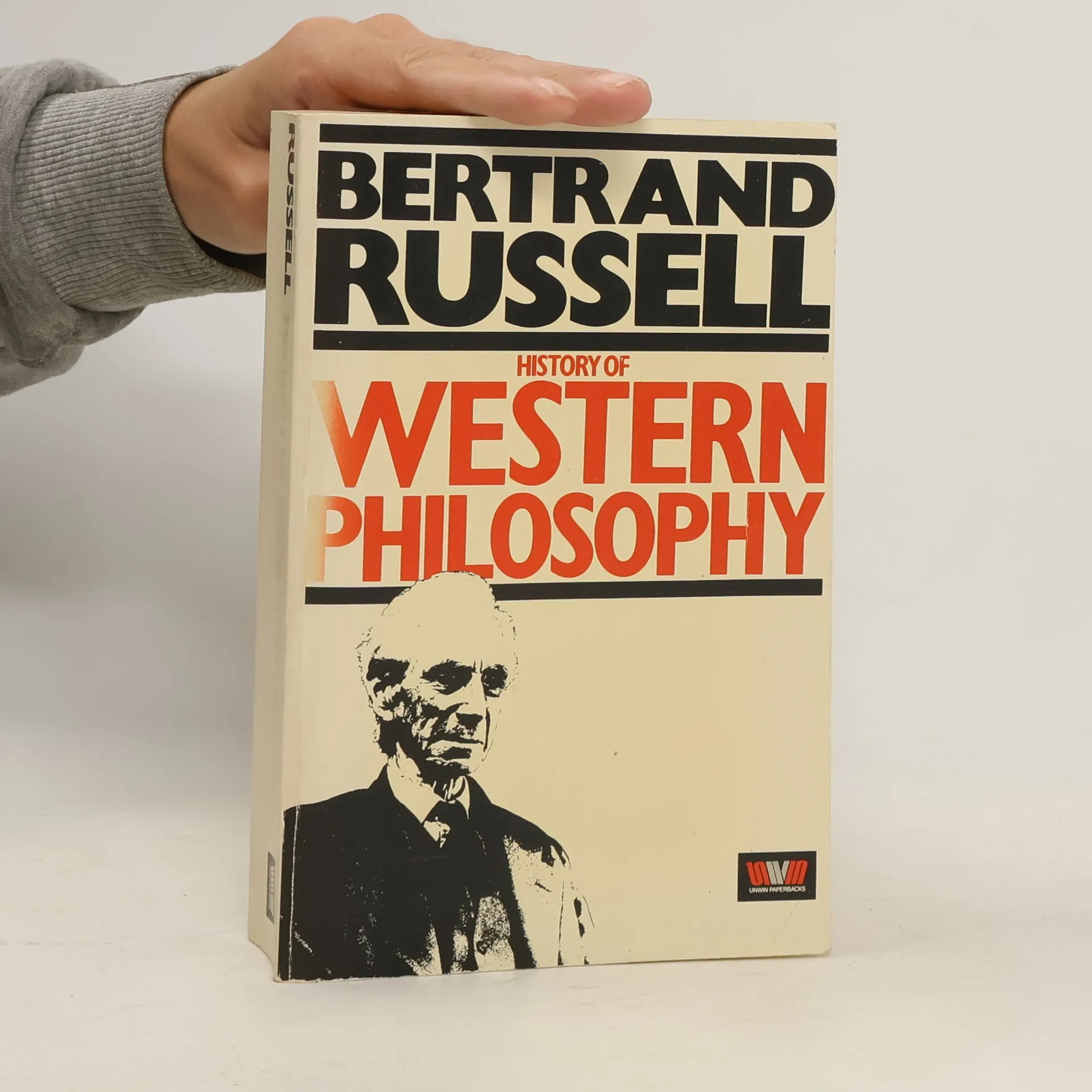

History of Western philosophy : and its connection with political and social circumstances from the earliest times to the present day
Auteurs
Boekbeoordeling
Meer over het boek
Since its first publication in 1945 Lord Russell's A History of Western Philosophy has been universally acclaimed as the outstanding one-volume work on the subject—unparalleled in its comprehensiveness, its clarity, its erudition, its grace and wit. In seventy-six chapters he traces philosophy from the rise of Greek civilization to the emergence of logical analysis in the twentieth century. Among the philosophers considered are: Pythagoras, Heraclitus, Parmenides, Empedocles, Anaxagoras, the Atomists, Protagoras, Socrates, Plato, Aristotle, the Cynics, the Sceptics, the Epicureans, the Stoics, Plotinus, Ambrose, Jerome, Augustine, Benedict, Gregory the Great, John the Scot, Aquinas, Duns Scotus, William of Occam, Machiavelli, Erasmus, More, Bacon, Hobbes, Descartes, Spinoza, Leibniz, Locke, Berkeley, Hume, Rousseau, Kant, Hegel, Schopenhauer, Nietzsche, the Utilitarians, Marx, Bergson, James, Dewey, and lastly the philosophers with whom Lord Russell himself is most closely associated -- Cantor, Frege, and Whitehead, co-author with Russell of the monumental Principia Mathematica.





Een boek kopen
History of Western philosophy : and its connection with political and social circumstances from the earliest times to the present day, Bertrand Russell
- Taal

- Jaar van publicatie
- 1978
- Bindwijze
- (Paperback)
Betaalmethoden
We missen je recensie hier.
- Taal
- Engels
- Auteurs
- Bertrand Russell
- Uitgever
- Unwin Paperbacks
- Jaar van publicatie
- 1978
- Formaat
- Paperback
- Aantal pagina's
- 848
- ISBN10
- 0041090160
- ISBN13
- 9780041090161
- Reeks
- Tags
- Non-fictie, Sociale Wetenschappen, Esoterie & Religie, Waargebeurde verhalen, Biographies, Politicologie & Politiek, Religieuze onderwerpen, Filosofisch thema, Handleidingen en Gidsen, Politiek, Wetenschap, Autobiografie en memoires, Biografieën van politici
- Oorspronkelijke titel
- A history of western philosophy
- Beoordeling
- 4,1 van 5
- Aantekening
- Since its first publication in 1945 Lord Russell's A History of Western Philosophy has been universally acclaimed as the outstanding one-volume work on the subject—unparalleled in its comprehensiveness, its clarity, its erudition, its grace and wit. In seventy-six chapters he traces philosophy from the rise of Greek civilization to the emergence of logical analysis in the twentieth century. Among the philosophers considered are: Pythagoras, Heraclitus, Parmenides, Empedocles, Anaxagoras, the Atomists, Protagoras, Socrates, Plato, Aristotle, the Cynics, the Sceptics, the Epicureans, the Stoics, Plotinus, Ambrose, Jerome, Augustine, Benedict, Gregory the Great, John the Scot, Aquinas, Duns Scotus, William of Occam, Machiavelli, Erasmus, More, Bacon, Hobbes, Descartes, Spinoza, Leibniz, Locke, Berkeley, Hume, Rousseau, Kant, Hegel, Schopenhauer, Nietzsche, the Utilitarians, Marx, Bergson, James, Dewey, and lastly the philosophers with whom Lord Russell himself is most closely associated -- Cantor, Frege, and Whitehead, co-author with Russell of the monumental Principia Mathematica.