



Meer over het boek
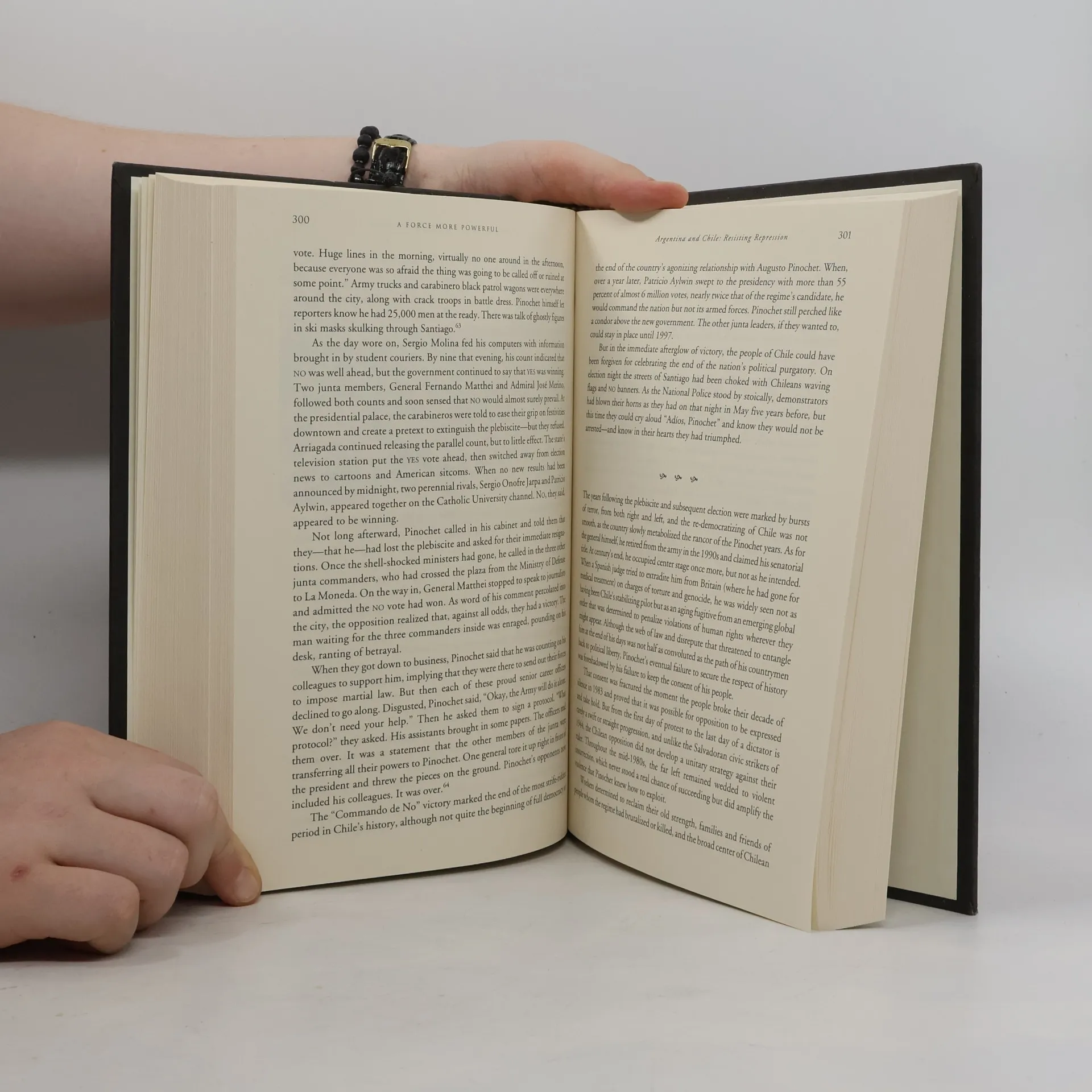
In this volume, Peter Ackerman, an authority on non-violent strategy, and Jack DuVall, a veteran writer, show how popular movements used non-violent action to overthrow dictators, obstruct military invaders and secure human rights in country after country, over the past century. A cavalcade of far-flung locations and history-changing crises, the book depicts how non-violent sanctions such as protests, strikes and boycotts separate brutal regimes from their means of control. It tells inside stories - how Danes out-manoeuvered the Nazis, Solidarity defeated Polish communism, and mass action removed a Chilean dictator. It also shows how non-violent power is changing the world today, from Burma to Serbia. Covering characters such as Leo Tolstoy and Mohandas Gandhi, Lech Walesa and the mothers of the disappeared in Argentina, the book is a companion to a feature-length documentary showing at film festivals worldwide.


Een boek kopen
A Force More Powerful, Peter Ackerman, Jack DuVall
- Taal

- Jaar van publicatie
- 2000
- Bindwijze
- (Hardcover),
- Staat van het boek
- Beschadigd
- Prijs
- € 3,11
Betaalmethoden
We missen je recensie hier.
- Ondertitel
- A Century of Nonviolent Conflict
- Taal
- Engels
- Auteurs
- Peter Ackerman, Jack DuVall
- Uitgever
- St. Martin's Press
- Jaar van publicatie
- 2000
- Formaat
- Hardcover
- Aantal pagina's
- 544
- ISBN10
- 0312228643
- ISBN13
- 9780312228644
- Reeks
- Tags
- Non-fictie, Sociale Wetenschappen, Historisch thema, Geschiedenis, Politicologie & Politiek, Politiek, Sociologie, School, Sociale rechtvaardigheid, Activisme
- Beoordeling
- 4,15 van 5
- Aantekening
- In this volume, Peter Ackerman, an authority on non-violent strategy, and Jack DuVall, a veteran writer, show how popular movements used non-violent action to overthrow dictators, obstruct military invaders and secure human rights in country after country, over the past century. A cavalcade of far-flung locations and history-changing crises, the book depicts how non-violent sanctions such as protests, strikes and boycotts separate brutal regimes from their means of control. It tells inside stories - how Danes out-manoeuvered the Nazis, Solidarity defeated Polish communism, and mass action removed a Chilean dictator. It also shows how non-violent power is changing the world today, from Burma to Serbia. Covering characters such as Leo Tolstoy and Mohandas Gandhi, Lech Walesa and the mothers of the disappeared in Argentina, the book is a companion to a feature-length documentary showing at film festivals worldwide.