

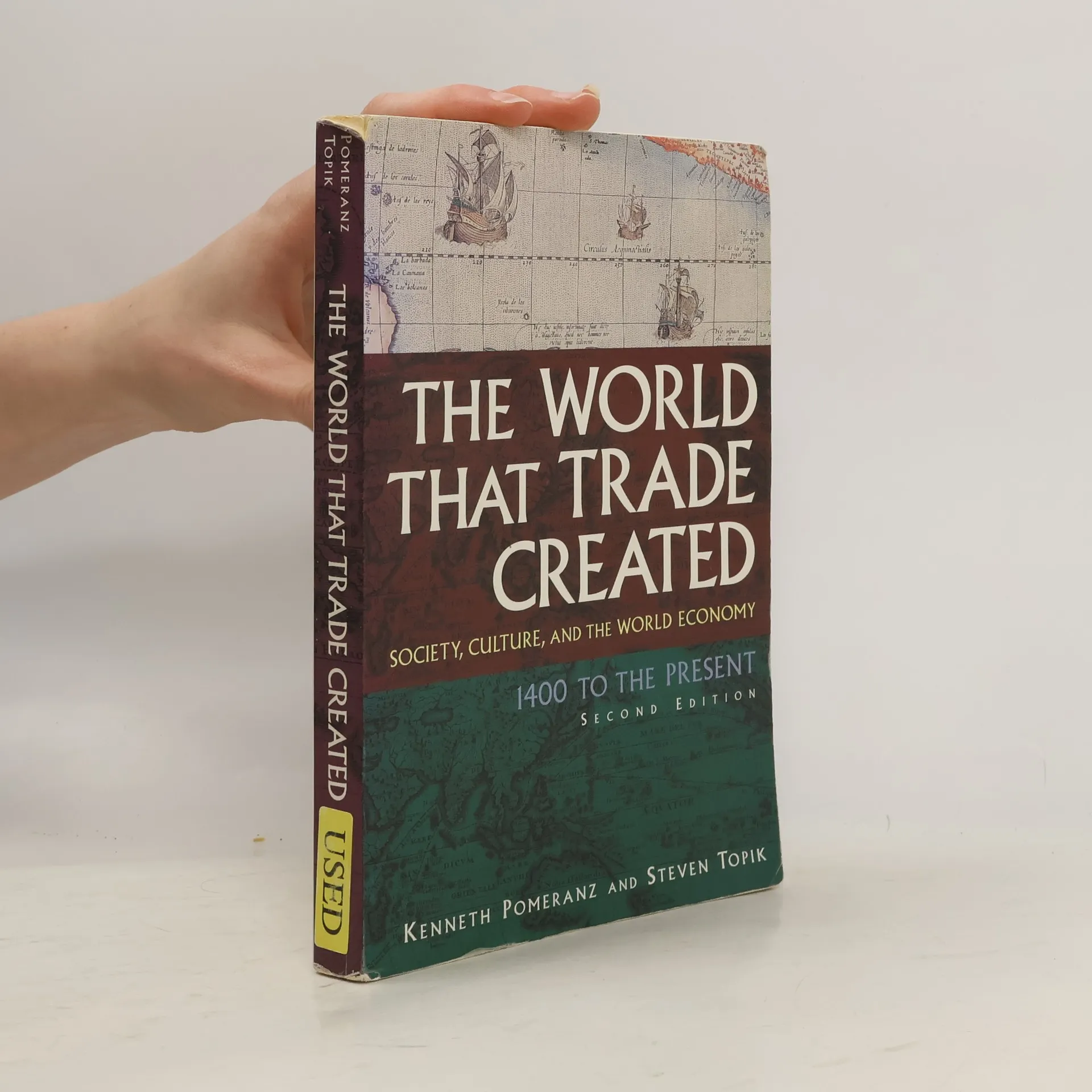
The World That Trade Created
Society, Culture, and the World Economy, 1400 to the Present - Second Edition
Boekbeoordeling
Meer over het boek
Why are railroad tracks separated by the same four feet, eight inches as ancient Roman roads? How did 19th-century Europeans turn mountains of bird excrement from Peru into mountains of gold? Where has most of the world's oil come from in the 20th century? This new edition of "The World That Trade Created" reveals the answers to dozens of tantalizing questions like these. In a series of brief, highly readable vignettes the authors bring to life international trade and its actors - including migrants and merchants, pirates and privateers, sailors and slaves, traders and tree-tappers. In the process they make clear that the seemingly modern concept of economic globalization has deep historical roots. The authors also demonstrate that economic activity cannot be divorced from social and cultural contexts. This second edition provides enhanced coverage of Africa, the Middle East, and the 20th century, and features eighteen new vignettes, including two new pieces on oil.
Uitgave

Een boek kopen
The World That Trade Created, Kenneth L. Pomeranz, Steven C. Topik
- Taal

- Jaar van publicatie
- 2005
- Bindwijze
- (Hardcover)
Betaalmethoden
We missen je recensie hier.
- Titel
- The World That Trade Created
- Ondertitel
- Society, Culture, and the World Economy, 1400 to the Present - Second Edition
- Taal
- Engels
- Auteurs
- Kenneth L. Pomeranz, Steven C. Topik
- Uitgever
- Routledge
- Jaar van publicatie
- 2005
- Formaat
- Hardcover
- Aantal pagina's
- 285
- ISBN10
- 0765617080
- ISBN13
- 9780765617088
- Reeks
- Categorieën
- Beoordeling
- 3,85 van 5
- Aantekening
- Why are railroad tracks separated by the same four feet, eight inches as ancient Roman roads? How did 19th-century Europeans turn mountains of bird excrement from Peru into mountains of gold? Where has most of the world's oil come from in the 20th century? This new edition of "The World That Trade Created" reveals the answers to dozens of tantalizing questions like these. In a series of brief, highly readable vignettes the authors bring to life international trade and its actors - including migrants and merchants, pirates and privateers, sailors and slaves, traders and tree-tappers. In the process they make clear that the seemingly modern concept of economic globalization has deep historical roots. The authors also demonstrate that economic activity cannot be divorced from social and cultural contexts. This second edition provides enhanced coverage of Africa, the Middle East, and the 20th century, and features eighteen new vignettes, including two new pieces on oil.