

Parameters
- 560bladzijden
- 20 uur lezen
Meer over het boek
What determines the size and form of redistributive programs, the extent and type of public goods provision, the burden of taxation across alternative tax bases, the size of government deficits, and the stance of monetary policy during the course of business and electoral cycles? A large and rapidly growing literature in political economics attempts to answer these questions. But so far there is little consensus on the answers and disagreement on the appropriate mode of analysis. Combining the best of three separate traditions—the theory of macroeconomic policy, public choice, and rational choice in political science—Torsten Persson and Guido Tabellini suggest a unified approach to the field. As in modern macroeconomics, individual citizens behave rationally, their preferences over economic outcomes inducing preferences over policy. As in public choice, the delegation of policy decisions to elected representatives may give rise to agency problems between voters and politicians. And, as in rational choice, political institutions shape the procedures for setting policy and electing politicians. The authors outline a common method of analysis, establish several new results, and identify the main outstanding problems.
Een boek kopen
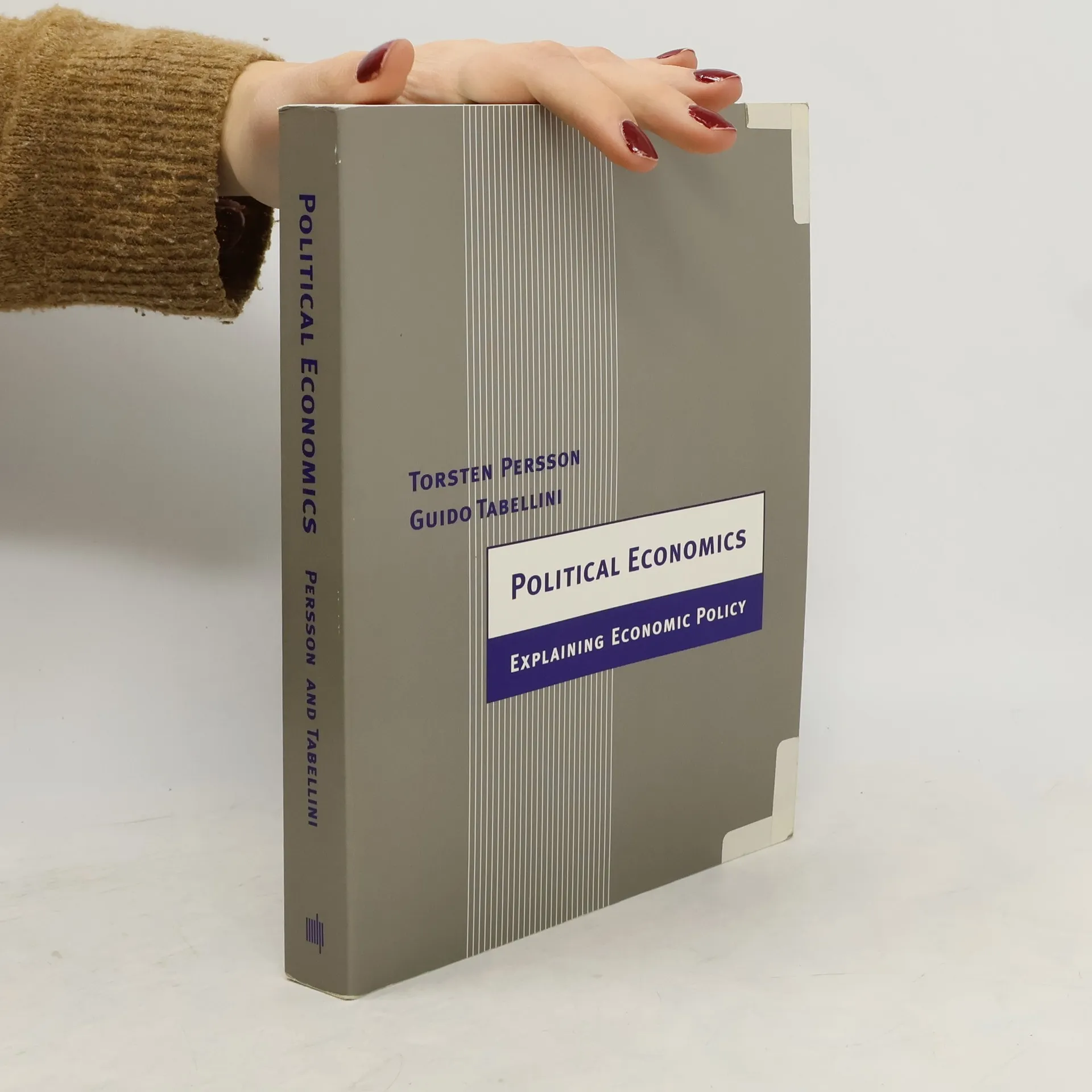
Political Economics, Torsten Persson, Guido Tabellini
- Taal

- Jaar van publicatie
- 2002
- Bindwijze
- (Paperback)
Betaalmethoden
We missen je recensie hier.
- Titel
- Political Economics
- Ondertitel
- Explaining Economic Policy (Zeuthen Lectures)
- Taal
- Engels
- Auteurs
- Torsten Persson, Guido Tabellini
- Uitgever
- MIT Press
- Jaar van publicatie
- 2002
- Formaat
- Paperback
- Aantal pagina's
- 560
- ISBN10
- 0262661314
- ISBN13
- 9780262661317
- Reeks
- Categorieën
- Tags
- Studieboeken, Handel, Kookboeken, Psychologische thema’s, Handleidingen en Gidsen, Filosofisch thema, Dieren, Juridische thematiek, Sport, Familie, Politiek, Vriendschap, Verenigde Staten, Gezondheid, Relaties, Eten, Onderwijs, schoolwezen, School, Dood, Samenleving, Engeland, Feminisme, Geestelijke Gezondheid, Journalistiek en Publiciteit, Financiën, Politieke theorieën, Cultuur, Fysicaboeken, Biologie-leerboeken, Geluk, 21e Eeuw, Geld, Drugs, Arbeid, Ethiek, Internationale Betrekkingen, Evolutie, Sociale rechtvaardigheid, Armoede, Burgerlijk recht, Globalisatie, Kapitalisme, Veroudering, Strategie, Regering, Economische Politiek, Politieke Economie, Politieke filosofie
- Beoordeling
- 4,1 van 5
- Aantekening
- What determines the size and form of redistributive programs, the extent and type of public goods provision, the burden of taxation across alternative tax bases, the size of government deficits, and the stance of monetary policy during the course of business and electoral cycles? A large and rapidly growing literature in political economics attempts to answer these questions. But so far there is little consensus on the answers and disagreement on the appropriate mode of analysis. Combining the best of three separate traditions—the theory of macroeconomic policy, public choice, and rational choice in political science—Torsten Persson and Guido Tabellini suggest a unified approach to the field. As in modern macroeconomics, individual citizens behave rationally, their preferences over economic outcomes inducing preferences over policy. As in public choice, the delegation of policy decisions to elected representatives may give rise to agency problems between voters and politicians. And, as in rational choice, political institutions shape the procedures for setting policy and electing politicians. The authors outline a common method of analysis, establish several new results, and identify the main outstanding problems.