



Parameters
- 160bladzijden
- 6 uur lezen
Meer over het boek
This volume presents the first English translation of a series of lectures by Claude Levi-Strauss, delivered in Tokyo in 1986, reflecting on his career and the future of anthropology. It synthesizes his major ideas on structural anthropology, a field he significantly shaped. Levi-Strauss critiques his earlier insights regarding race, history, and civilization, revisiting enduring social issues. He notes the end of Western cultural supremacy, which has been challenged by global conflicts and genocides that have eroded faith in humanity's progress through science. He argues that anthropology can foster a new democratic humanism, expanding traditional frameworks to enhance cross-cultural understanding and exploring lessons from civilizations like those in Asia. As he surveys the world on the cusp of the twenty-first century, Levi-Strauss addresses dilemmas of cultural and moral relativism, including ethical concerns surrounding economic inequality, the rise of religious fundamentalism, and the implications of genetic and reproductive engineering. This work serves as a thought laboratory, offering critical insights into the challenges of modern society and stands as a significant contribution to the legacy of one of the twentieth century's most influential theorists.


Een boek kopen
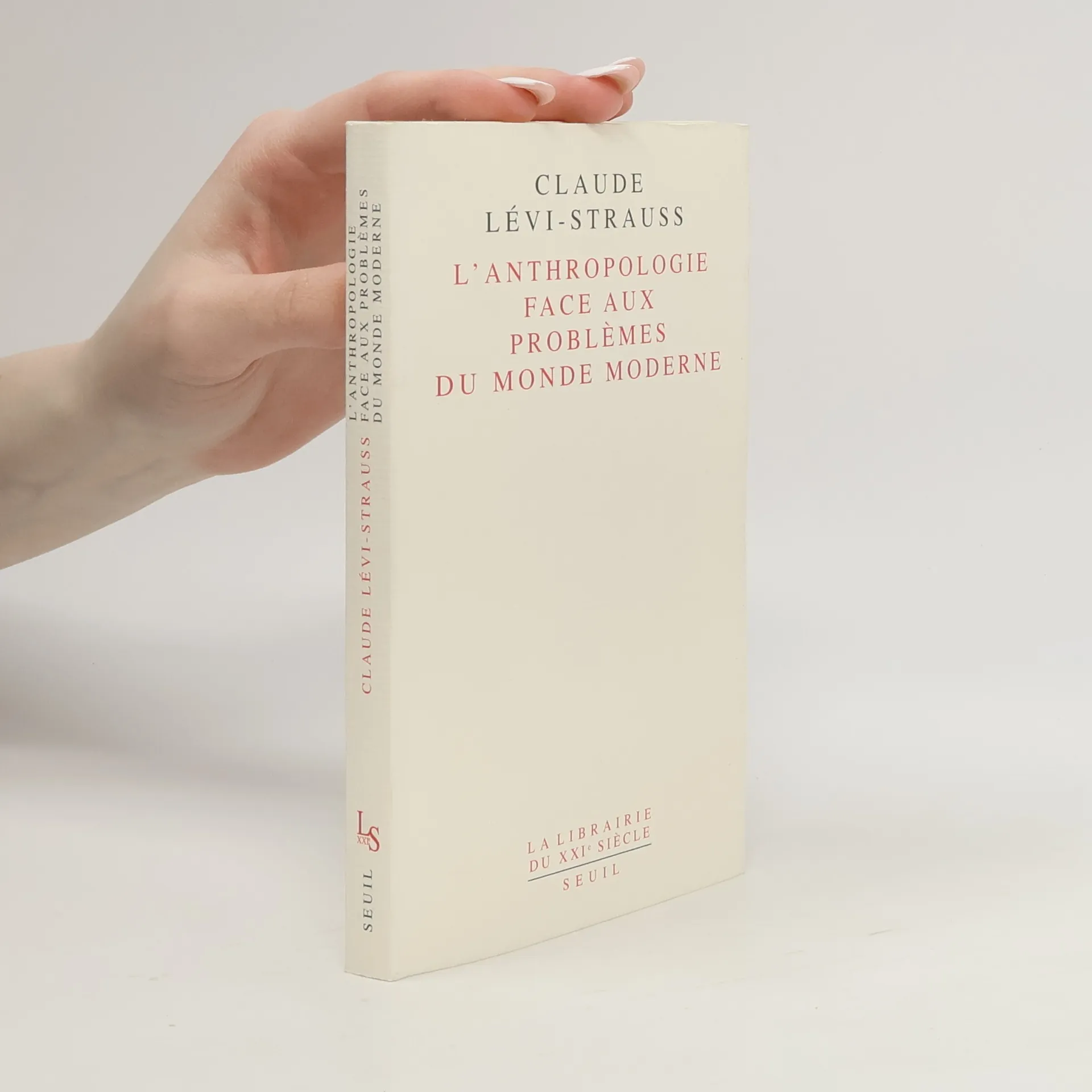
L'anthropologie face aux problèmes du monde moderne, Claude LéviStrauss
- Taal

- Jaar van publicatie
- 2011
- Bindwijze
- (Paperback)
Betaalmethoden
We missen je recensie hier.
- Titel
- L'anthropologie face aux problèmes du monde moderne
- Taal
- Frans
- Auteurs
- Claude LéviStrauss
- Uitgever
- Seuil
- Jaar van publicatie
- 2011
- Formaat
- Paperback
- Aantal pagina's
- 160
- ISBN10
- 2021035247
- ISBN13
- 9782021035247
- Reeks
- Tags
- Filosofisch thema, Cultuur en Samenleving, Ras, Racisme, Ontwikkeling, Lezingen, Westerse Beschaving, Limoenen
- Eerste editie
- 1986
- Oorspronkelijke titel
- LAnthropologie face aux problèmes du monde moderne
- Beoordeling
- 4 van 5
- Aantekening
- This volume presents the first English translation of a series of lectures by Claude Levi-Strauss, delivered in Tokyo in 1986, reflecting on his career and the future of anthropology. It synthesizes his major ideas on structural anthropology, a field he significantly shaped. Levi-Strauss critiques his earlier insights regarding race, history, and civilization, revisiting enduring social issues. He notes the end of Western cultural supremacy, which has been challenged by global conflicts and genocides that have eroded faith in humanity's progress through science. He argues that anthropology can foster a new democratic humanism, expanding traditional frameworks to enhance cross-cultural understanding and exploring lessons from civilizations like those in Asia. As he surveys the world on the cusp of the twenty-first century, Levi-Strauss addresses dilemmas of cultural and moral relativism, including ethical concerns surrounding economic inequality, the rise of religious fundamentalism, and the implications of genetic and reproductive engineering. This work serves as a thought laboratory, offering critical insights into the challenges of modern society and stands as a significant contribution to the legacy of one of the twentieth century's most influential theorists.