

Meer over het boek
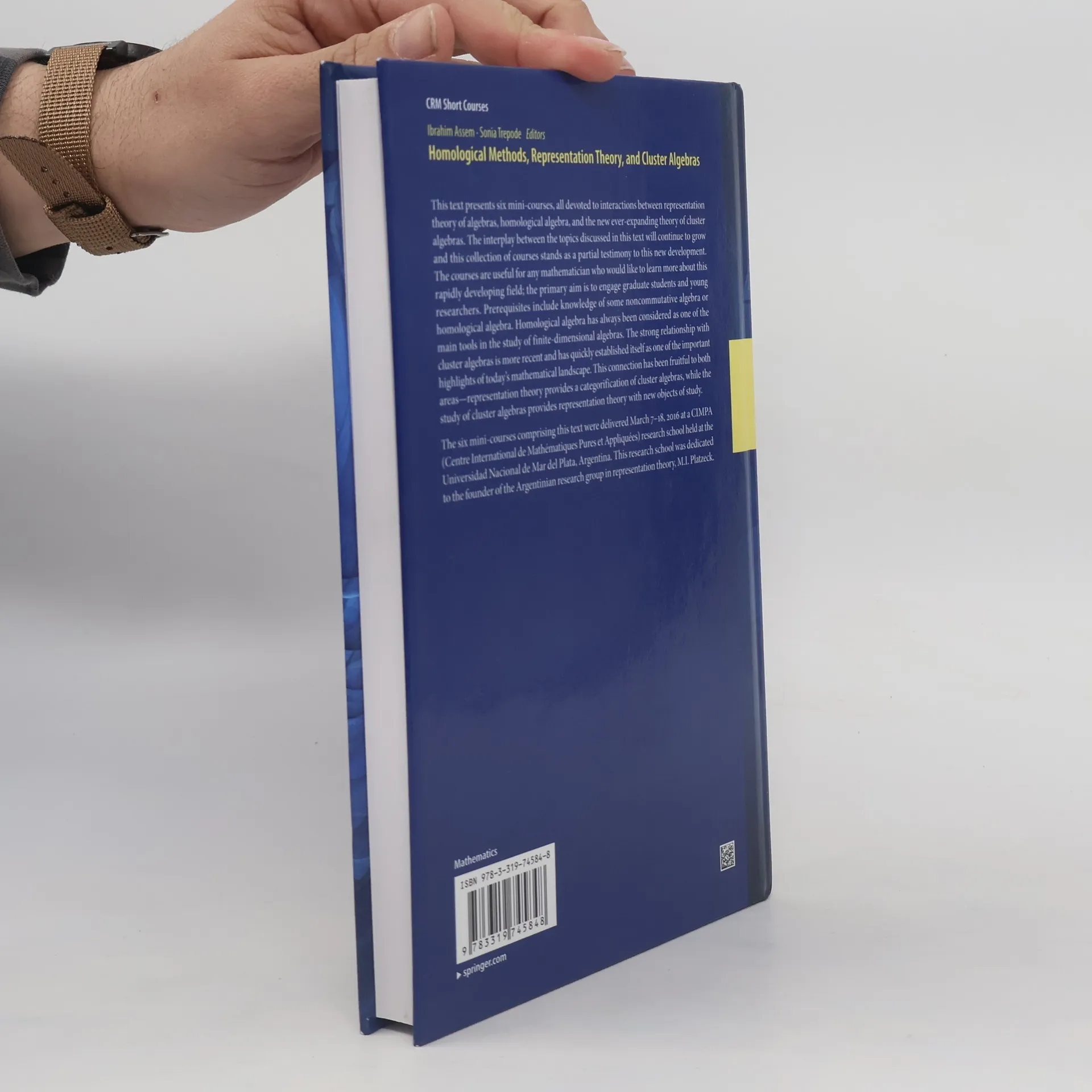
This text presents six mini-courses focused on the interactions between representation theory of algebras, homological algebra, and the expanding theory of cluster algebras. The interplay among these topics is expected to grow, and this collection serves as a testament to this development. It is designed for mathematicians eager to delve into this rapidly evolving field, particularly targeting graduate students and young researchers. Prerequisites include a background in noncommutative algebra or homological algebra. Historically, homological algebra has been a key tool in studying finite-dimensional algebras, and its relationship with cluster algebras has recently emerged as a significant aspect of contemporary mathematics. This connection has proven beneficial for both areas: representation theory offers a categorification of cluster algebras, while cluster algebras introduce new objects for representation theory to explore. The six mini-courses were delivered from March 7–18, 2016, at a CIMPA research school at the Universidad Nacional de Mar del Plata, Argentina, dedicated to M.I. Platzeck, the founder of the Argentinian research group in representation theory. The courses held were:
Een boek kopen
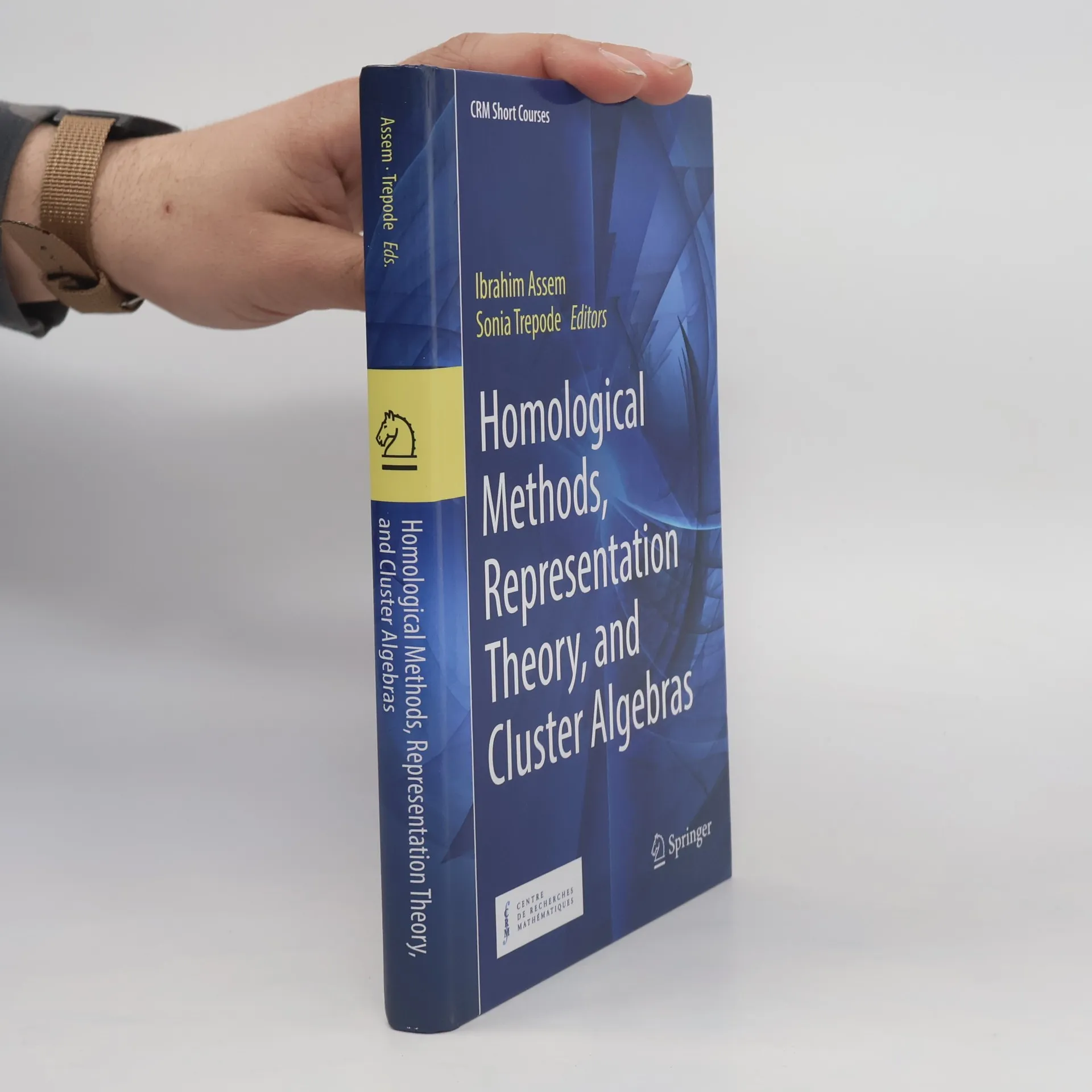
CRM Short Courses: Homological Methods, Representation Theory, and Cluster Algebras, Ibrahim Assem, Sonia Trepode
- Taal

- Jaar van publicatie
- 2018
- Bindwijze
- (Hardcover)
Betaalmethoden
Nog niemand heeft beoordeeld.
- Titel
- CRM Short Courses: Homological Methods, Representation Theory, and Cluster Algebras
- Taal
- Engels
- Auteurs
- Ibrahim Assem, Sonia Trepode
- Uitgever
- Springer
- Jaar van publicatie
- 2018
- Formaat
- Hardcover
- Aantal pagina's
- 236
- ISBN10
- 3319745840
- ISBN13
- 9783319745848
- Reeks
- Categorieën
- Tags
- Wetenschap, Algebra, Combinatoriek
- Aantekening
- This text presents six mini-courses focused on the interactions between representation theory of algebras, homological algebra, and the expanding theory of cluster algebras. The interplay among these topics is expected to grow, and this collection serves as a testament to this development. It is designed for mathematicians eager to delve into this rapidly evolving field, particularly targeting graduate students and young researchers. Prerequisites include a background in noncommutative algebra or homological algebra. Historically, homological algebra has been a key tool in studying finite-dimensional algebras, and its relationship with cluster algebras has recently emerged as a significant aspect of contemporary mathematics. This connection has proven beneficial for both areas: representation theory offers a categorification of cluster algebras, while cluster algebras introduce new objects for representation theory to explore. The six mini-courses were delivered from March 7–18, 2016, at a CIMPA research school at the Universidad Nacional de Mar del Plata, Argentina, dedicated to M.I. Platzeck, the founder of the Argentinian research group in representation theory. The courses held were: