



Meer over het boek
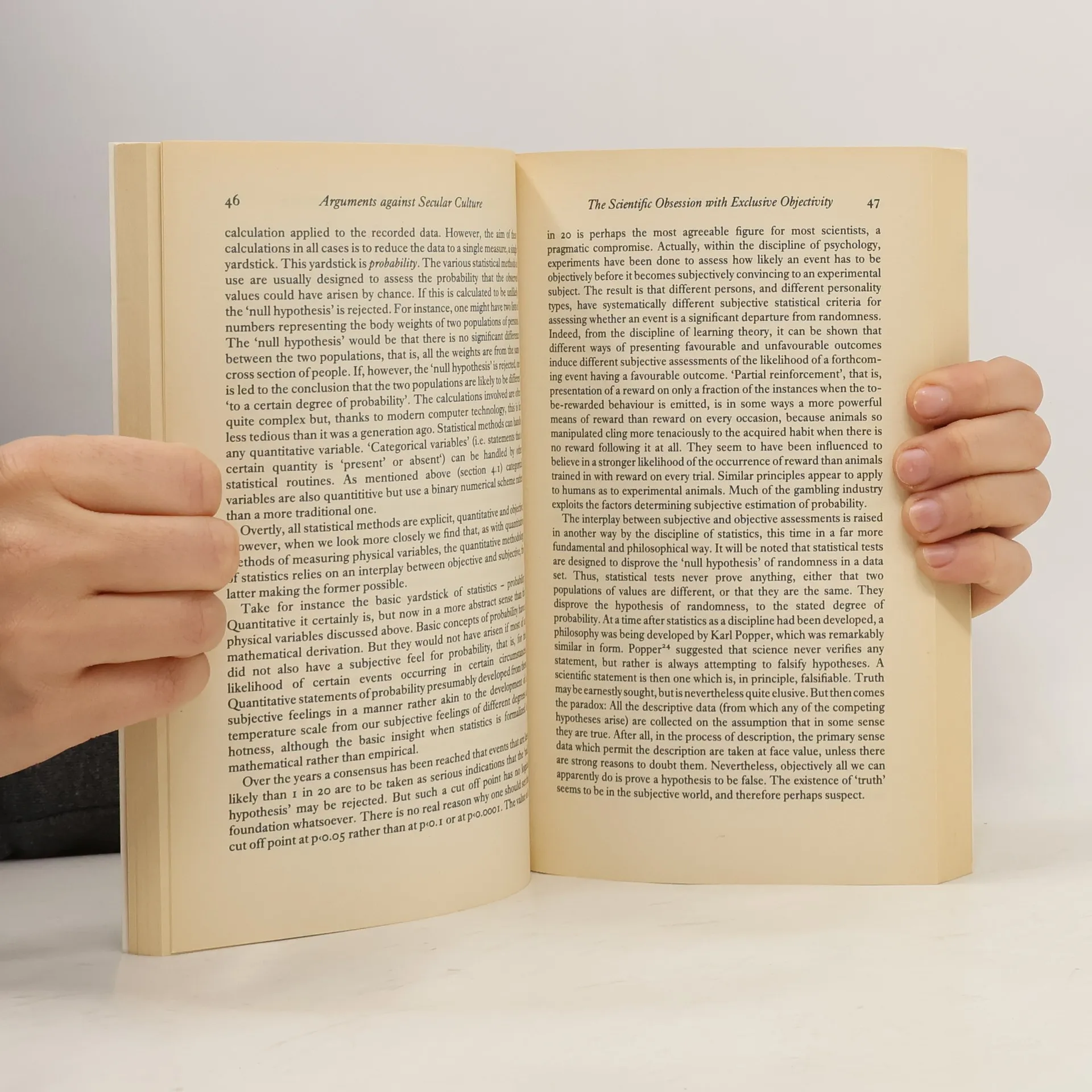
This book targets individuals outside established churches, assuming familiarity with both Christian claims and atheistic counterclaims. The author, a biologist specializing in brain research, critiques the prevailing scientific materialist perspective, arguing it is overly narrow and overlooks significant aspects of human experience. He diverges from Christian thinkers like Don Cupitt and John Polkinghorne, advocating for a viewpoint that embraces human subjectivity, artistic experience, and the reality of persons, while positing a God characterized by goodness but limited power, along with the existence of absolute truth and values. The first section outlines the dominant philosophical stance among educated individuals today and its connection to the rise of scientific knowledge, portraying modern materialism as a distortion of historical thought. The second section delves into human subjectivity and the mind-brain relationship. The final section contends that contemporary individuals need myths as much as earlier societies did, proposing fundamental myths that resonate with human experience. Amid negativity, this work offers a constructive exploration of essential human questions and contributes meaningfully to the dialogue between science and religion.
Een boek kopen
Arguments Against Secular Culture, Robert Miller
- Taal

- Jaar van publicatie
- 1995
- Bindwijze
- (Paperback)
Betaalmethoden
We missen je recensie hier.
- Titel
- Arguments Against Secular Culture
- Taal
- Engels
- Auteurs
- Robert Miller
- Uitgever
- Hymns Ancient & Modern Ltd
- Jaar van publicatie
- 1995
- Formaat
- Paperback
- Aantal pagina's
- 254
- ISBN10
- 0334026040
- ISBN13
- 9780334026044
- Reeks
- Categorieën
- Tags
- Historisch thema, Religieuze onderwerpen, Filosofisch thema, Christelijke thema's, Wetenschap, Inspiratie, Ethiek, Christelijke theologie, Wetenschap en Geloof
- Beoordeling
- 3,5 van 5
- Aantekening
- This book targets individuals outside established churches, assuming familiarity with both Christian claims and atheistic counterclaims. The author, a biologist specializing in brain research, critiques the prevailing scientific materialist perspective, arguing it is overly narrow and overlooks significant aspects of human experience. He diverges from Christian thinkers like Don Cupitt and John Polkinghorne, advocating for a viewpoint that embraces human subjectivity, artistic experience, and the reality of persons, while positing a God characterized by goodness but limited power, along with the existence of absolute truth and values. The first section outlines the dominant philosophical stance among educated individuals today and its connection to the rise of scientific knowledge, portraying modern materialism as a distortion of historical thought. The second section delves into human subjectivity and the mind-brain relationship. The final section contends that contemporary individuals need myths as much as earlier societies did, proposing fundamental myths that resonate with human experience. Amid negativity, this work offers a constructive exploration of essential human questions and contributes meaningfully to the dialogue between science and religion.