

Meer over het boek
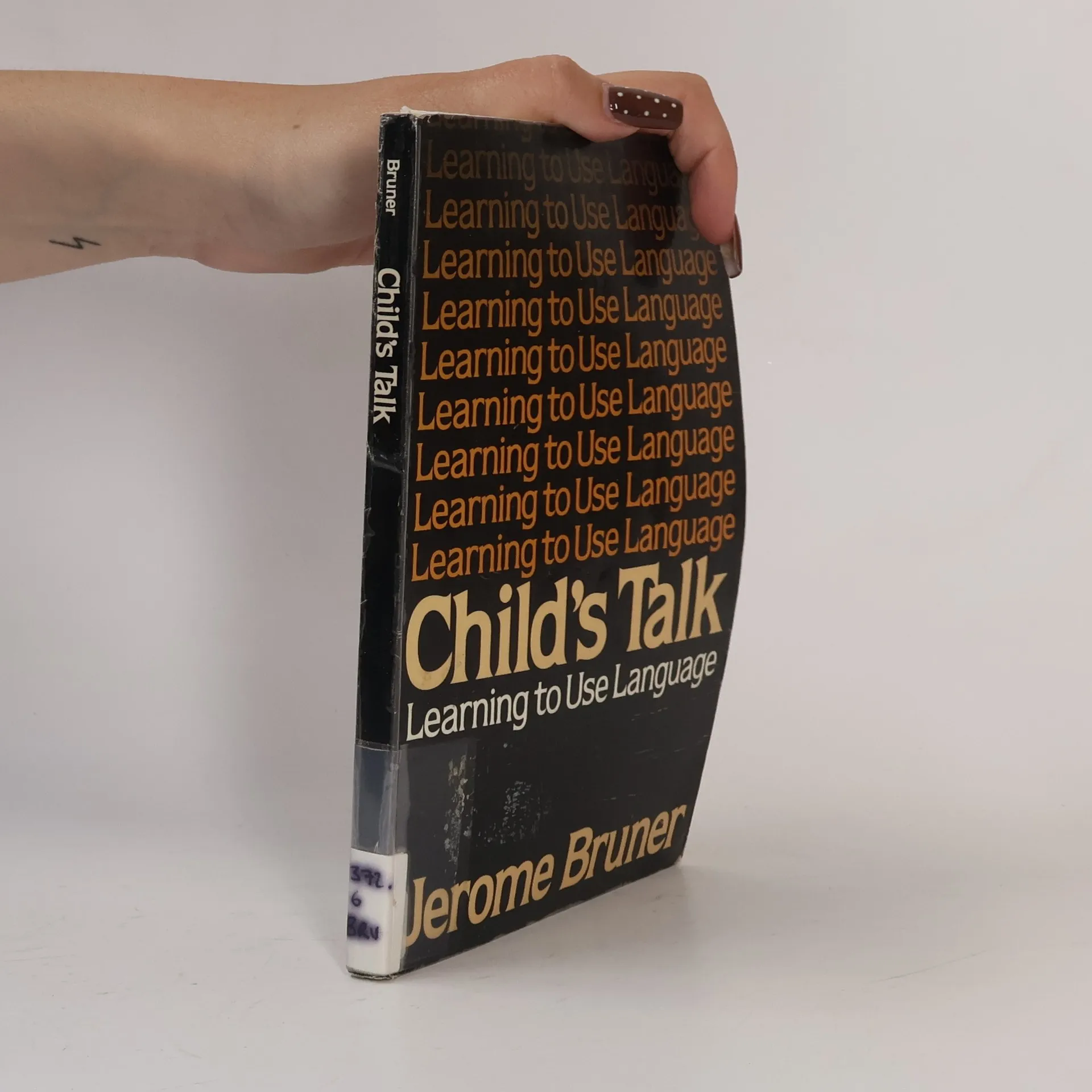
How does a child acquire language, and what may facilitate this learning? In this book, renowned psychologist Jerome Bruner explores the child's most remarkable achievement. To carry out his investigations, Bruner went to "the clutter of life at home," the child's own setting for learning, rather than observing children in a "contrived video laboratory." For Bruner, language is learned by using it. An central to its use are what he calls "formats," scriptlike interactions between mother and child―in short, play and games. What goes on in games as rudimentary as peekaboo or hide-and-seek can tell us much about language acquisition. But what aids the aspirant speaker in his attempt to use language? To answer this, the author postulates the existence of a Language Acquisition Support System that frames the interactions between adult and child in such a way as to allow the child to proceed from learning how to refer to objects to learning to make a request of another human being. And, according to Bruner, the Language Acquisition Support System not only helps the child learn "how to say it" but also helps him to learn "what is canonical, obligatory, and valued among those to whom he says it." In short, it is a vehicle for the transmission of our culture.
Een boek kopen
Child's Talk, Jerome Bruner, Rita Watson
- Taal

- Jaar van publicatie
- 1983
- Bindwijze
- (Paperback)
Betaalmethoden
Nog niemand heeft beoordeeld.
- Titel
- Child's Talk
- Ondertitel
- Learning to Use Language
- Taal
- Engels
- Auteurs
- Jerome Bruner, Rita Watson
- Uitgever
- W. W. Norton & Company
- Jaar van publicatie
- 1983
- Formaat
- Paperback
- Aantal pagina's
- 146
- ISBN10
- 0393953459
- ISBN13
- 9780393953459
- Reeks
- Tags
- Psychologische thema’s, Relaties, Kinderen, Onderwijs, schoolwezen, Linguïstiek, Psycholinguïstiek
- Aantekening
- How does a child acquire language, and what may facilitate this learning? In this book, renowned psychologist Jerome Bruner explores the child's most remarkable achievement. To carry out his investigations, Bruner went to "the clutter of life at home," the child's own setting for learning, rather than observing children in a "contrived video laboratory." For Bruner, language is learned by using it. An central to its use are what he calls "formats," scriptlike interactions between mother and child―in short, play and games. What goes on in games as rudimentary as peekaboo or hide-and-seek can tell us much about language acquisition. But what aids the aspirant speaker in his attempt to use language? To answer this, the author postulates the existence of a Language Acquisition Support System that frames the interactions between adult and child in such a way as to allow the child to proceed from learning how to refer to objects to learning to make a request of another human being. And, according to Bruner, the Language Acquisition Support System not only helps the child learn "how to say it" but also helps him to learn "what is canonical, obligatory, and valued among those to whom he says it." In short, it is a vehicle for the transmission of our culture.