

Meer over het boek
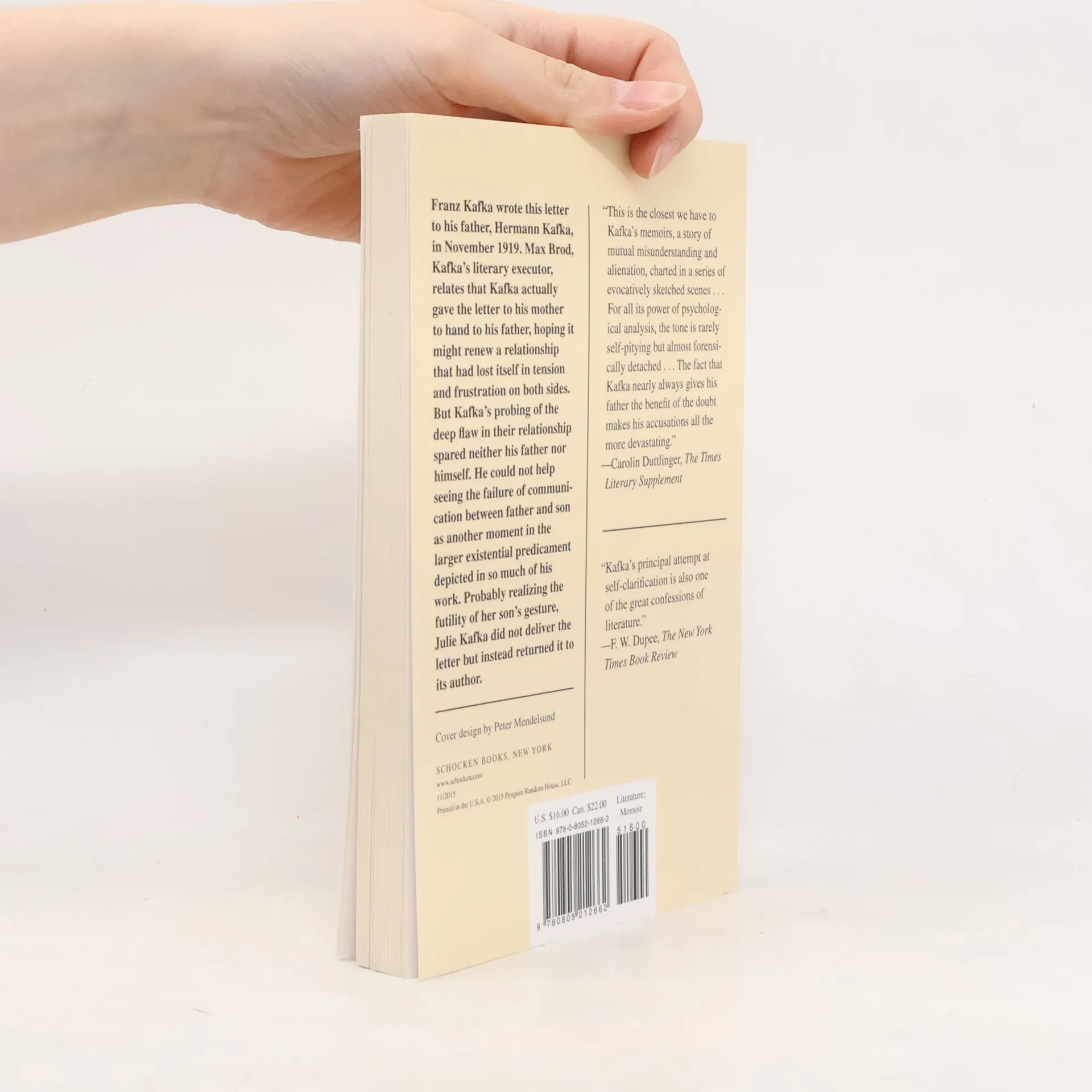
Franz Kafka wrote this letter to his father, Hermann Kafka, in November 1919. Max Brod, Kafka’s literary executor, relates that Kafka actually gave the letter to his mother to hand to his father, hoping it might renew a relationship that had lost itself in tension and frustration on both sides. But Kafka’s probing of the deep flaw in their relationship spared neither his father nor himself. He could not help seeing the failure of communication between father and son as another moment in the larger existential predicament depicted in so much of his work. Probably realizing the futility of her son’s gesture, Julie Kafka did not deliver the letter but instead returned it to its author.


Een boek kopen
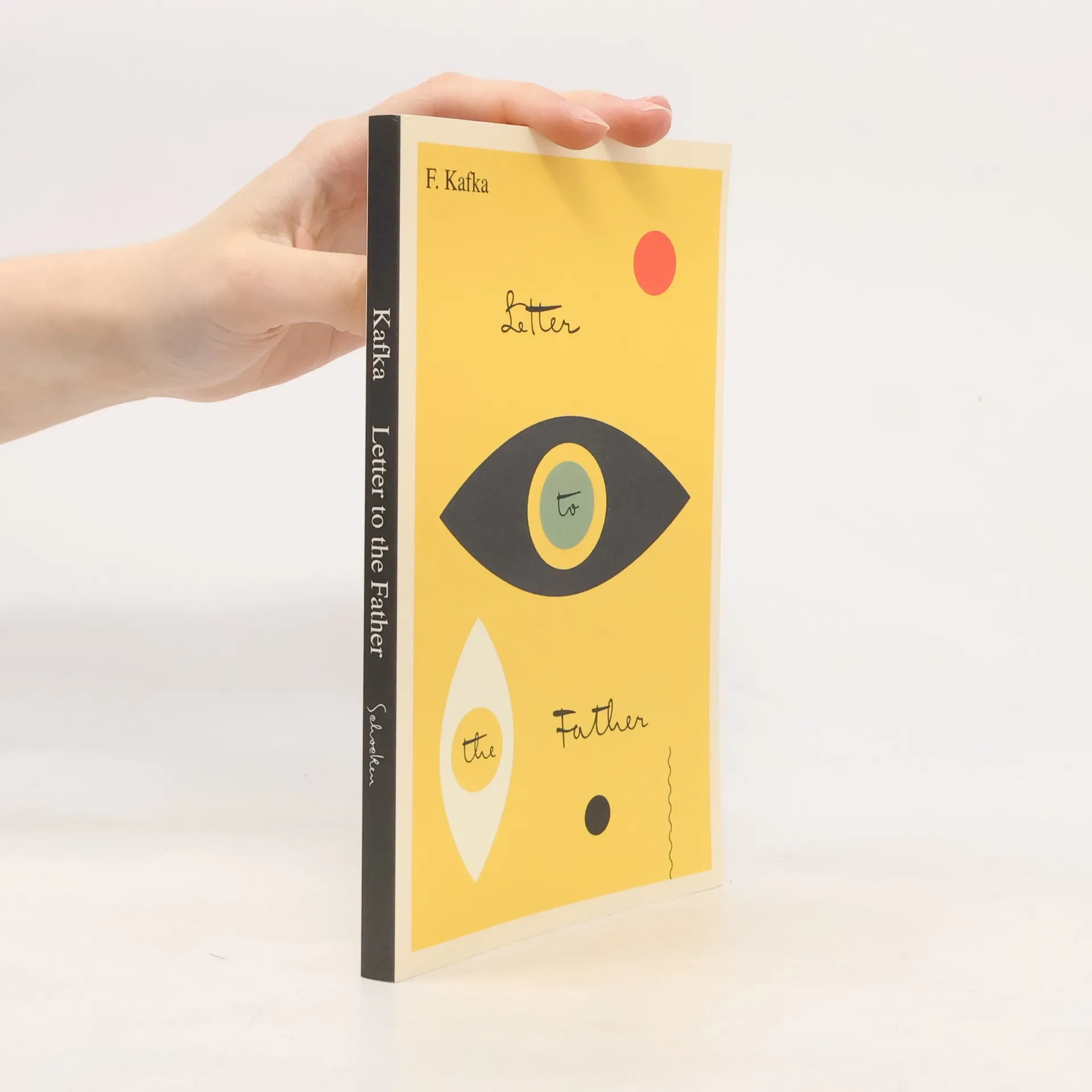
The Schocken Kafka Library: Letter to the Father, Franz Kafka, Ernst Kaiser, Eithne Wilkins
- Taal


- Jaar van publicatie
- 2015
- Bindwijze
- (Paperback)
Betaalmethoden
We missen je recensie hier.
- Titel
- The Schocken Kafka Library: Letter to the Father
- Ondertitel
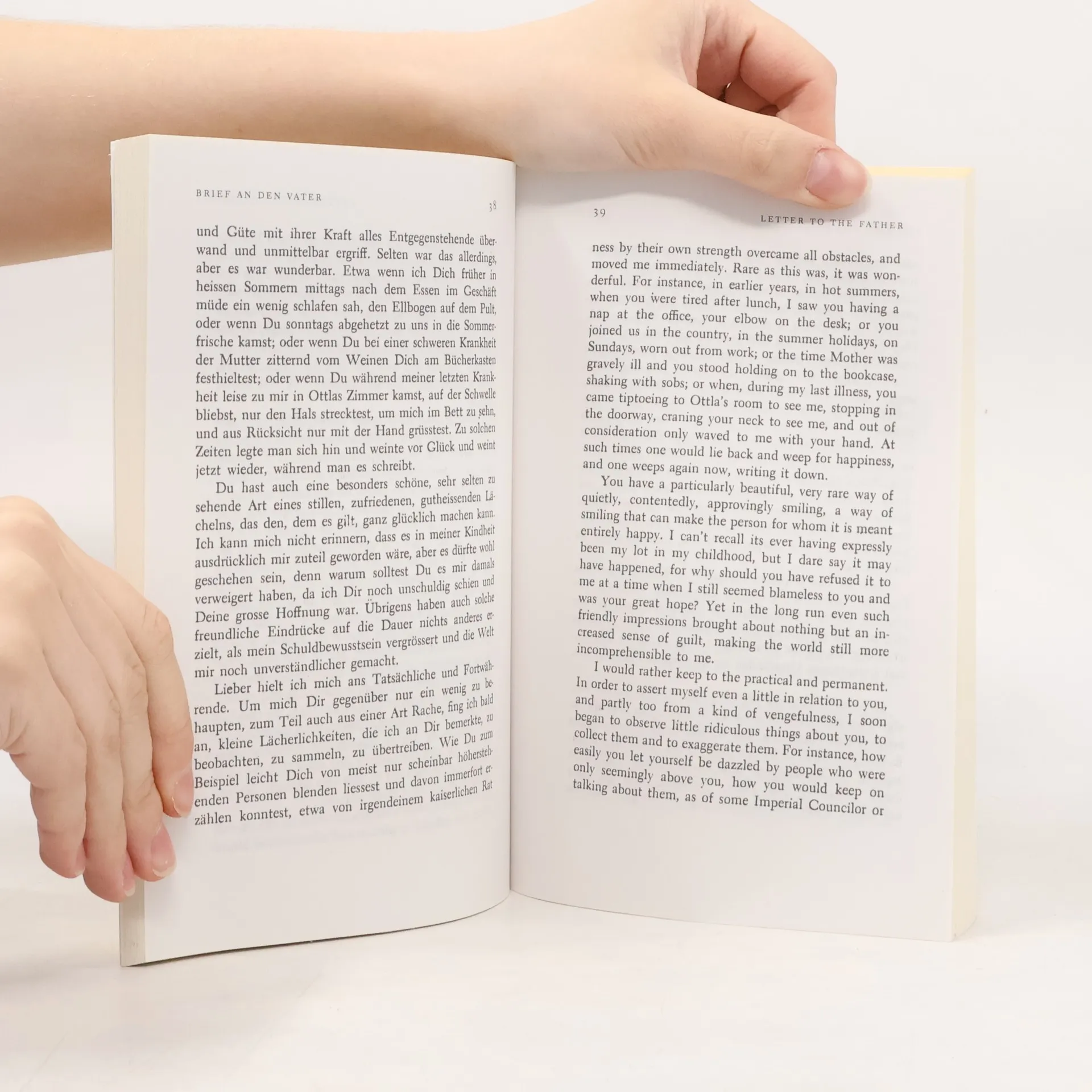
- Bilingual Edition
- Taal
- Engels, Duits
- Auteurs
- Franz Kafka, Ernst Kaiser, Eithne Wilkins
- Uitgever
- Schocken Books
- Jaar van publicatie
- 2015
- Formaat
- Paperback
- Aantal pagina's
- 144
- ISBN10
- 0805212663
- ISBN13
- 9780805212662
- Reeks
- Beoordeling
- 3,9 van 5
- Aantekening
- Franz Kafka wrote this letter to his father, Hermann Kafka, in November 1919. Max Brod, Kafka’s literary executor, relates that Kafka actually gave the letter to his mother to hand to his father, hoping it might renew a relationship that had lost itself in tension and frustration on both sides. But Kafka’s probing of the deep flaw in their relationship spared neither his father nor himself. He could not help seeing the failure of communication between father and son as another moment in the larger existential predicament depicted in so much of his work. Probably realizing the futility of her son’s gesture, Julie Kafka did not deliver the letter but instead returned it to its author.