




Parameters
- 494bladzijden
- 18 uur lezen
Meer over het boek
Interest in preparing new polymers peaked about 1966. Since that time, industrial and government support for the synthesis and study of new polymers has steadily declined. Gone are the good days when government funds supported a great push to attain ulti mate thermal stability for organic polymeric materials. Gone are the good days when many chemical companies, encouraged by the obvious potential for rewards, had great interest and provided support for preparing new polymers. We now often hear managers say "we have enough polymers" or "all we need to do is find additional and better ways to use existing polymers. " The latter often in cludes the statement, "we can get the new materials that are wanted from polymer alloys or blends. " Interest in preparing new monomers has also waned, even though it is well recognized that monomers with special functionality are greatly needed to fine-tune existing polymers for specific tasks. Shrinkage of interest in new monomer and polymer research has not come about solely as a result of the obvious maturity of the polymers industry. Since uses for polymers continue to grow and there is still room for good concepts to study, lack of market growth and fields of study have probably not significantly contribu ted to that shrinkage.
Een boek kopen
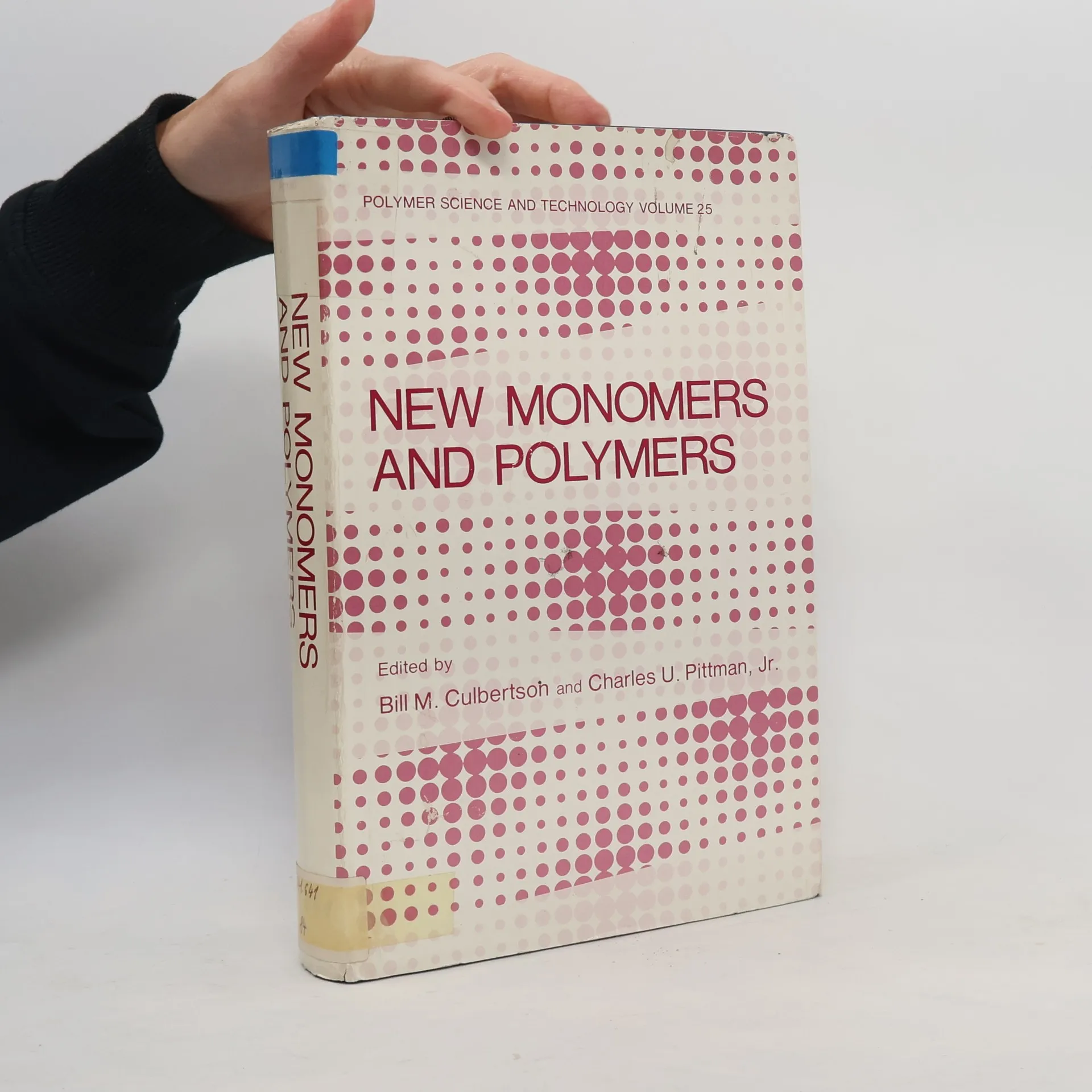
Polymer Science and Technology Series - 25: New Monomers and Polymers, Bill M. Culbertson, Charles U. Pittman, Jr.
- Taal

- Jaar van publicatie
- 1984
- product-detail.submit-box.info.binding
- (Hardcover),
- Staat van het boek
- Beschadigd
- Prijs
- € 35,63
Betaalmethoden
Nog niemand heeft beoordeeld.
- Taal
- Engels
- Uitgever
- Springer
- Jaar van publicatie
- 1984
- Formaat
- Hardcover
- Aantal pagina's
- 494
- ISBN10
- 0306414775
- ISBN13
- 9780306414770
- Reeks
- Tags
- Non-fictie, Wetenschap en Wiskunde, Natuurwetenschappen, Wetenschap, Technologie, Fysica, Chemie, Fysica en Astronomie, Chemische Ingenieurswetenschappen, Metalen, Stabiliteit
- Aantekening
- Interest in preparing new polymers peaked about 1966. Since that time, industrial and government support for the synthesis and study of new polymers has steadily declined. Gone are the good days when government funds supported a great push to attain ulti mate thermal stability for organic polymeric materials. Gone are the good days when many chemical companies, encouraged by the obvious potential for rewards, had great interest and provided support for preparing new polymers. We now often hear managers say "we have enough polymers" or "all we need to do is find additional and better ways to use existing polymers. " The latter often in cludes the statement, "we can get the new materials that are wanted from polymer alloys or blends. " Interest in preparing new monomers has also waned, even though it is well recognized that monomers with special functionality are greatly needed to fine-tune existing polymers for specific tasks. Shrinkage of interest in new monomer and polymer research has not come about solely as a result of the obvious maturity of the polymers industry. Since uses for polymers continue to grow and there is still room for good concepts to study, lack of market growth and fields of study have probably not significantly contribu ted to that shrinkage.