

This new translation of The Science of Logic (also known as 'Greater Logic') includes the revised Book I (1832), Book II (1813), and Book III (1816). Recent research has given us a detailed picture of the process that led Hegel to his final conception of the System and of the place of the Logic within it. We now understand how and why Hegel distanced himself from Schelling, how radical this break with his early mentor was, and to what extent it entailed a return (but with a difference) to Fichte and Kant. In the introduction to the volume, George di Giovanni presents in synoptic form the results of recent scholarship on the subject, and, while recognizing the fault lines in Hegel's System that allow opposite interpretations, argues that the Logic marks the end of classical metaphysics. The translation is accompanied by a full apparatus of historical and explanatory notes.
Encyclopedie van de Filosofische Wetenschappen Reeks
Deze serie duikt in de diepten van de Hegeliaanse filosofie, met de nadruk op zijn monumentale werk, de Encyclopaedie. Het verkent de kernconcepten van zijn idealisme, logica en filosofie van de geest. Dit is een essentiële bron voor iedereen die zich wil verdiepen in een van de meest invloedrijke denksystemen in de westerse filosofie. Lezers kunnen een systematisch overzicht verwachten van complexe ideeën die helder worden gepresenteerd.

Aanbevolen leesvolgorde
Hegel's philosophy of nature
- 482bladzijden
- 17 uur lezen
Hegel's aim in this work is to interpret the varied phenomena of Nature from the standpoint of a dialectical logic. Those who still think of Hegel as a merely a priori philosopher will here find abundant evidence that he was keenly interested in and very well informed about empirical science.
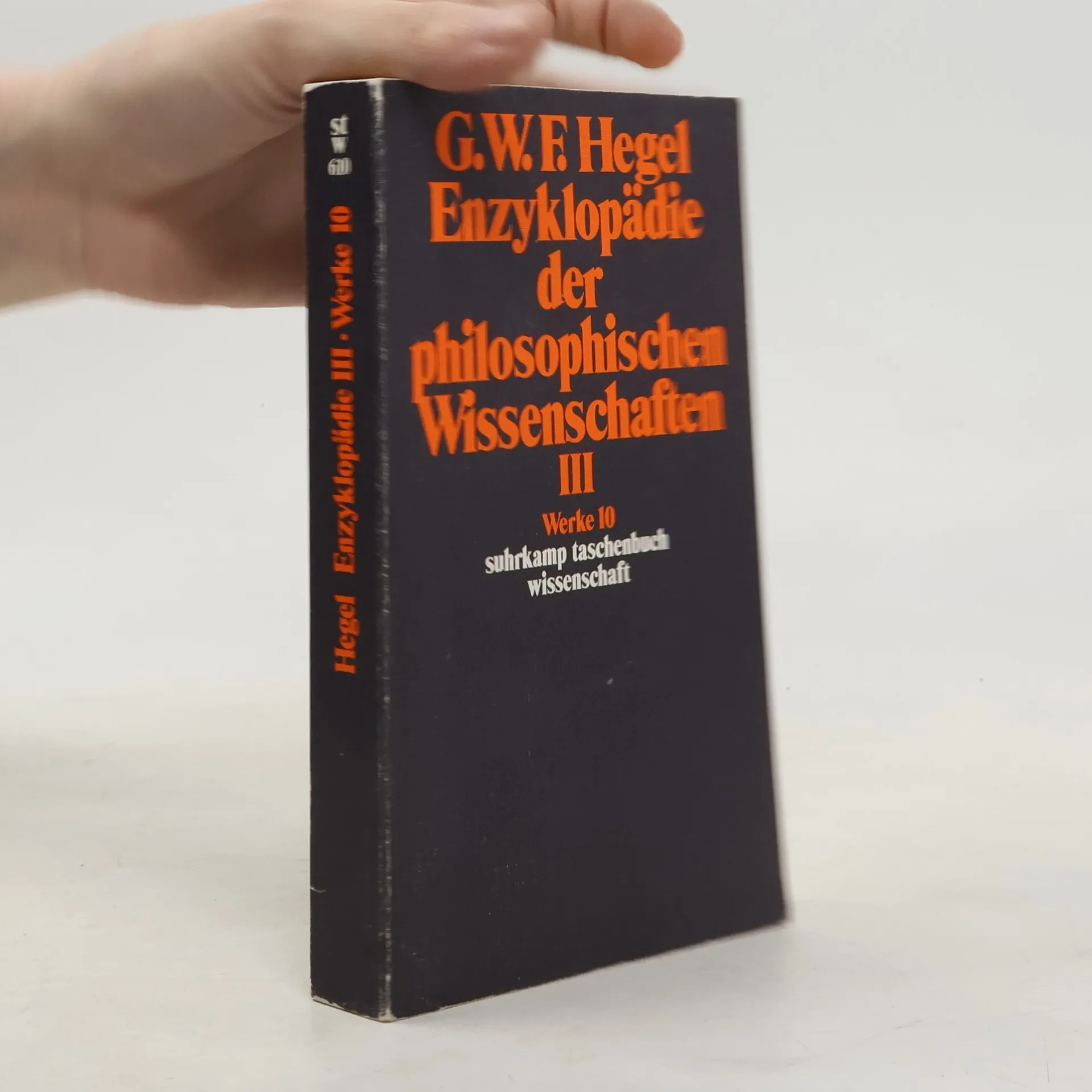
Enzyklopädie der philosophischen Wissenschaften im Grundrisse (1830). Tl.3
- 432bladzijden
- 16 uur lezen