Army industry and labor in Germany 1914 - 1918
- 586bladzijden
- 21 uur lezen
Examines the social and economic role of the German army in the nation's internal affairs during World War I.


Deze serie biedt een uitgebreide verkenning van de Grote Oorlog, met origineel academisch werk naast belangrijke memoires en ooggetuigenverslagen. Het doel is om lezers een breed scala aan perspectieven te bieden op deze cruciale historische periode. Veel van deze essentiële Europese werken worden voor het eerst in het Engels beschikbaar gesteld, wat het wereldwijde begrip van het conflict verdiept.

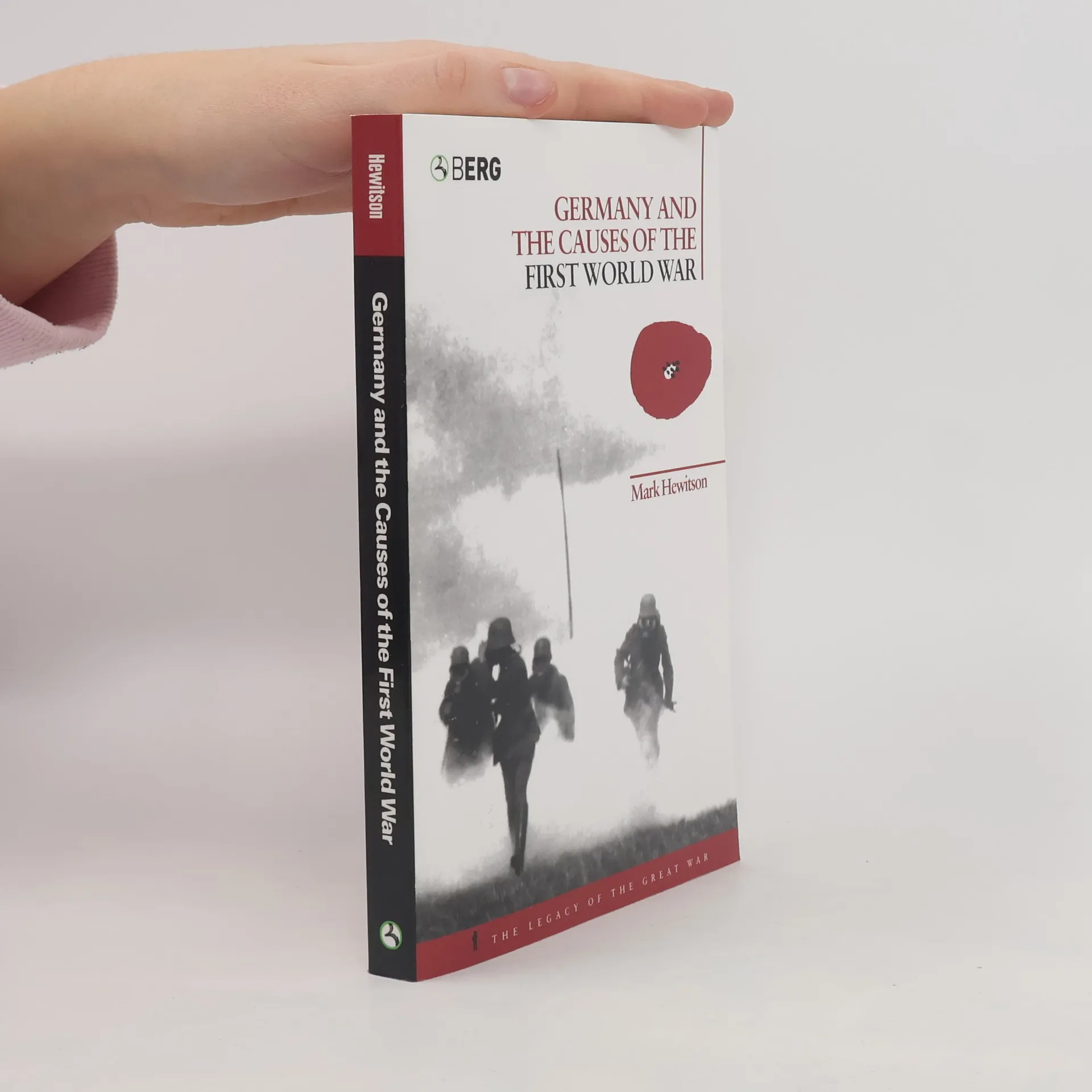

Examines the social and economic role of the German army in the nation's internal affairs during World War I.
How can we understand the causes of World War I and Germany's role in it? This book prompts a re-evaluation of the events leading to the global conflict in 1914. Recent historical interpretations suggest that German leaders acted defensively in response to a deteriorating military and diplomatic situation. However, this work challenges that view, emphasizing that the German Chancellor, Foreign Office, and Great General Staff believed in their ability to win a continental war. This confidence stemmed from an assumption of French decline and Russian weakness prior to the war. Consequently, German policymakers pursued aggressive strategies, risking conflict during critical moments in the early 20th century. The author examines how enemy states were stereotyped, the portrayal of war during peacetime, and the evolving perceptions of international relations. He highlights the influence of ruling elites, political parties, big business, and the press, arguing that significant shifts in German foreign policy occurred in the decade leading up to the war. By the July crisis of 1914, perceptions had shifted, with Russia emerging as the primary adversary. Under these new circumstances, German leaders could adopt a strategy of brinkmanship, using war as a policy tool to its fullest extent.
National Sentiment and Trench Journalism in France During the First World War
This study is based on the extraordinarily rich and varied range of trench journalism that brings to life - in the vivid language of the soldiers themselves - not only their suffering but also their vulgarity, sentimentality and idealism.