Bookbot

Platformstudies

Deze serie duikt in de ingewikkelde wisselwerking tussen het hardware- en softwareontwerp van computersystemen en de daarop geproduceerde creatieve werken. Het onderzoekt hoe de architectuur van deze systemen artistieke expressie vormt en vice versa. Deze collectie is essentieel voor iedereen die geïnteresseerd is in de diepe verbanden tussen technologie en creativiteit.

I Am Error
Super Power, Spoony Bards, and Silverware
Racing the Beam
Who Are You?
Minitel
Codename Revolution
  • Codename Revolution

    • 204bladzijden
    • 8 uur lezen

    Nintendo's hugely popular and influential video game console system considered as technological device and social phenomenon.

    Codename Revolution
    3,2
  • Minitel

    • 240bladzijden
    • 9 uur lezen

    The first scholarly book in English on Minitel, the pioneering French computer network, offers a history of a technical system and a cultural phenomenon.

    Minitel
    3,8
  • Who Are You?

    • 248bladzijden
    • 9 uur lezen

    GBA is the progentitor of handheld gaming platforms today. Who are You? offers fresh ways of thinking about the production, circulation, and actual use of a video game platform--

    Who Are You?
    3,6
  • Racing the Beam

    • 180bladzijden
    • 7 uur lezen

    A study of the relationship between platform and creative expression in the Atari VCS.

    Racing the Beam
    4,1
  • "While there have been a great many triumphs written about video games (the first game developed jointly by MIT and Harvard; the wild success of Pong at a rather seedy bar in Sunnyvale, CA; the Golden Age of Videogames; and the growing prominence of video games over screen-based entertainment mediums), there of course had to be failures and the Nintendo SNES (Super Nintendo Entertainment System) was the beginning of Nintendo's downfall. This is a book about Nintendo, and how it lived the "16-bit console wars" that saw it go from being the undisputed industry leader in the 8-bit generation of consoles with more than a 90% market share in 1989 to a marginally leading top player with a 60% share of the video game market at the end of the 16-bit console war, and all the way down to its Nintendo 64 selling a little less than one-third as many units as Sony's dominating PlayStation console. (Malik 1997) Ultimately, it is a critical history of Nintendo's fall from grace, from the height of a period I dub the ReNESsance (1985-1990) all the way down to the Nintendo Dark Age (1996-2006)" -- Provided by publisher

    Super Power, Spoony Bards, and Silverware
    3,7
  • I Am Error

    • 440bladzijden
    • 16 uur lezen

    The complex material histories of the Nintendo Entertainment System platform, from code to silicon, focusing on its technical constraints and its expressive affordances.

    I Am Error
    4,4
  • Peripheral Vision

    • 133bladzijden
    • 5 uur lezen

    How the S-C 4020-a mainframe peripheral intended to produce scientific visualizations-shaped a series of early computer art projects that emerged from Bell Labs.

    Peripheral Vision
    3,7
  • An in-depth exploration of a neglected video game platform of the 1990s and a reflection on the way we construct the cultural history of video games.

    The Media Snatcher
    2,7
  • Future Was Here

    • 328bladzijden
    • 12 uur lezen

    Exploring the often-overlooked history and technological innovations of the world's first true multimedia computer.

    Future Was Here
    3,9
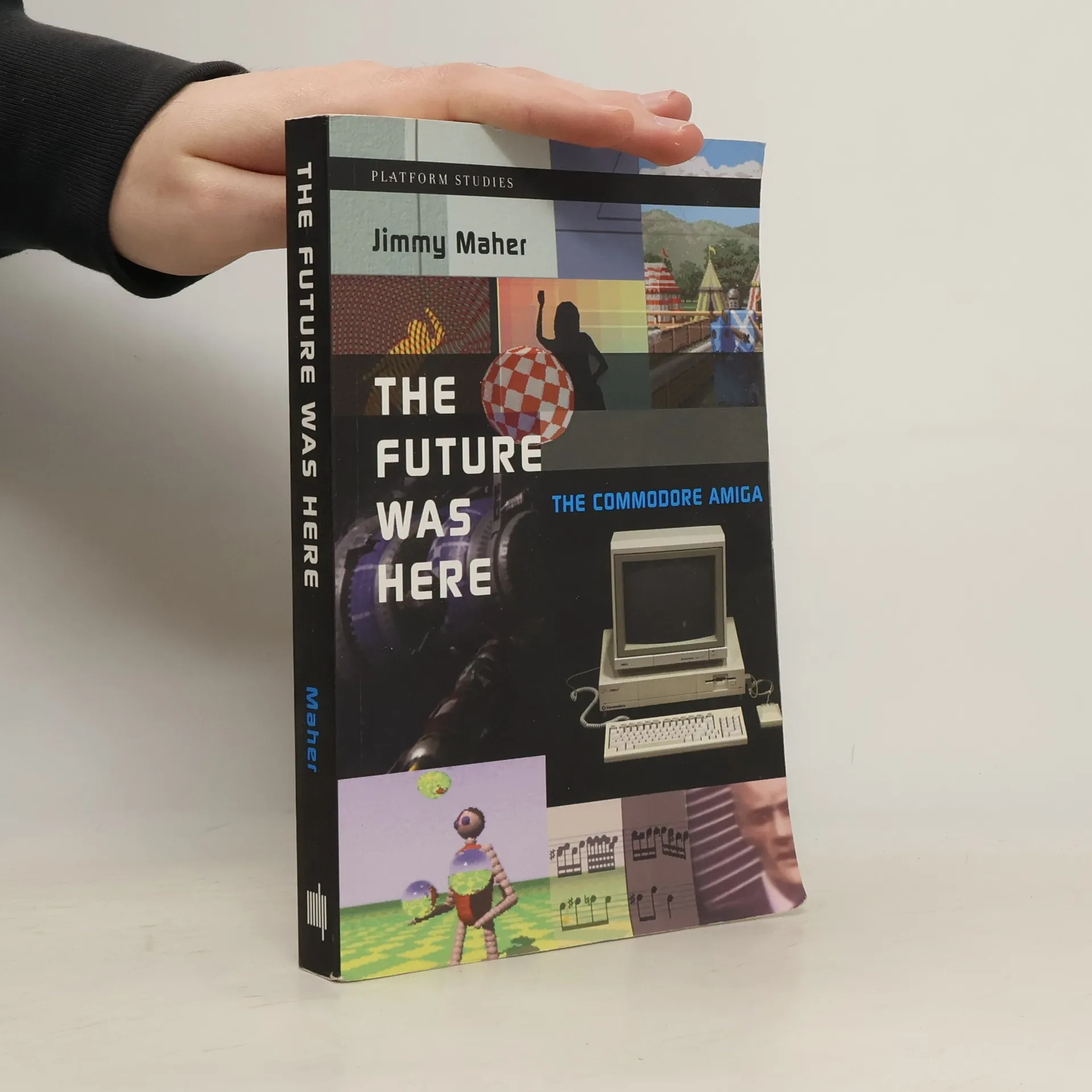
  • Platform Studies: The Future Was Here

    The Commodore Amiga

    • 344bladzijden
    • 13 uur lezen

    In 1985, personal computers were largely divided into two categories: playful game machines from companies like Atari and Commodore, and utilitarian business machines from IBM. The former offered limited real-world utility, while the latter focused solely on functionality, lacking any sense of fun. Enter the Commodore Amiga 1000, a groundbreaking personal computer that introduced a palette of 4,096 colors, advanced animation capabilities, four-channel stereo sound, multitasking, a graphical user interface, and impressive processing power. According to Jimmy Maher, this was the world's first true multimedia computer. He argues that the Amiga's ability to store and display color photos, manipulate video, and use real-world sound recordings laid the groundwork for the digital media future, influencing technologies like digital cameras, Photoshop, MP3 players, and platforms such as YouTube and Flickr. Maher explores various aspects of the Amiga, including Deluxe Paint, AmigaOS, and Cinemaware, painting a vivid picture of the platform and its vibrant community. While acknowledging its flaws—such as a clunky DOS component and frequent crashes—he highlights how, for a brief period, the Amiga empowered engineers, programmers, and artists to redefine the landscape of computing before Commodore's bankruptcy in 1994.

    Platform Studies: The Future Was Here
    3,7