Short Circuits: Incontinence of the Void
- 322bladzijden
- 12 uur lezen
The formidably brilliant Zizek considers sexuality, ontology, subjectivity, and Marxian critiques of political economy by way of Lacanian psychoanalysis.


Slavoj Žižek is een Sloveense filosoof en cultuurcriticus, bekend om zijn vernieuwende toepassing van de werken van Jacques Lacan op populaire cultuur. Zijn uitgebreide oeuvre behandelt een breed scala aan onderwerpen, van politiek en ideologie tot subjectiviteit en psychoanalyse. Žižeks essays en boeken verbinden vaak theoretische concepten met analyses van hedendaagse sociale verschijnselen en media. Zijn unieke stijl en provocatieve benadering maken hem tot een van de belangrijkste denkers van deze tijd.





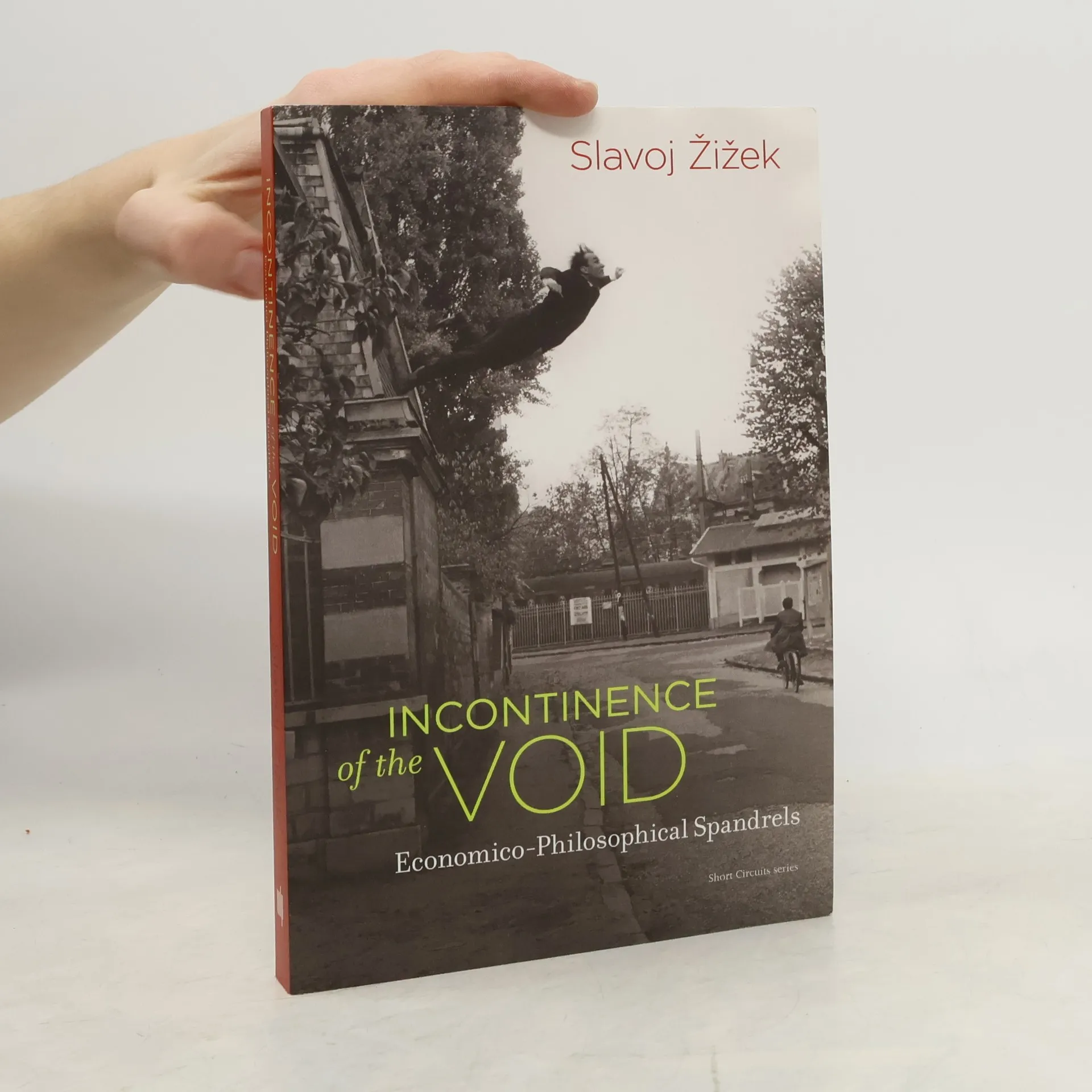
The formidably brilliant Zizek considers sexuality, ontology, subjectivity, and Marxian critiques of political economy by way of Lacanian psychoanalysis.
A spirit is haunting contemporary thought – the spirit of Hegel. All the powers of academia have entered into a holy alliance to exorcize this spirit: Vitalists and Eschatologists, Transcendental Pragmatists and Speculative Realists, Historical Materialists and even ‘liberal Hegelians’. Which of these groups has not been denounced as metaphysically Hegelian by its opponents? And which has not hurled back the branding reproach of Hegelian metaphysics in its turn? Progressives, liberals and reactionaries alike receive this condemnation. In light of this situation, it is high time that true Hegelians should openly admit their allegiance and, without obfuscation, express the importance and validity of Hegelianism to the contemporary intellectual scene. To this end, a small group of Hegelians of different nationalities have assembled to sketch the following book – a book which addresses a number of pressing issues that a contemporary reading of Hegel allows a new perspective on: our relation to the future, our relation to nature and our relation to the absolute.
A thousand-page resurrection of Hegel, from the bestselling philosopher and critic who has been hailed as “one of the world’s best-known public intellectuals” (New York Review of Books) For the last two centuries, Western philosophy has developed in the shadow of Hegel, an influence each new thinker struggles to escape. As a consequence, Hegel’s absolute idealism has become the bogeyman of philosophy, obscuring the fact that he is the defining philosopher of the historical transition to modernity, a period with which our own times share startling similarities. Today, as global capitalism comes apart at the seams, we are entering a new period of transition. In Less Than Nothing—the product of a career-long focus on the part of its author—Slavoj Žižek argues it is imperative we not simply return to Hegel but that we repeat and exceed his triumphs, overcoming his limitations by being even more Hegelian than the master himself. Such an approach not only enables Žižek to diagnose our present condition, but also to engage in a critical dialogue with key strands of contemporary thought—Heidegger, Badiou, speculative realism, quantum physics, and cognitive sciences. Modernity will begin and end with Hegel.
Slavoj Žižek takes the work of French philosopher Gilles Deleuze as the beginning of a dazzling enquiry into the realms of radical politics, philosophy, film and psychoanalysis.
Zizek's philosophical masterwork, now out in paperback
In this profound exploration, Slavoj Zizek redefines dialectical materialism, critiquing influential thinkers and engaging with diverse topics from quantum mechanics to sexual difference. Utilizing striking imagery and Hegelian concepts, he offers fresh interpretations of Hegel and Kant, alongside vibrant discussions on film, politics, and culture.
Totalitarianism, as an ideological notion, has always had a precise strategic function: to guarantee the liberal-democratic hegemony by dismissing the Leftist critique of liberal democracy as the obverse, the twin, of the Rightist Fascist dictatorships. Instead of providing yet another systematic exposition of the history of this notion, Žižek’s book addresses totalitarianism in a Wittgensteinian way, as a cobweb of family resemblances. He concludes that the devil lies not so much in the detail of what constitutes totalitarianism as in what enables the very designation totalitarian: the liberal-democratic consensus itself.
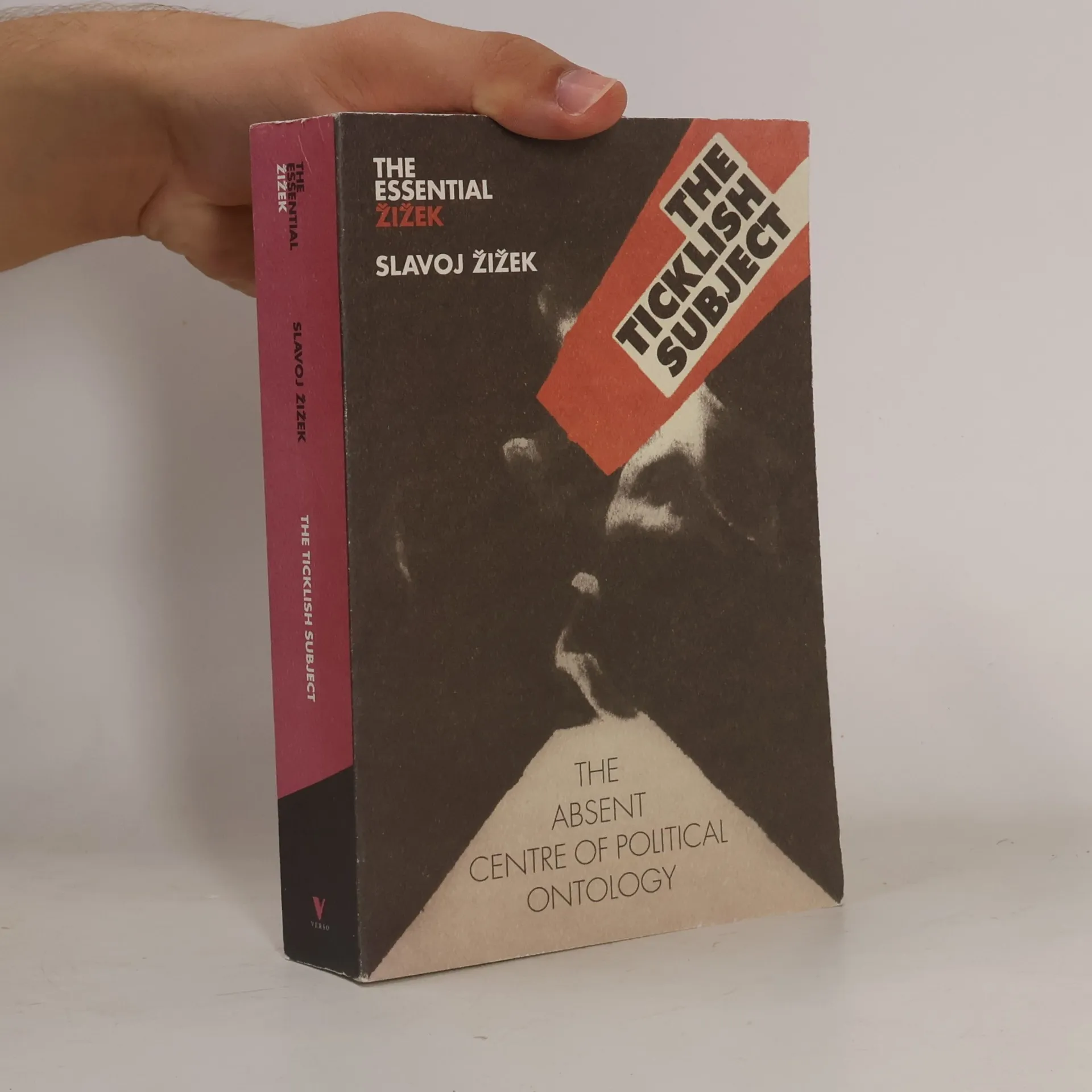
Slavoj Žižek, the maverick philosopher, author of over 30 books, acclaimed as the “Elvis of cultural theory”, and today’s most controversial public intellectual. His work traverses the fields of philosophy, psychoanalysis, theology, history and political theory, taking in film, popular culture, literature and jokes—all to provide acute analyses of the complexities of contemporary ideology as well as a serious and sophisticated philosophy. His recent films The Pervert’s Guide to the Cinema and Žižek! reveal a theorist at the peak of his powers and a skilled communicator. Now Verso is making his classic titles, each of which stand as a core of his ever-expanding life’s work, available as new editions. Each is beautifully re-packaged, including new introductions from Žižek himself. Simply put, they are the essential texts for understanding Žižek’s thought and thus cornerstones of contemporary philosophy. The Ticklish Subject: The Absent Centre of Political Ontology: A specter is haunting Western thought, the specter of the Cartesian subject. In this book Slavoj Žižek unearths a subversive core to this elusive specter, and finds within it the indispensable philosophical point of reference for any genuinely emancipatory project.
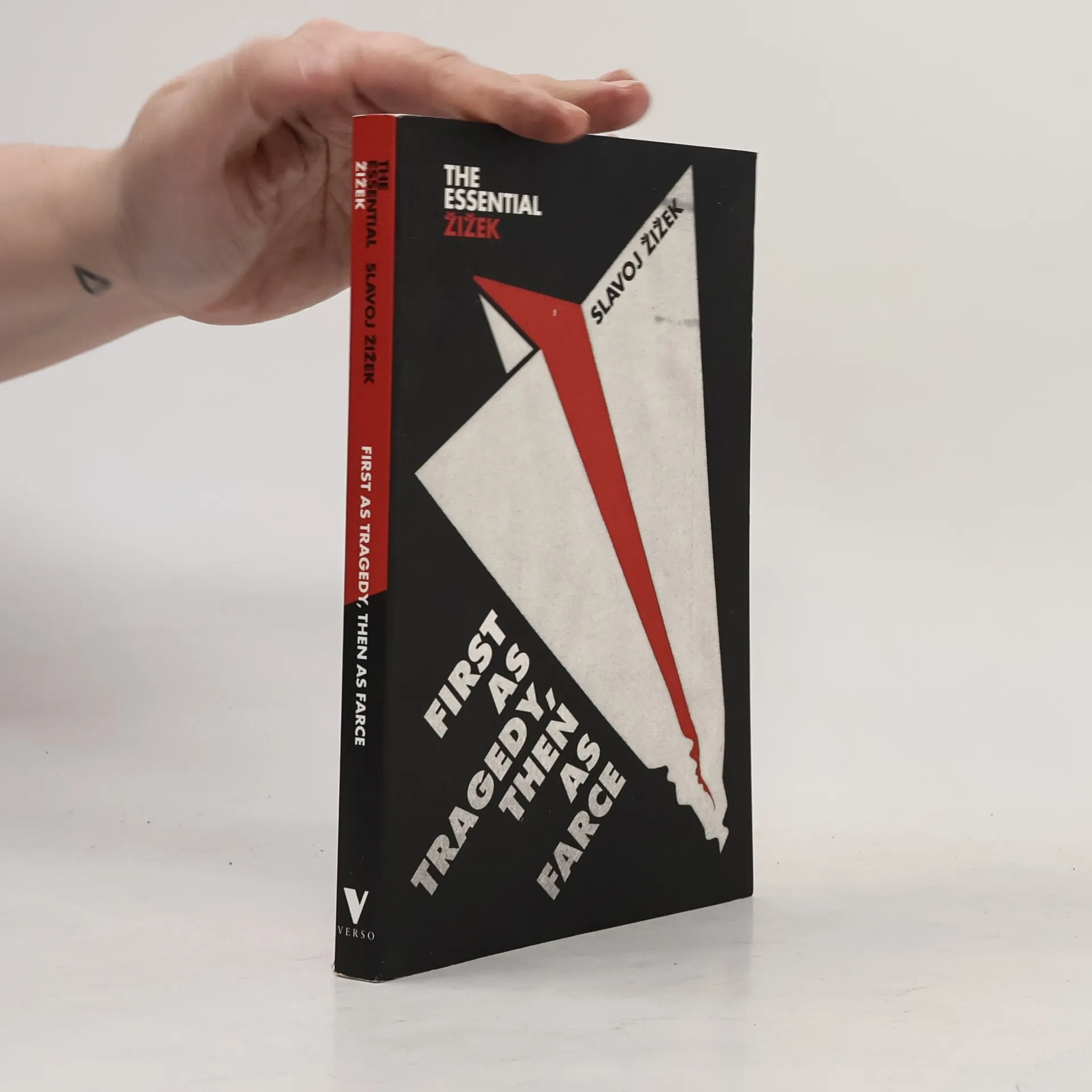
As we emerge (though perhaps only temporarily) from the pandemic, other crises move center stage: outrageous inequality, climate disaster, desperate refugees, mounting tensions of a new cold war. The abiding motif of our time is relentless chaos. Acknowledging the possibilities for new beginnings at such moments, Mao Zedong famously proclaimed "There is great disorder under heaven; the situation is excellent." The contemporary relevance of Mao's observation depends on whether today's catastrophes can be a catalyst for progress or have passed over into something terrible and irretrievable. Perhaps the disorder is no longer under, but in heaven itself. Characteristically rich in paradoxes and reversals that entertain as well as illuminate, Slavoj Žižek's new book treats with equal analytical depth the lessons of Rammstein and Corbyn, Morales and Orwell, Lenin and Christ. It excavates universal truths from local political sites across Palestine and Chile, France and Kurdistan, and beyond. Heaven In Disorder looks with fervid dispassion at the fracturing of the Left, the empty promises of liberal democracy, and the tepid compromises offered by the powerful. From the ashes of these failures, Žižek asserts the need for international solidarity, economic transformation, and--above all--an urgent, "wartime" communism.
Robespierre's defense of the French Revolution remains one of the most powerful and unnerving justifications for political violence ever written, and has extraordinary resonance in a world obsessed with terrorism and appalled by the language of its proponents. Yet today, the French Revolution is celebrated as the event which gave birth to a nation built on the principles of enlightenment. So how should a contemporary audience approach Robespierre's vindication of revolutionary terror? Zizek takes a helter-skelter route through these contradictions, marshaling all the breadth of analogy for which he is famous.
Slavoj Žižek, the maverick philosopher, author of over 30 books, acclaimed as the “Elvis of cultural theory”, and today’s most controversial public intellectual. His work traverses the fields of philosophy, psychoanalysis, theology, history and political theory, taking in film, popular culture, literature and jokes—all to provide acute analyses of the complexities of contemporary ideology as well as a serious and sophisticated philosophy. His recent films The Pervert’s Guide to the Cinema and Žižek! reveal a theorist at the peak of his powers and a skilled communicator. Now Verso is making his classic titles, each of which stand as a core of his ever-expanding life’s work, available as new editions. Each is beautifully re-packaged, including new introductions from Žižek himself. Simply put, they are the essential texts for understanding Žižek’s thought and thus cornerstones of contemporary philosophy. The Sublime Object of Ideology: Slavoj Žižek’s first book is a provocative and original work looking at the question of human agency in a postmodern world. In a thrilling tour de force that made his name, he explores the ideological fantasies of wholeness and exclusion which make up human society.
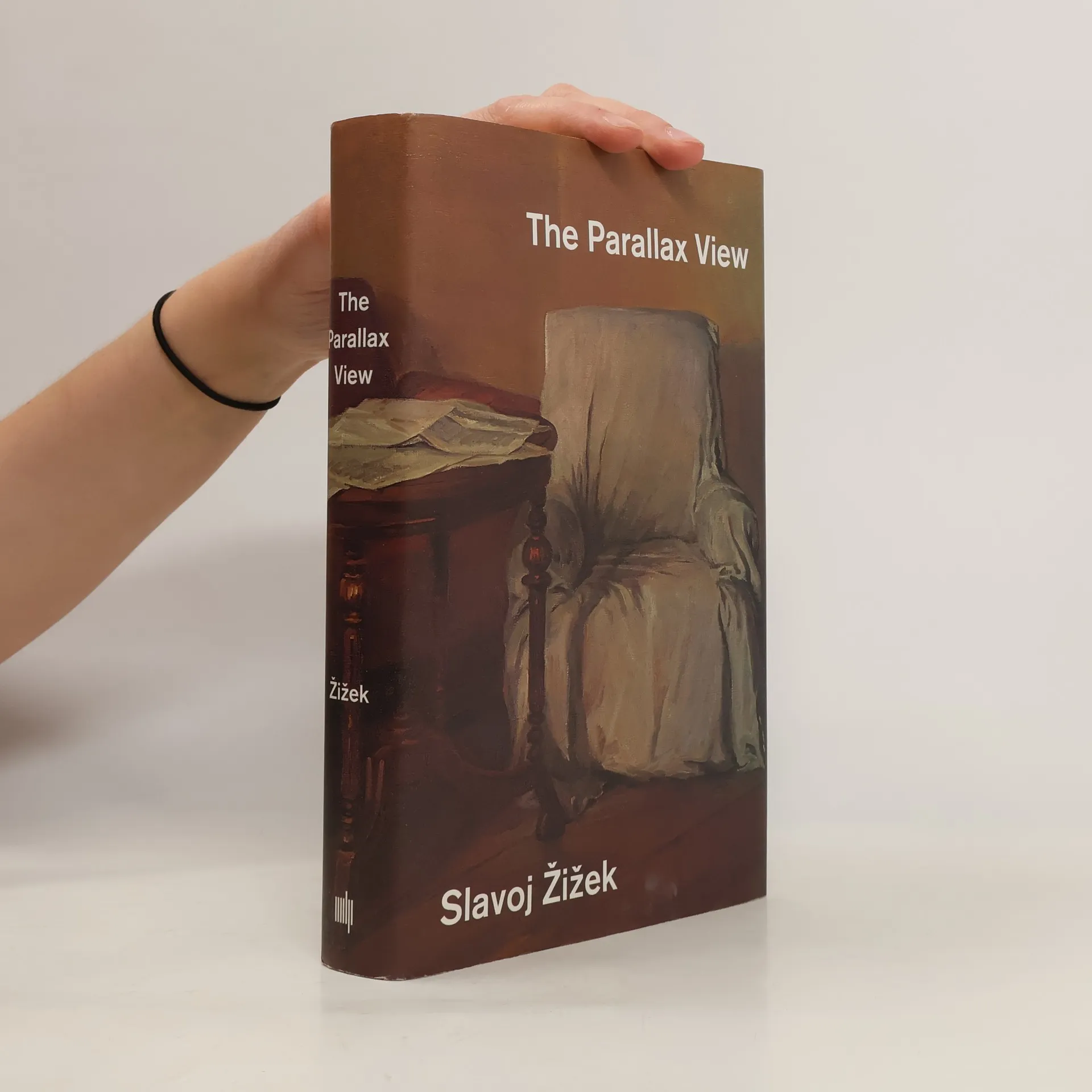
Seeks to rehabilitate dialectical materialism by discussing the "parallax gap," which separates two points because of the displacement of an object resulting from a change in observational position.
Slavoj eiuek provides a virtuoso reading of the psychoanalytic theory of Jacques Lacan through the works of contemporary popular culture, from horror fiction and detective thrillers to popular romances and Hitchcock films.
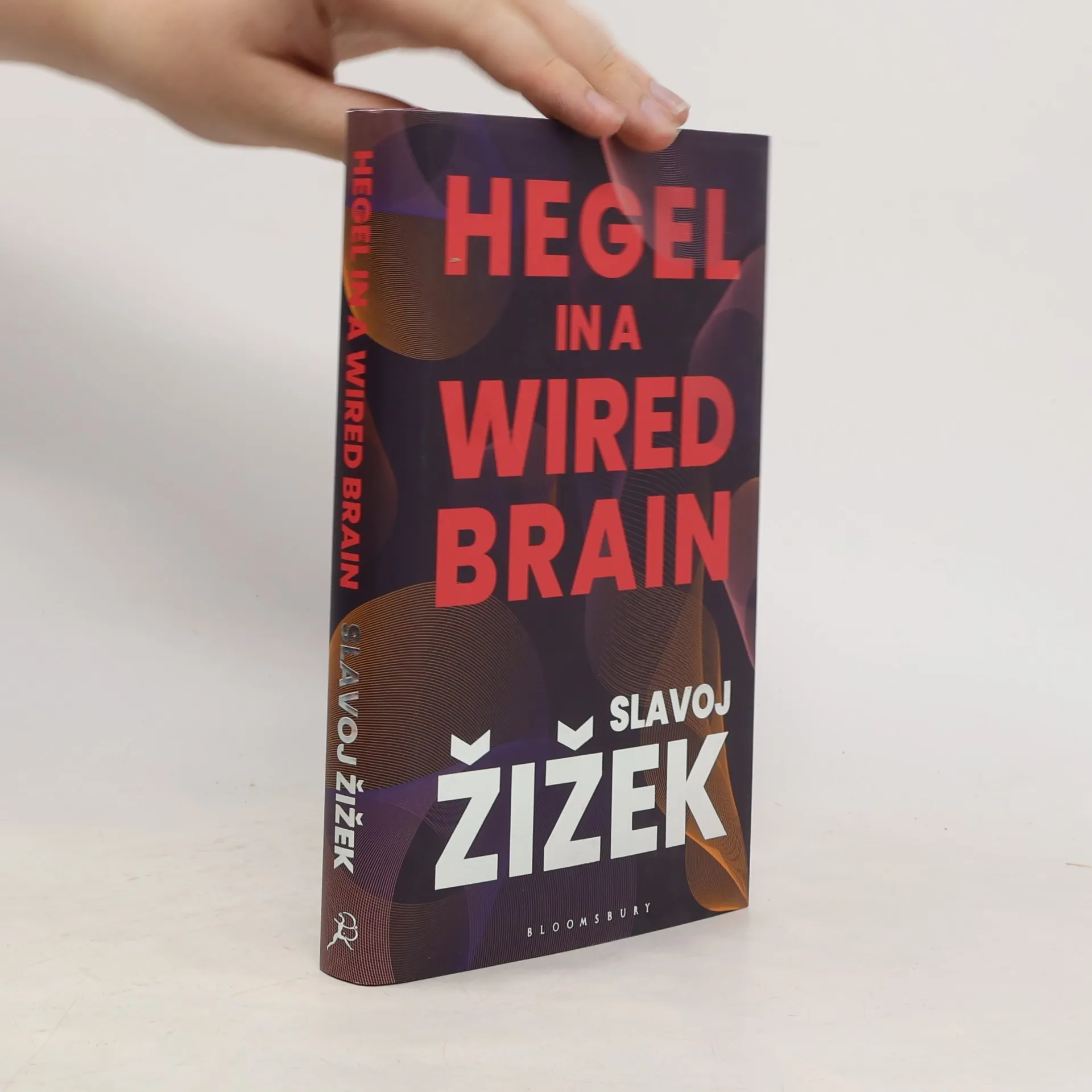
In celebration of the 250th anniversary of the birth of G.W.F. Hegel, Slavoj Žižek gives us a reading of the philosophical giant that changes our way of thinking about our new posthuman era. No ordinary study of Hegel, Hegel in a Wired Brain investigates what he might have had to say about the idea of the 'wired brain' – what happens when a direct link between our mental processes and a digital machine emerges. Žižek explores the phenomenon of a wired brain effect , and what might happen when we can share our thoughts directly with others. He hones in on the key question of how it shapes our experience and status as 'free' individuals and asks what it means to be human when a machine can read our minds.With characteristic verve and enjoyment of the unexpected, Žižek connects Hegel to the world we live in now, shows why he is much more fun than anyone gives him credit for, and why the 21st century might just be Hegelian.
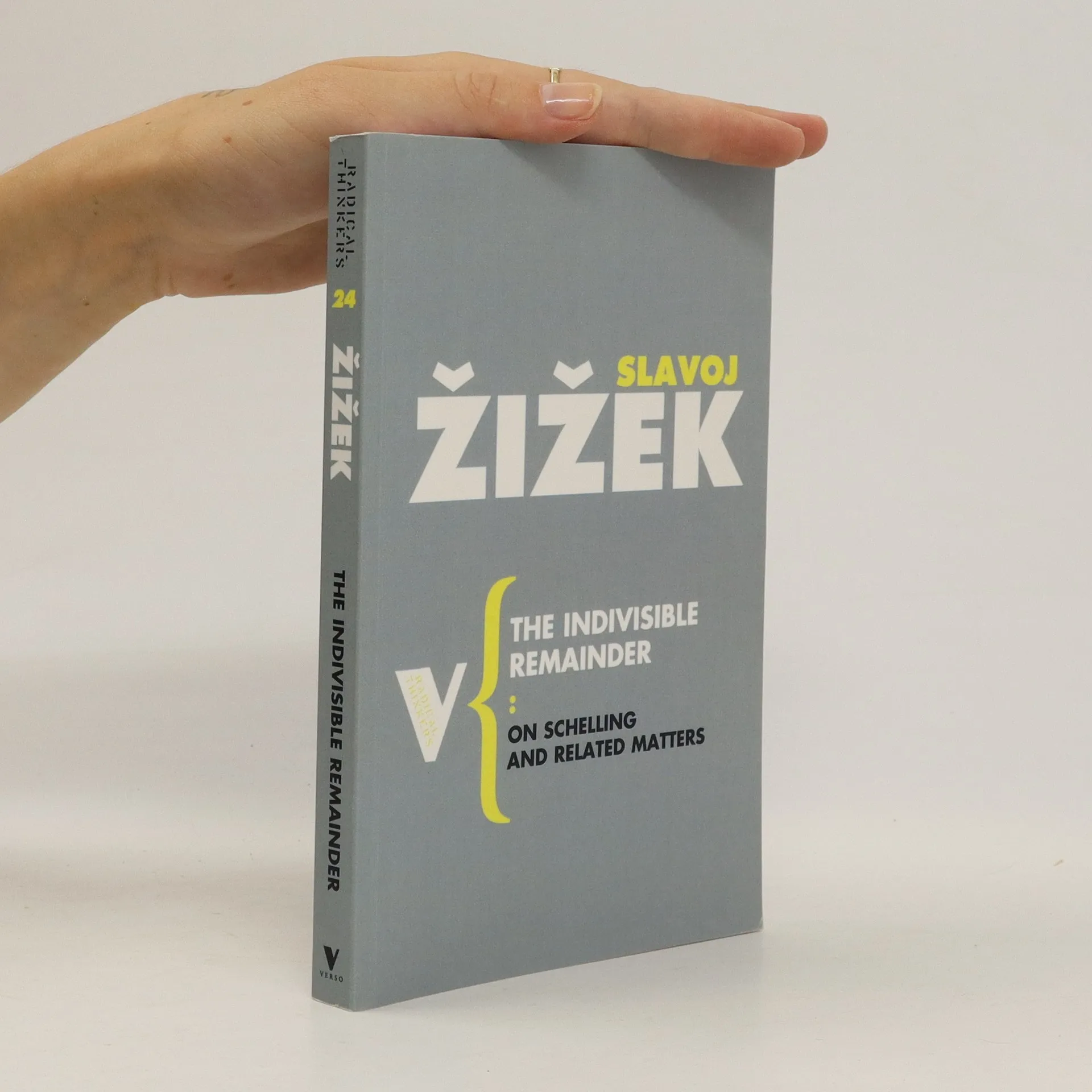
Combines Schelling with popular film for a study of modern life.
DIVA theoretical analysis of social conflict that uses examples from Kant, Hegel, Lacan, popular culture and contemporary politics to critique nationalism./div
"We are all afraid that new dangers pose a threat to our hard-won freedoms, so what deserves attention is precisely the notion of freedom." The concept of freedom is deceptively simple - we think we understand it, but the moment we try and define it we encounter contradictions. In this new philosophical exploration, Slavoj Zizek argues that the experience of true, radical freedom is transient and fragile. Countering the idea of libertarian individualism, Zizek draws on philosophers including Kierkegaard, Heidegger, and Timothy Morton, as well as the work of Kandinsky, Agatha Christie and Alexandria Ocasio-Cortez to examine the many facets of freedom and what we can learn from each of them. Tracing its connection to a variety of issues, including environmental breakdown, capitalism, and war, he shows through this entertaining and illuminating journey how a deeper understanding of freedom can offer hope in dark times.
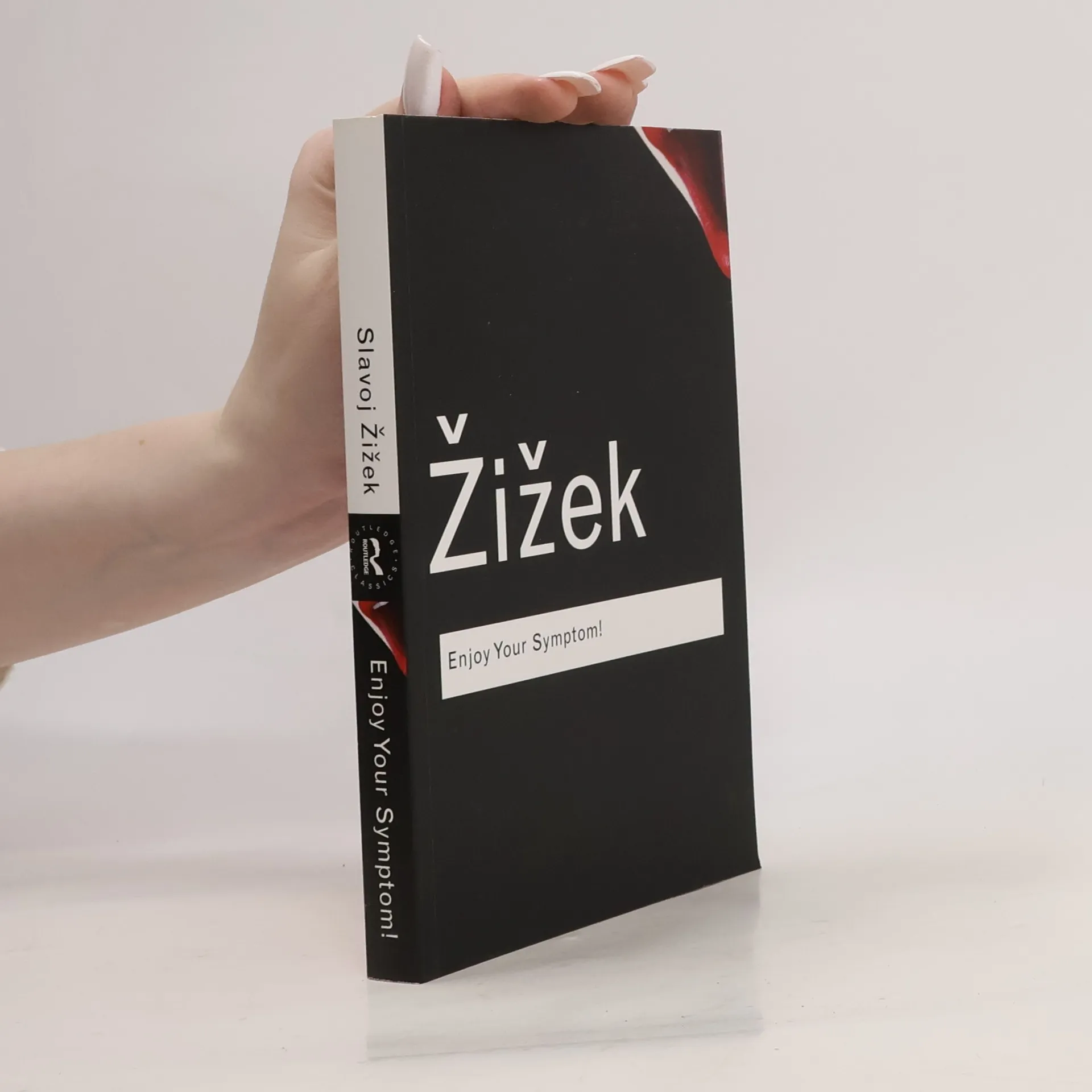
The title is just the first of many startling asides, observations and insights that fill this guide to Hollywood on the Lacanian psychoanalyst's couch. Zizek introduces the ideas of Jacques Lacan through the medium of American film, taking his examples from over 100 years of cinema, from Charlie Chaplin to The Matrix and referencing along the way such figures as Lenin and Hegel, Michel Foucault and Jesus Christ. Enjoy Your Symptom! is a thrilling guide to cinema and psychoanalysis from a thinker who is perhaps the last standing giant of cultural theory in the twenty-first century.
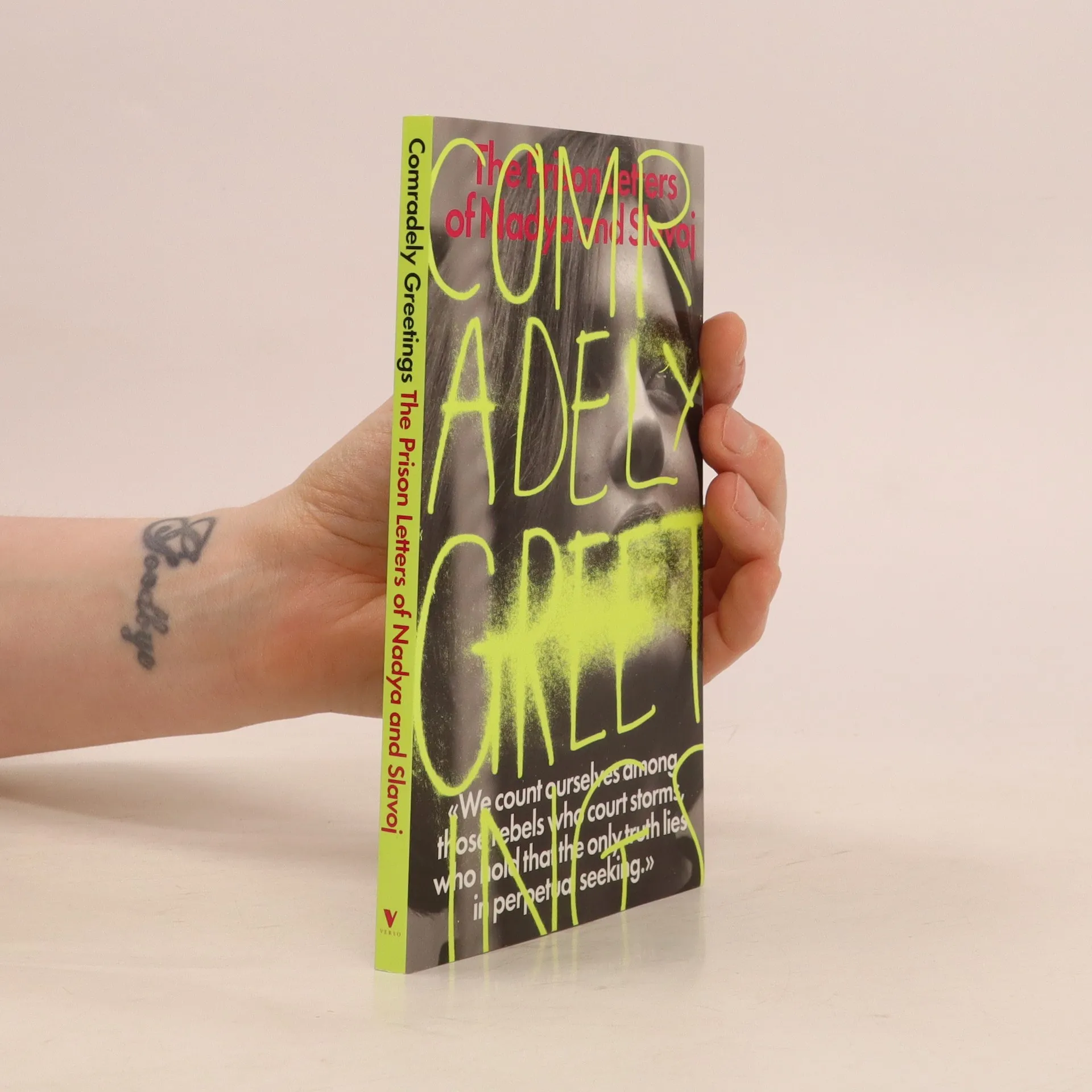
”We are the rebels asking for the storm, and believing that truth is only to be found in an endless search ... Two years of prison for Pussy Riot is our tribute to a destiny that gave us sharp ears, allowing us to sound the note A when everyone else is used to hearing G flat.”In an extraordinary exchange of letters, Nadezhda Tolokonnikova, imprisoned for taking part in Pussy Riot’s anti-Putin performance, and Slovenian philosopher Slavoj Žižek discuss artistic subversion, political activism, and the future of democracy via the ideas of Hegel, Deleuze, Nietzsche, and even Laurie Anderson. Two radicals, one in a Russian forced labor camp, the other writing to her from far outside its walls, show passionately – across linguistic and generational divides – that “there is still a common cause worth fighting for.” Touching, erudite, and worldly, their correspondence unfolds with poetic urgency.In association with Philosophie Magazine .
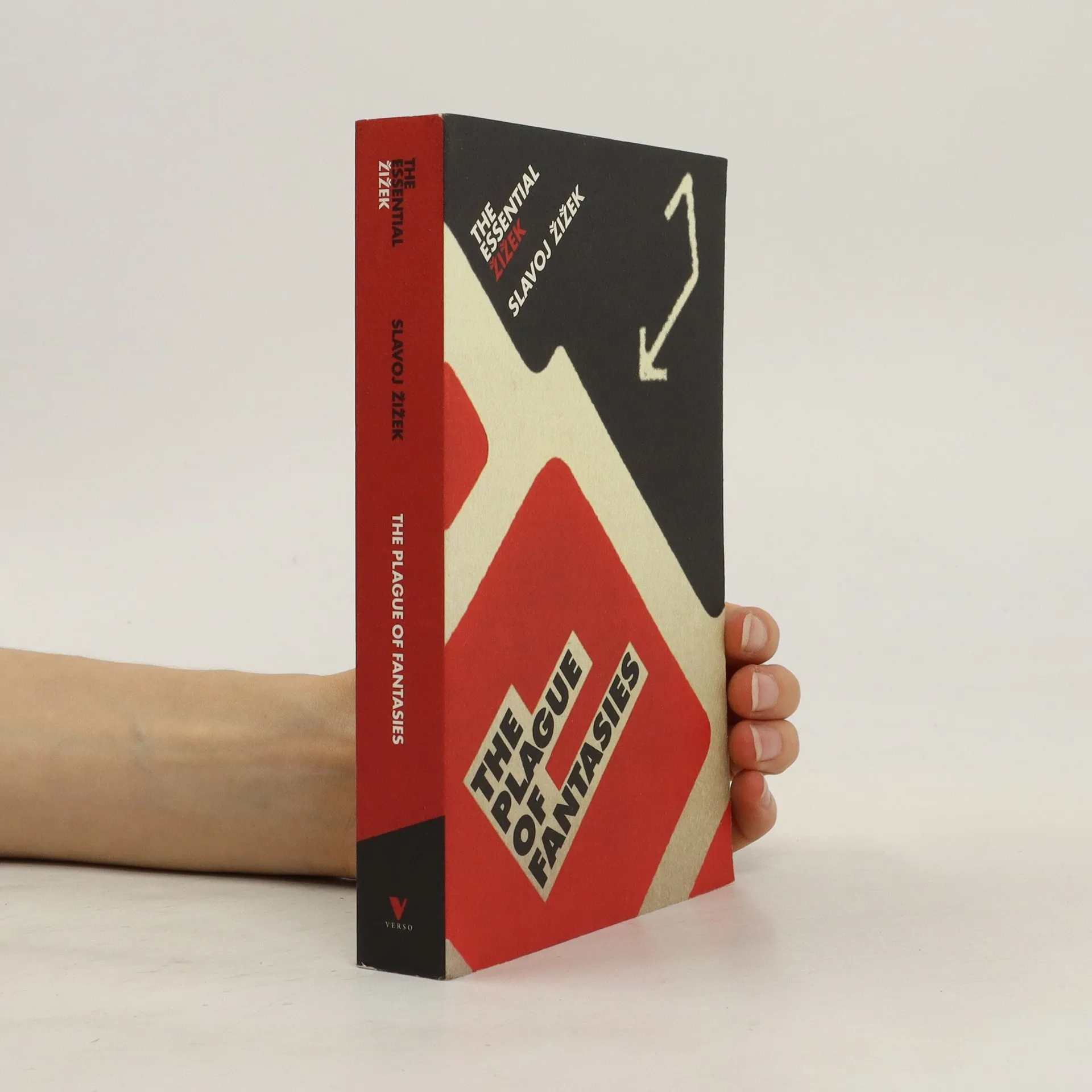
Modern audiovisual media have spawned a ‘plague of fantasies’, electronically inspired phantasms that cloud the ability to reason and prevent a true understanding of a world increasingly dominated by abstractions—whether those of digital technology or the speculative market. Into this arena, enters Žižek: equipped with an agile wit and the skills of a prodigious scholar, he confidently ranges among a dazzling array of cultural references—explicating Robert Schumann as deftly as he does John Carpenter—to demonstrate how the modern condition blinds us to the ideological basis of our lives.
Five Essays on September 11 and Related Dates
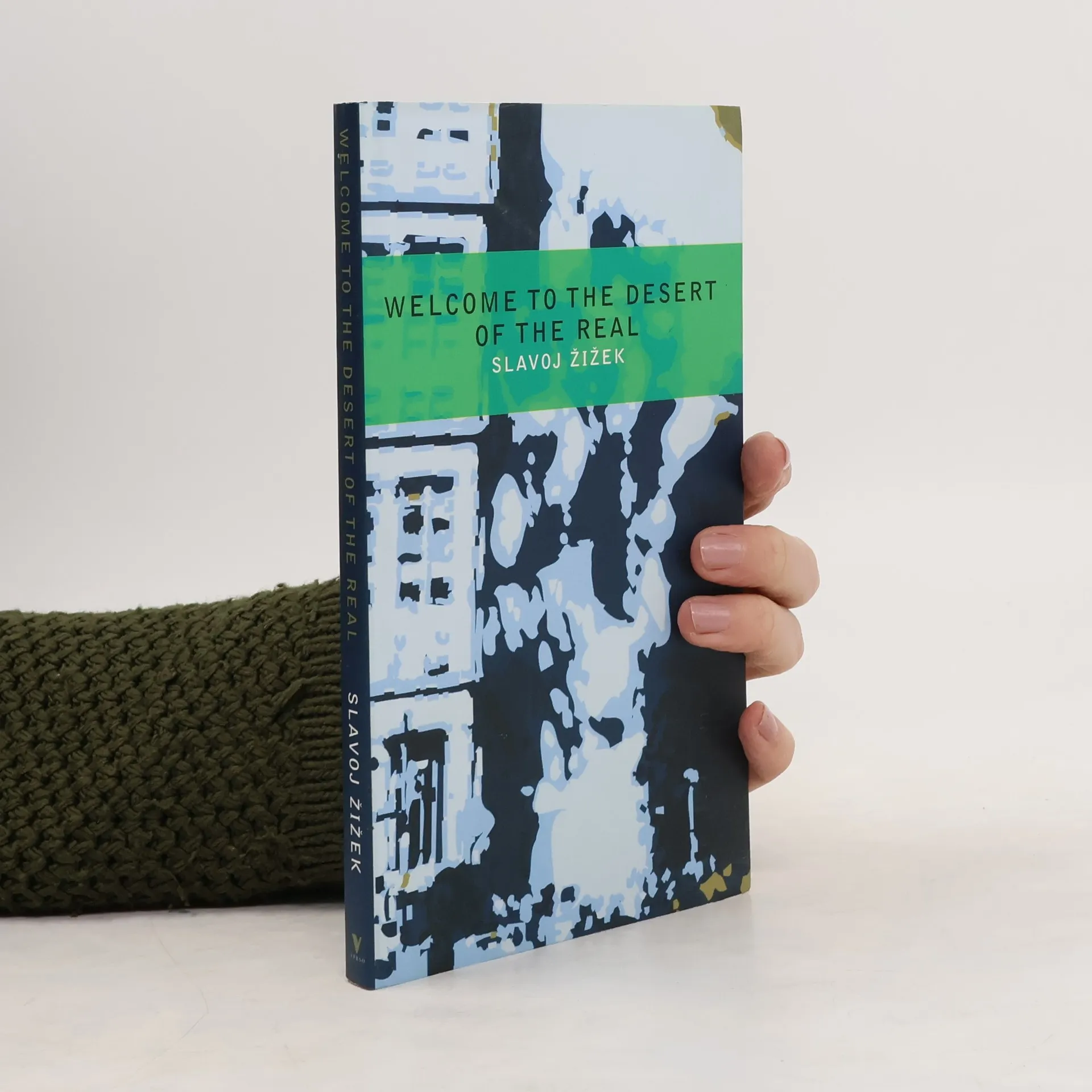
Liberals and conservatives proclaim the end of the American holiday from history. Now the easy games are over; one should take sides. Žižek argues this is precisely the temptation to be resisted. In such moments of apparently clear choices, the real alternatives are most hidden. Welcome to the Desert of the Real steps back, complicating the choices imposed on us. It proposes that global capitalism is fundamentalist and that America was complicit in the rise of Muslim fundamentalism. It points to our dreaming about the catastrophe in numerous disaster movies before it happened, and explores the irony that the tragedy has been used to legitimize torture. Last but not least it analyzes the fiasco of the predominant leftist response to the events.
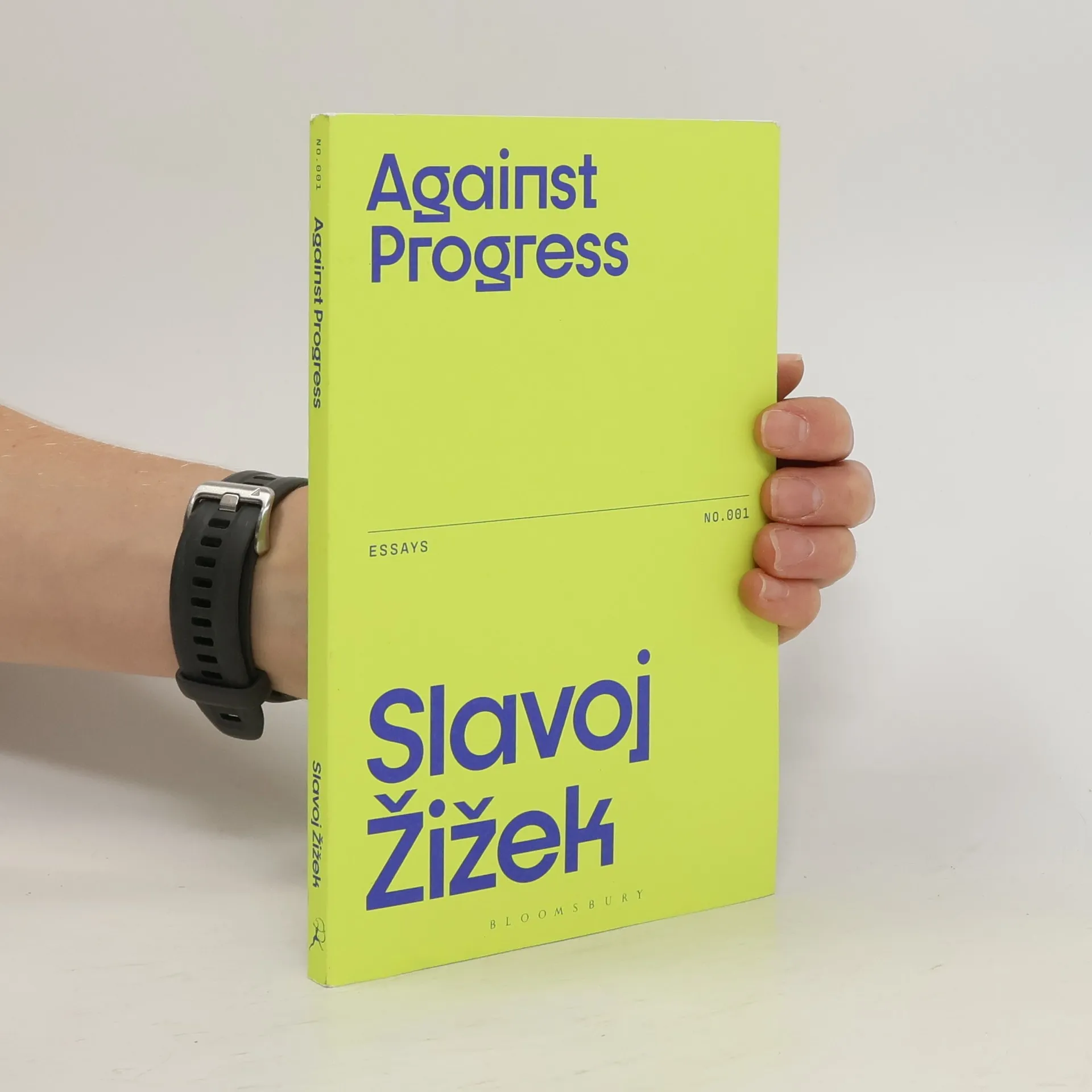
In this first book in the new series Žižek's Essays, Slavoj Žižek asks readers to disrupt fake notions of progress in order to fight for something authentically better.
With his characteristic wit, Zizek addresses the burning question of how to reformulate a leftist project in an era of global capitalism and liberal-democratic multiculturalism. Copyright © Libri GmbH. All rights reserved.
Three renowned contemporary theorists discuss their different perspectives for politics and thought.
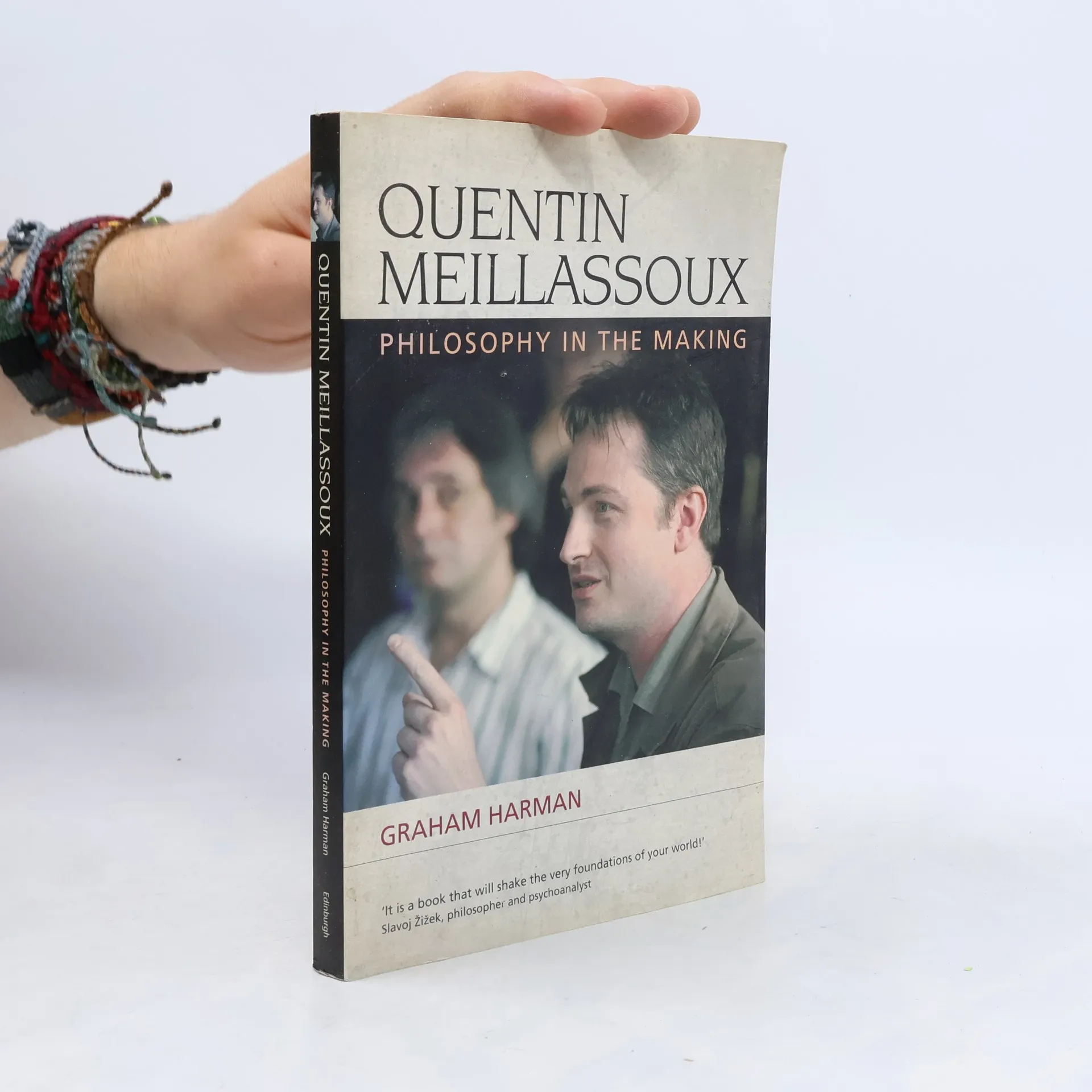
Quentin Meillassoux's entry into the philosophical scene marks the beginning of a new epoch: the end of the transcendental approach and the return to realist ontology. Harman's beautifully written and argued book provides not just an introduction to Meillassoux, but much more: one authentic philosopher writing about another - a rare true encounter. It is not only for those who want to understand Meillassoux, but also for those who want to witness a radical shift in the entire field of philosophy. It is a book that will shake the very foundations of your world!Slavoj Zizek, philosopher and psychoanalystAn in-depth study of the emerging French philosopher Quentin MeillassouxQuentin Meillassoux has been described as the most rapidly prominent French philosopher in the Anglophone world since Jacques Derrida in the 1960's. With the publication of After Finitude (2006), this daring prot�g� of Alain Badiou became one of the world's most visible younger thinkers.In this book, his fellow Speculative Realist, Graham Harman, assesses Meillassoux's publications in English so far. Also included are an insightful interview with Meillassoux and first-time translations of excerpts from L'Inexistence divine (The Divine Inexistence), his famous but still unpublished major book.
With irrepressible humour Slavoj eZiezek dissects our current political and social climate, discussing everything from Jordan Peterson and sex 'unicorns' to Greta Thunberg and Chairman Mao. This is eZiezek's attempt to elucidate the major political issues of the day from a truly radical left position--
In a characteristically explosive barrage, Ljubljana’s most famous philosopher takes a passionate stance on the war in Ukraine, surveys the latest Hollywood blockbusters, and delivers detonations into a range of contemporary issues, from sexual politics in India to the prospects for a new Cold War. Ever attentive to moments where the bizarre and the epic join forces, among the questions Žižek considers here Is the giant orgy, planned to take place in Ukraine in the event of a Russian nuclear attack, really all that morbid? And what should society do, whether on the big screen or the battlefield, in preparation for the end of the world? Agree with him or not, Žižek rarely fails to provoke in a productive fashion. By examining matters through a lens that is bold and original, and often joyfully outlandish, Žižek helps us to better grasp a world in which, increasingly, the dominant motif is one of madness.
Zizek argues that the physical violence we see is often generated by the systemic violence that sustains our political and economic systems. With the help of eminent philosophers like Marx, Engel and Lacan, as well as frequent references to popular culture, he examines the real causes of violent outbreaks like those seen in Israel and Palestine and in terrorist acts around the world. Ultimately, he warns, doing nothing is often the most violent course of action we can take.
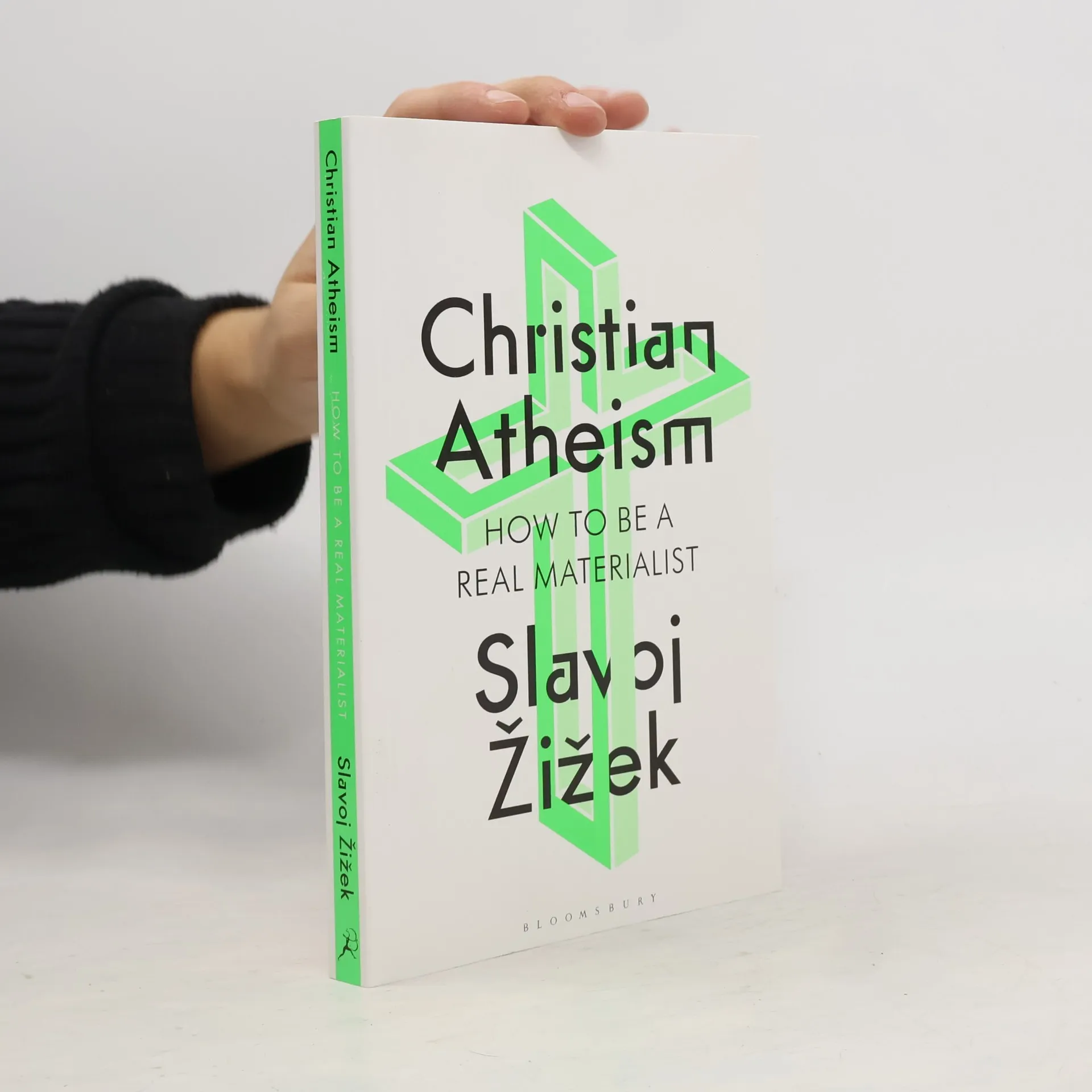
If we want to be true atheists, do we have to begin with a religious edifice and undermine it from within? Slavoj Žižek has long been a commentator on, and critic of, Christian theology. His preoccupation with Badiou's concept of 'the event' alongside the Pauline thought of the New Testament has led to a decidedly theological turn in his thinking. Drawing on traditions and subjects as broad as Buddhist thought, dialectical materialism, political subjectivity, quantum physics, AI and chatbots, this book articulates Žižek's idea of a religious life for the first time. Christian Atheism is a unique insight into Žižek's theological project and the first book-length exploration of his religious thinking. In his own words, "to become a true dialectical materialist, one should go through the Christian experience." Crucial to his whole conception of 'experience' is not some kind of spiritual revelation but rather the logic of materialistic thought. This affirmation of Christian theology whilst simultaneously deconstructing it is a familiar Žižekian move, but one that holds deep-seated political, philosophical and, in the end, personal import for him. Here is Žižek's most extensive treatment of theology and religion to date.
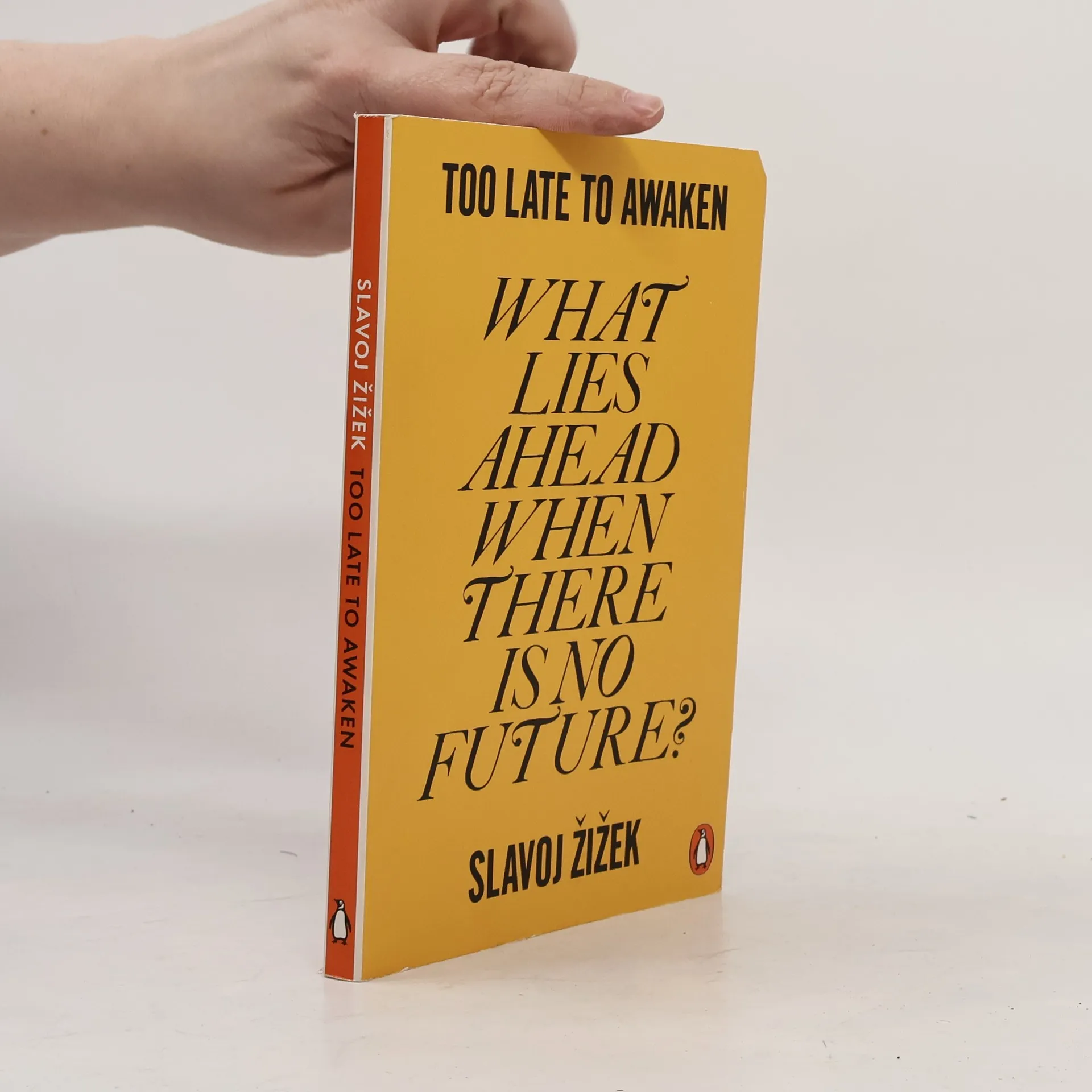
We hear all the time that we're moments from doomsday. Around us, crises interlock and escalate, threatening our collective survival: Russia's invasion of Ukraine, with its rising risk of nuclear warfare, is taking place against a backdrop of global warming, ecological breakdown, and widespread social and economic unrest. Protestors and politicians repeatedly call for action, but still we conti[Bokinfo].
Is global emancipation a lost cause? Are universal values outdated relics of an earlier age? In fear of the horrors of totalitarianism should we submit ourselves to a miserable third way of economic liberalism and government-as-administration?In this major new work, philosophical sharpshooter Slavoj Žižek takes on the reigning ideology with a plea that we should re-appropriate several ‘lost causes,’ and look for the kernel of truth in the ‘totalitarian’ politics of the past.Examining Heidegger’s seduction by fascism and Foucault’s flirtation with the Iranian Revolution, he suggests that these were the ‘right steps in the wrong direction.’ He argues that while the revolutionary terror of Robespierre, Mao and the Bolsheviks ended in historic failure and monstrosity, this is not the whole story. There is, in fact, a redemptive moment that gets lost in the outright liberal-democratic rejection of revolutionary authoritarianism and the valorization of soft, consensual, decentralized politics.Žižek claims that, particularly in light of the forthcoming ecological crisis, we should reinvent revolutionary terror and the dictatorship of the proletariat in the struggle for universal emancipation. We need to courageously accept the return to this Cause — even if we court the risk of a catastrophic disaster. In the words of Samuel Beckett: ‘Try again. Fail again. Fail better.’
The concept of disparity has long been a topic of obsession and argument for philosophers but Slavoj Žižek would argue that what disparity and negativity could mean, might mean and should mean for us and our lives has never been more hotly debated. Disparities explores contemporary 'negative' philosophies from Catherine Malabou's plasticity, Julia Kristeva's abjection and Robert Pippin's self-consciousness to the God of negative theology, new realisms and post-humanism and draws a radical line under them. Instead of establishing a dialogue with these other ideas of disparity, Slavoj Žižek wants to establish a definite departure, a totally different idea of disparity based on an imaginative dialectical materialism. This notion of rupturing what has gone before is based on a provocative reading of how philosophers can, if they're honest, engage with each other. Slavoj Žižek borrows Alain Badiou's notion that a true idea is the one that divides. Radically departing from previous formulations of negativity and disparity, Žižek employs a new kind of negativity: namely positing that when a philosopher deals with another philosopher, his or her stance is never one of dialogue, but one of division, of drawing a line that separates truth from falsity.
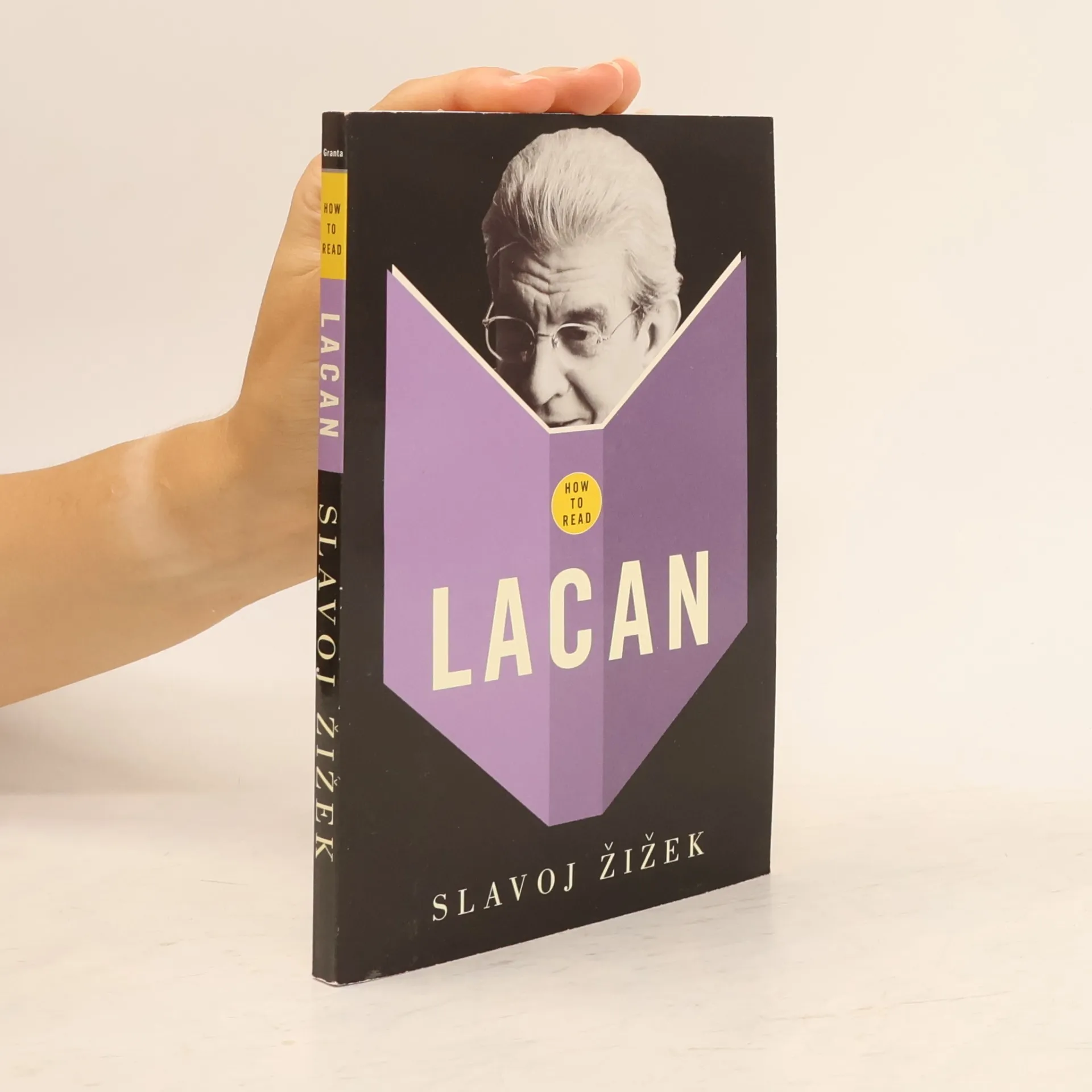
Lacan reminds us that psychoanalysis is the only discourse in which you are allowed not to enjoy. Since for Lacan psychoanalysis itself is a procedure of reading, here, each chapter uses a passage from Lacan as a tool to interpret another text from philosophy, art or popular ideology.
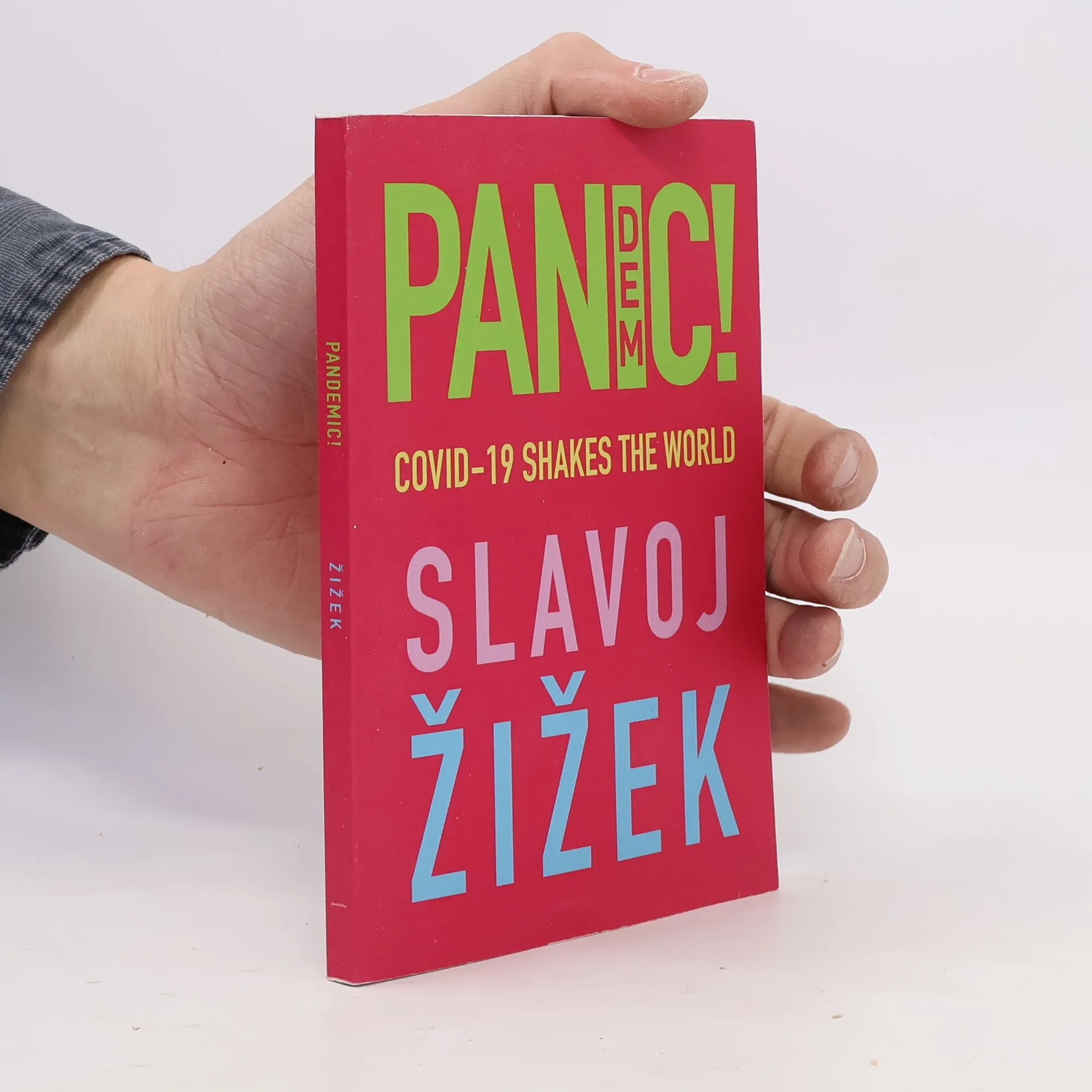
As an unprecedented pandemic sweeps the planet, who better than the supercharged Slovenian philosopher Slavoj Zizek to uncover its deeper meanings, marvel at its paradoxes and speculate on the profundity of its consequences? Written with his customary brio, Zizek provides a provocative snapshot of the crisis as it widens, engulfing us all.
In a world rife with crises, we often accept capitalism as the best possible system, viewing alternatives like equality and democracy as dull or dangerous. Slavoj Zizek challenges this notion, arguing that capitalism offers a bleak future masked as constant change. He posits that the struggle for emancipation is the boldest endeavor we can undertake. Drawing from diverse references, including music videos and philosophical giants like Marx and Lacan, Zizek critiques the capitalist system and warns of the dire consequences of inaction. He emphasizes the need for radical change and highlights new heroes such as Julian Assange, Chelsea Manning, and Edward Snowden, urging us to break free from ideological constraints. The stakes are high; without this shift, we risk a society filled with metaphorical zombies and vampires. Zizek's provocative insights reveal the contradictions of contemporary capitalism, making him a pivotal figure in modern thought. His engaging, sometimes chaotic prose captivates readers, providing a compelling call to action against complacency in the face of systemic failures. The urgency of his message resonates, reminding us that true progress requires daring imagination and a willingness to challenge the status quo.
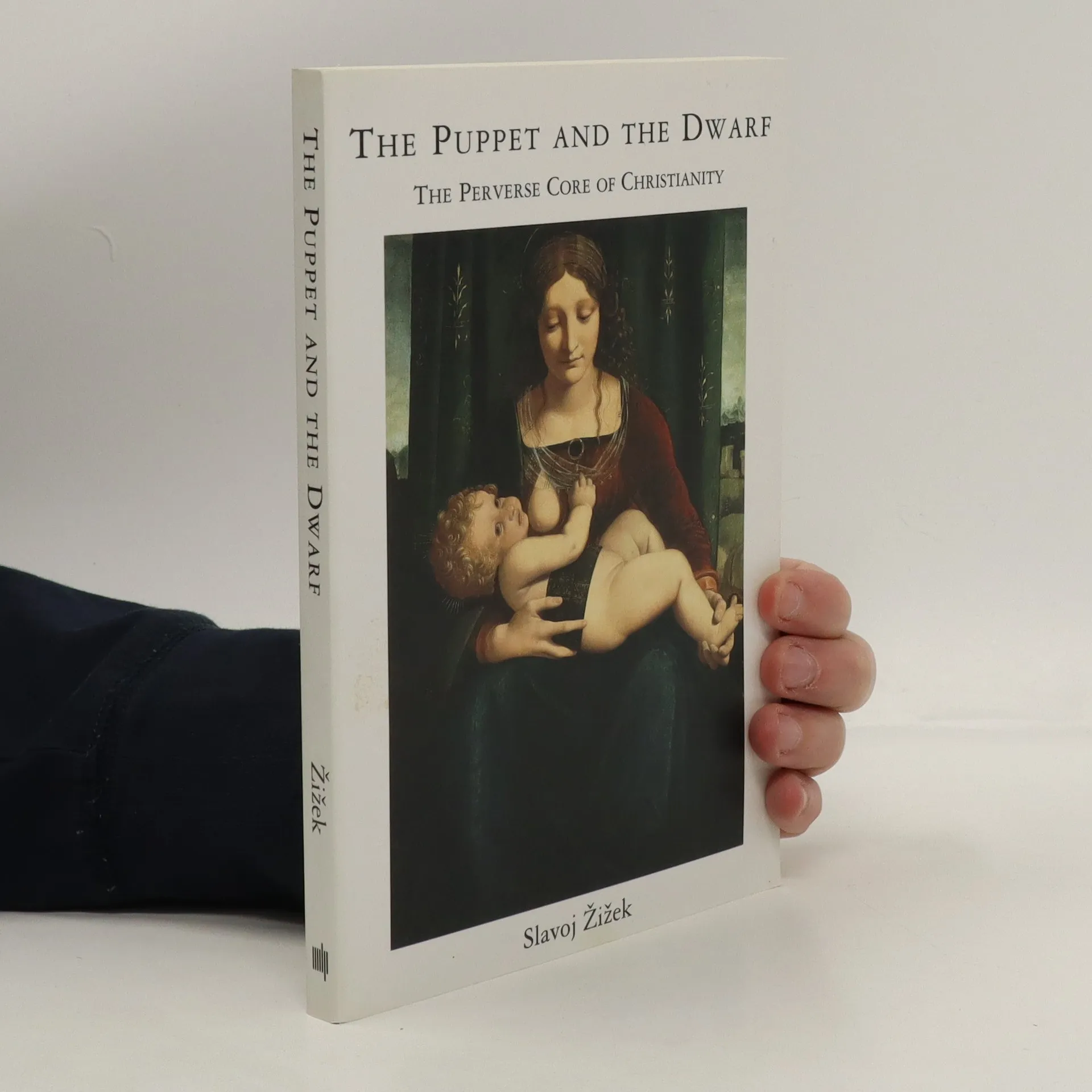
One of our most daring intellectuals offers a Lacanian interpretation of religion, finding that early Christianity was the first revolutionary collective.Slavoj Zizek has been called "an academic rock star" and "the wild man of theory"; his writing mixes astonishing erudition and references to pop culture in order to dissect current intellectual pieties. In The Puppet and the Dwarf he offers a close reading of today's religious constellation from the viewpoint of Lacanian psychoanalysis. He critically confronts both predominant versions of today's spirituality -- New Age gnosticism and deconstructionist-Levinasian Judaism -- and then tries to redeem the "materialist" kernel of Christianity. His reading of Christianity is explicitly political, discerning in the Pauline community of believers the first version of a revolutionary collective. Since today even advocates of Enlightenment like Jurgen Habermas acknowledge that a religious vision is needed to ground our ethical and political stance in a "postsecular" age, this book -- with a stance that is clearly materialist and at the same time indebted to the core of the Christian legacy -- is certain to stir controversy.
Written in the white heat of revolutionary Russia’s Civil War, Trotsky’s Terrorism and Communism is one of the most potent defenses of revolutionary dictatorship. In his provocative commentary to this new edition the philosopher Slavoj Žižek argues that Trotsky’s attack on the illusions of liberal democracy has a vital relevance today.
Contemporary life is defined by excess. There must always be more, there is never enough. We need a surplus to what we need to be able to truly enjoy what we have. Slavoj Žižek's guide to surplus (and why it's enjoyable) begins by arguing that what is surplus to our needs is by its very nature unsubstantial and unnecessary. But, perversely, without this surplus, we wouldn't be able to enjoy, what is substantial and necessary. Indeed, without the surplus we wouldn't be able to identify what was the perfect amount.Is there any escape from the vicious cycle of surplus enjoyment or are we forever doomed to simply want more? Engaging with everything from The Joker film to pop songs and Thomas Aquinas to the history of pandemics, Žižek argues that recognising the society of enjoyment we live in for what it is can provide an explanation for the political impasses in which we find ourselves today. And if we begin, even a little bit, to recognise that the nuggets of 'enjoyment' we find in excess are as flimsy and futile, might we find a way out?
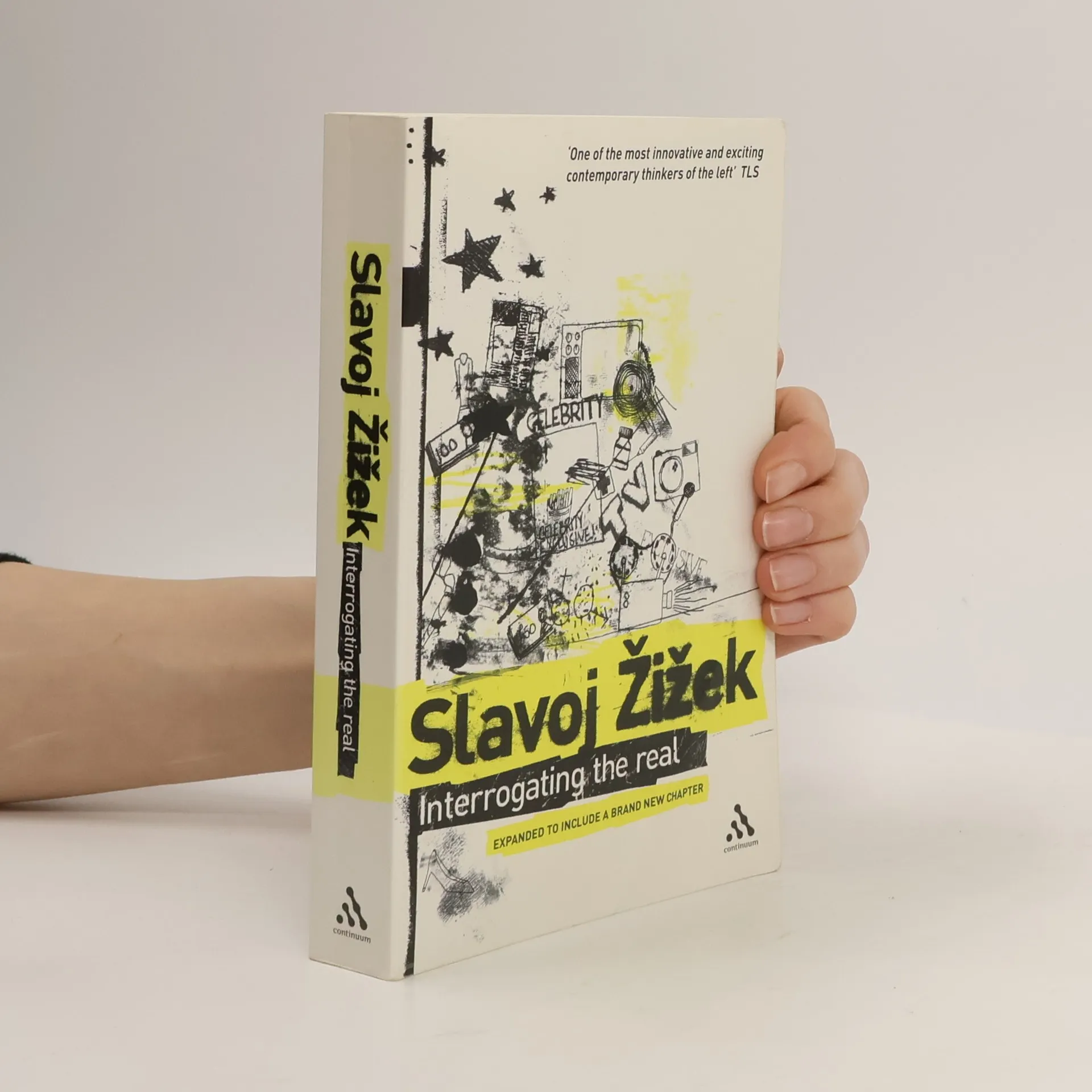
Interrogating the Real is the first volume of the collected writings of Slavoj Žižek--undoubtedly one of the world's leading contemporary cultural commentators. Drawing upon the full range of his prolific output, the articles here cover psychoanalysis, philosophy, and popular culture. These essays not only reflect the remarkable breadth and depth of Žižek's interest in politics, culture, and philosophy, but also showcase his sometimes controversial, but always entertaining style. Over the course of the collection, a full and clear sense of Ž iž ekian philosophy emerges. At the same time, Žižek's witty and accessible approach to his subject matter remains constant throughout, and his choice of exemplars from pop culture ensures that this is a consistently fresh and surprising body of work. Thematically organized, the book includes a new preface by Ž iž ek himself, as well as an introduction by the editors and a helpful glossary. This collection, along with the second volume--The Universal Exception--is an excellent introduction to the work of one of the most inspiring, provocative, and entertaining cultural critics at work today.
The status of women and the role of violence in contemporary culture and politics.The experience of the Yugoslav war and the rise of "irrational" violence in contemporary societies provides the theoretical and political context of this book, which uses Lacanian psychoanalysis as the basis for a renewal of the Marxist theory of ideology. The author's analysis leads into a study of the figure of woman in modern art and ideology, including studies of The Crying Game and the films of David Lynch, and the links between violence and power/gender relations.
Call it the year of dreaming dangerously: 2011 caught the world off guard with a series of shattering events. While protesters in New York, Cairo, London, and Athens took to the streets in pursuit of emancipation, obscure destructive fantasies inspired the world’s racist populists in places as far apart as Hungary and Arizona, achieving a horrific consummation in the actions of mass murderer Anders Breivik. The subterranean work of dissatisfaction continues. Rage is building, and a new wave of revolts and disturbances will follow. Why? Because the events of 2011 augur a new political reality. These are limited, distorted—sometimes even perverted—fragments of a utopian future lying dormant in the present.
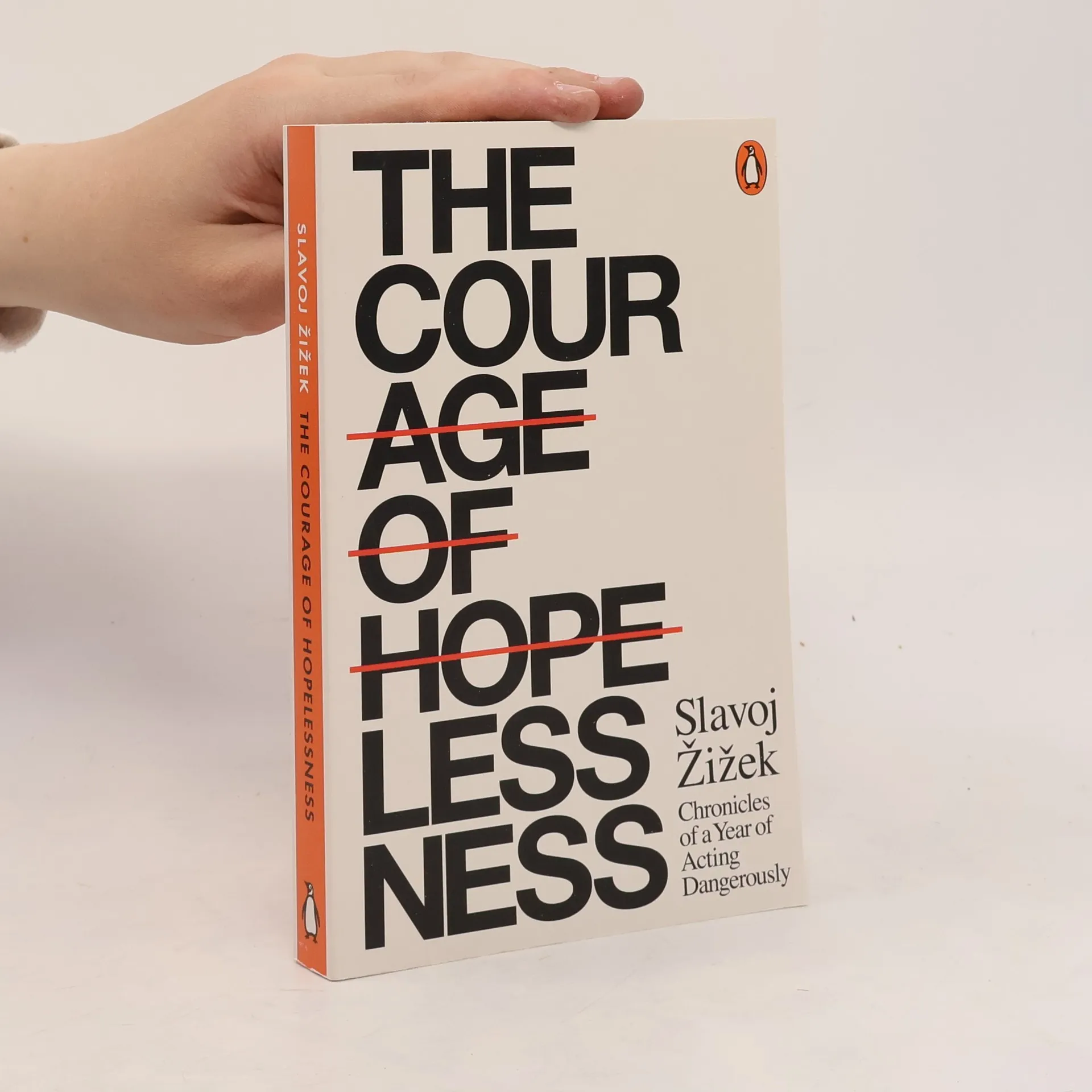
In these troubled times, even the most pessimistic diagnosis of our future ends with an uplifting hint that things might not be as bad as all that, that there is light at the end of the tunnel. Yet, argues the author, it is only when we have admitted to ourselves that our situation is completely hopeless - that the light at the end of the tunnel is in fact the headlight of a train approaching us from the opposite direction - that fundamental change can be brought about
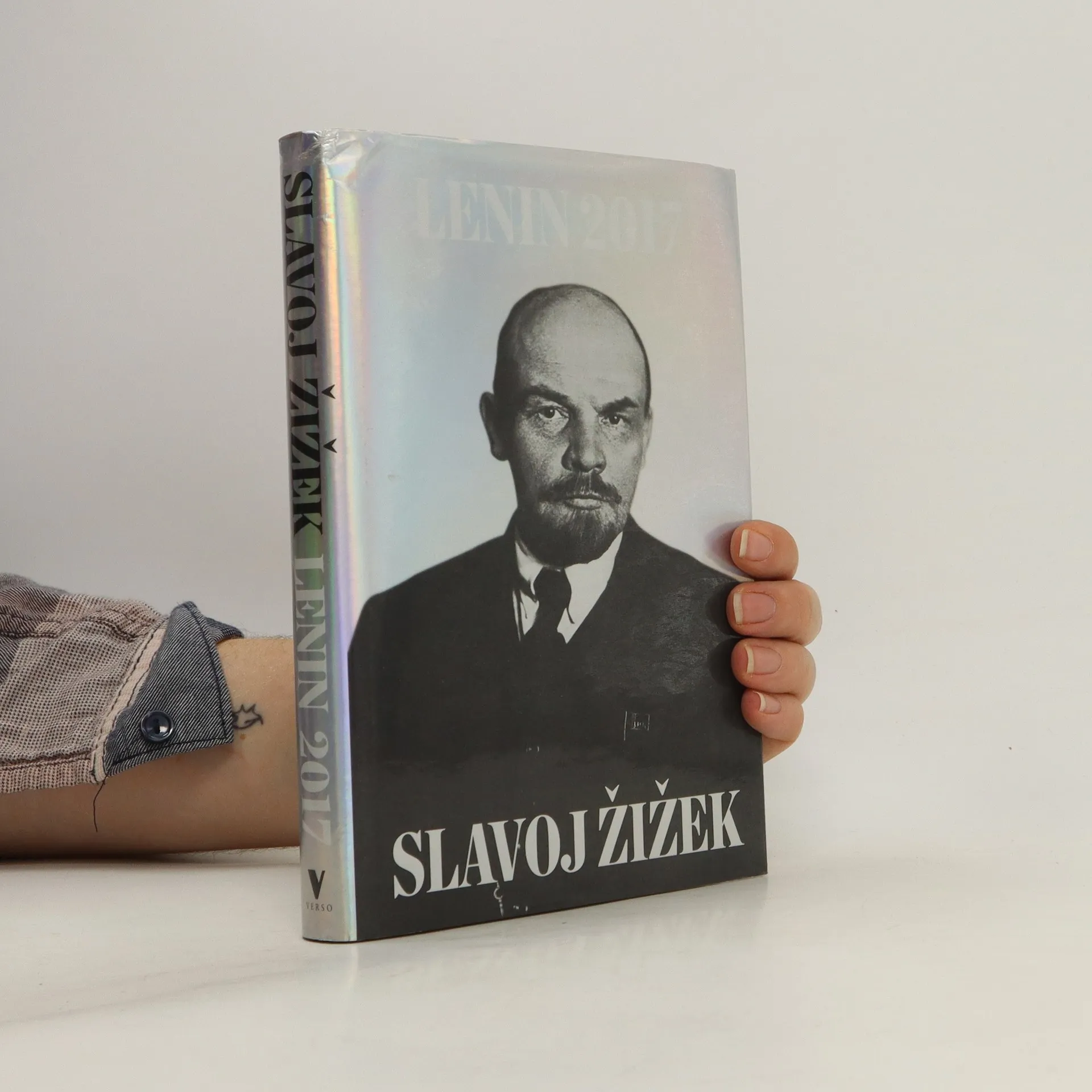
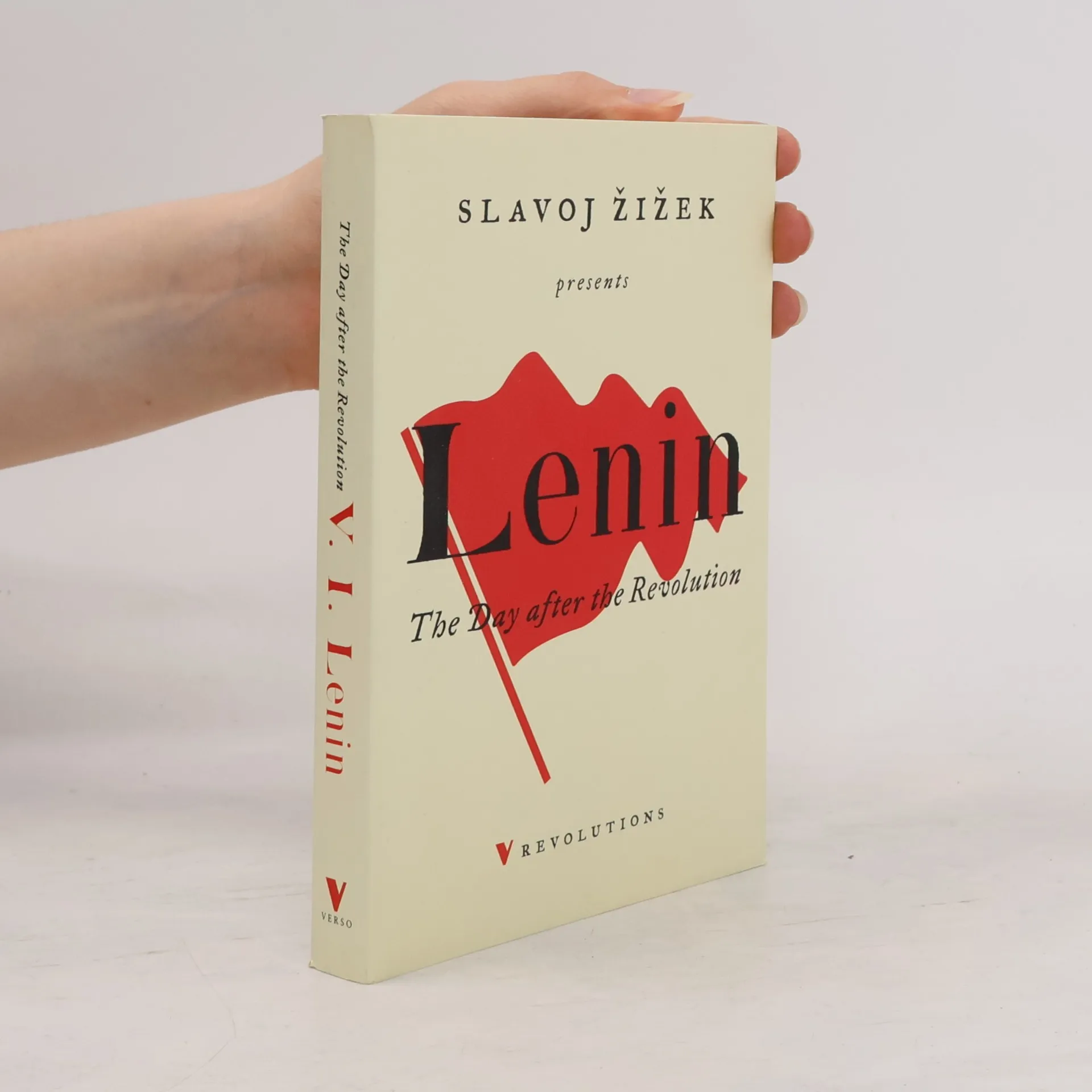
One hundred years after the Russian Revolution, Žižek shows why Lenin’s thought is still important today V. I. Lenin’s originality and importance as a revolutionary leader is most often associated with the seizure of power in 1917. But, in this new study and collection of Lenin’s original texts, Slavoj Žižek argues that his true greatness can be better grasped in the last two years of his political life. Russia had survived foreign invasion, embargo and a terrifying civil war, as well as internal revolts such as the one at Kronstadt in 1921. But the new state was exhausted, isolated and disorientated. As the anticipated world revolution receded into the distance, new paths had to be charted if the Soviet state was to survive. With his characteristic brio and provocative insight, Žižek suggests that Lenin’s courage as a thinker can be found in his willingness to face this reality of retreat unflinchingly. In today’s world, characterized by political turbulence, economic crises and geopolitical tensions, we should revisit Lenin’s combination of sober lucidity and revolutionary determination.
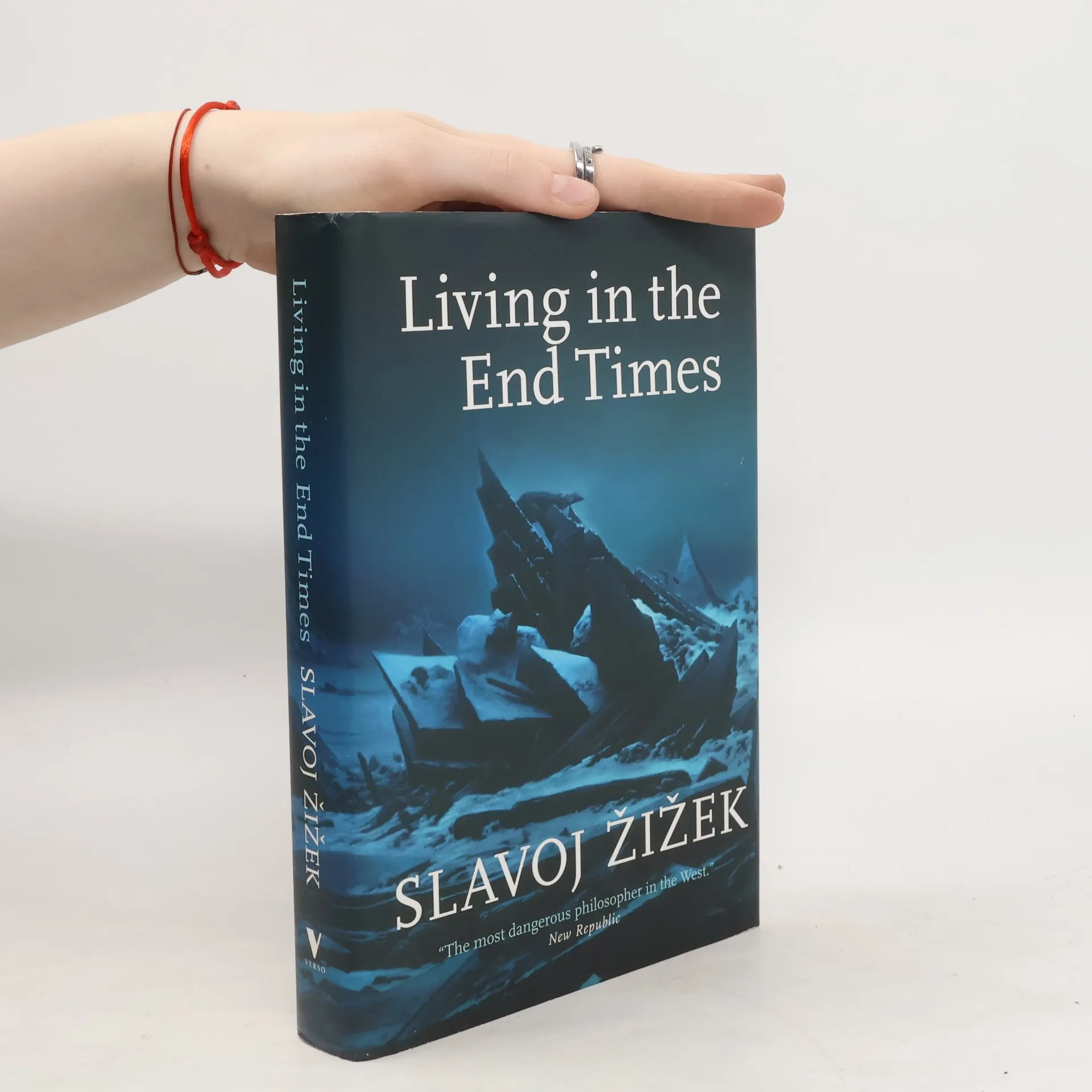
There should no longer be any doubt: global capitalism is fast approaching its terminal crisis. Slavoj Žižek has identified the four horsemen of this coming apocalypse: the worldwide ecological crisis; imbalances within the economic system; the biogenetic revolution; and exploding social divisions and ruptures. But, he asks, if the end of capitalism seems to many like the end of the world, how is it possible for Western society to face up to the end times? In a major new analysis of our global situation, Slavok Žižek argues that our collective responses to economic Armageddon correspond to the stages of grief: ideological denial, explosions of anger and attempts at bargaining, followed by depression and withdrawal. After passing through this zero-point, we can begin to perceive the crisis as a chance for a new beginning. Or, as Mao Zedong put it, “There is great disorder under heaven, the situation is excellent.” Slavoj Žižek shows the cultural and political forms of these stages of ideological avoidance and political protest, from New Age obscurantism to violent religious fundamentalism. Concluding with a compelling argument for the return of a Marxian critique of political economy, Žižek also divines the wellsprings of a potentially communist culture—from literary utopias like Kafka’s community of mice to the collective of freak outcasts in the TV series Heroes.
�i�ek is to today what Jacques Derrida was to the '80s: the thinker of choice for Europe's young intellectual vanguard. -Observer
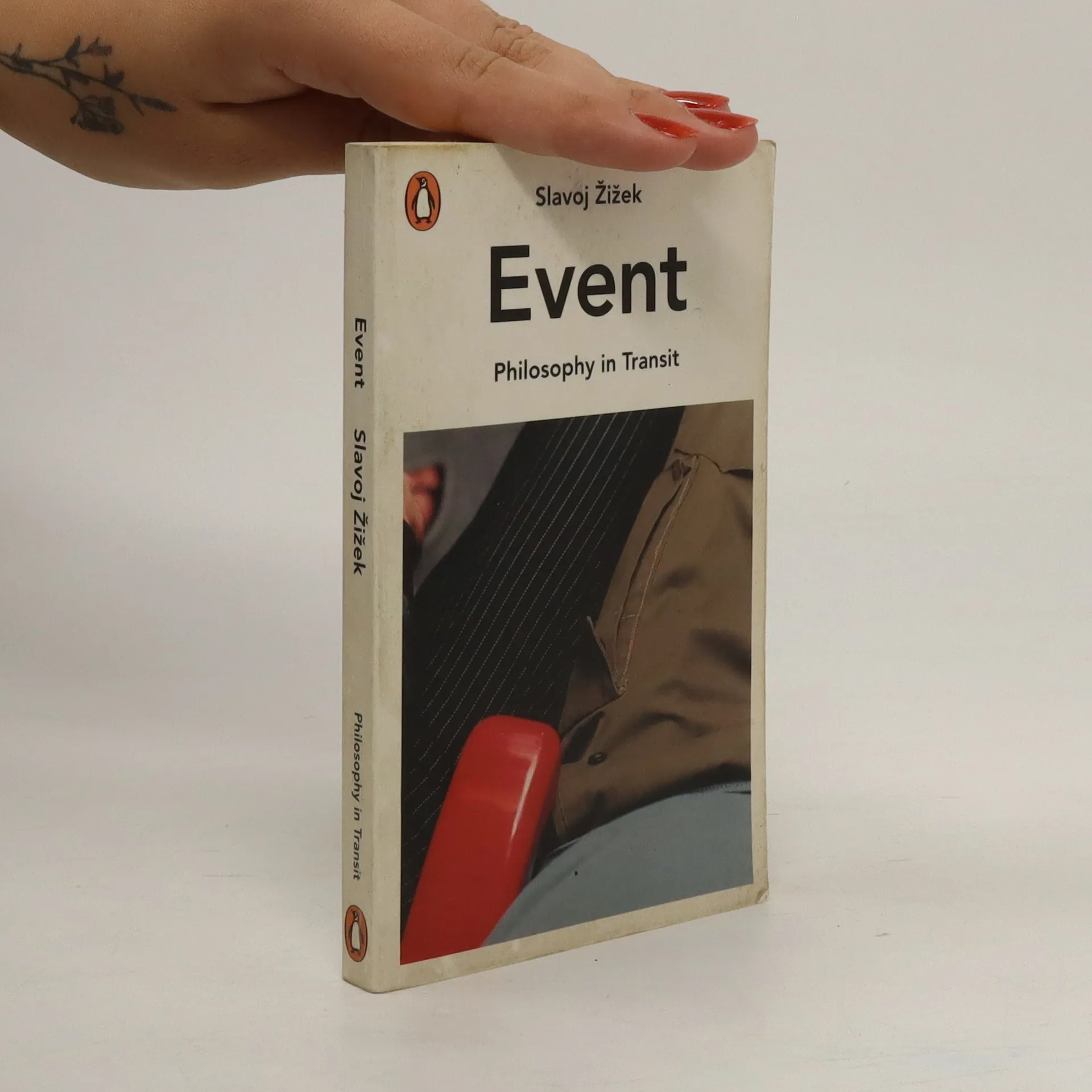
Probably the most famous living philosopher, Slavoj Žižek explores the concept of 'event', in the second in this new series of easily digestible philosophy What is really happening when something happens? In the second in a new series of accessible, commute-length books of original thought, Slavoj Žižek, one of the world's greatest living philosophers, examines the new and highly-contested concept of Event. An Event can be an occurrence that shatters ordinary life, a radical political rupture, a transformation of reality, a religious belief, the rise of a new art form, or an intense experience such as falling in love. Taking us on a trip which stops at different definitions of Event, Žižek addresses fundamental questions such as: are all things connected? How much are we agents of our own fates? Which conditions must be met for us to perceive something as really existing? In a world that's constantly changing, is anything new really happening? Drawing on references from Plato to arthouse cinema, the Big Bang to Buddhism, Event is a journey into philosophy at its most exciting and elementary. Slavoj Žižek is a Hegelian philosopher, Lacanian psychoanalyst, and Communist political activist. He is the author of numerous books on dialectical materialism, critique of ideology and art. His main work is Less Than Nothing, a study on the actuality of Hegelian dialectics.
An iconoclastic analysis of the ideological and political stakes of the attack on Iraq.
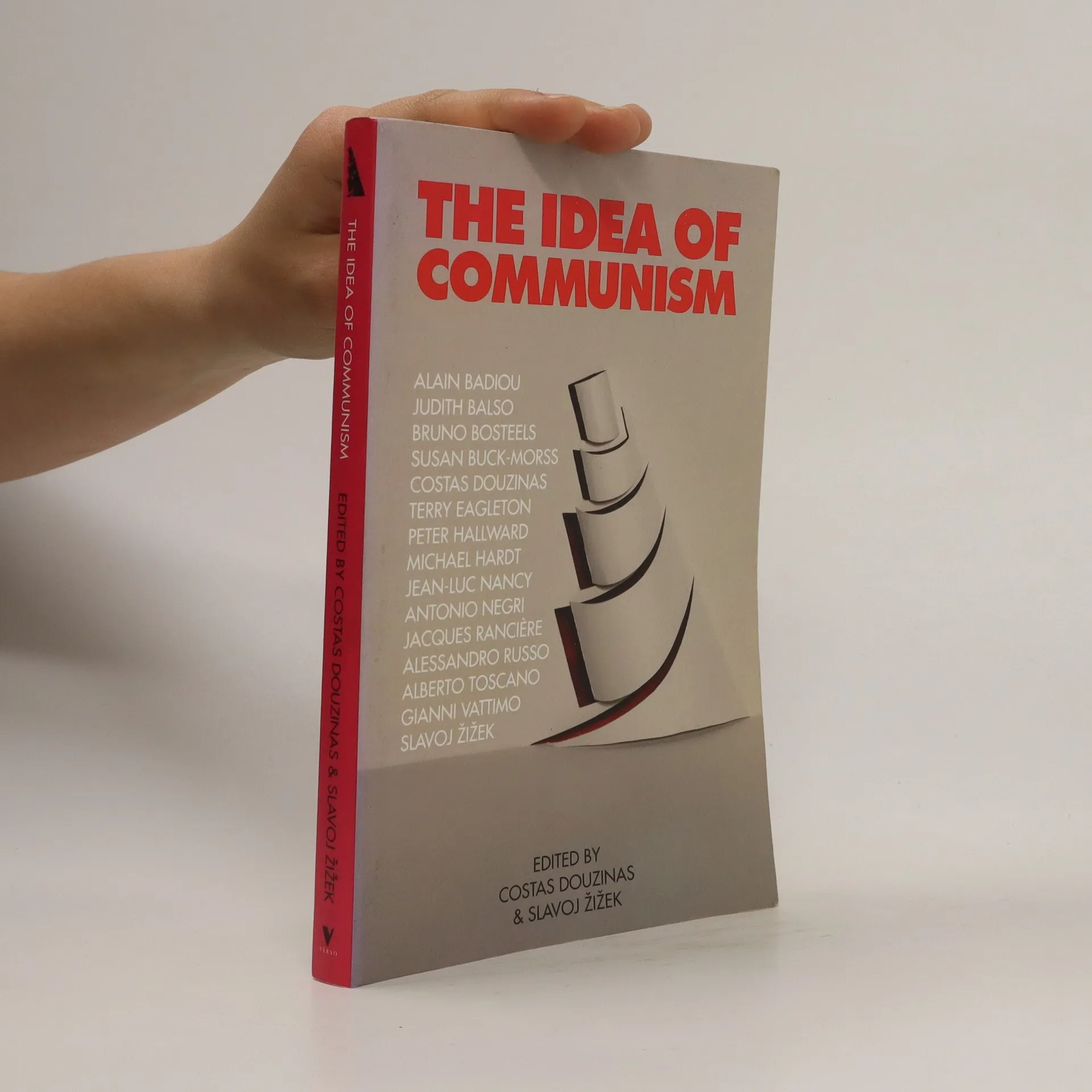
Do not be afraid, join us, come back! You’ve had your anti-communist fun, and you are pardoned for it—time to get serious once again!—Slavoj Žižek Responding to Alain Badiou’s ‘communist hypothesis’, the leading political philosophers of the Left convened in London in 2009 to take part in a landmark conference to discuss the perpetual, persistent notion that, in a truly emancipated society, all things should be owned in common. This volume brings together their discussions on the philosophical and political import of the communist idea, highlighting both its continuing significance and the need to reconfigure the concept within a world marked by havoc and crisis.
A militant Marxist atheist and a ""Radical Orthodox"" Christian theologian square off on everything from the meaning of theology and Christ to the war machine of corporate mafia
The celebrated philosopher returns with a provoking analysis of Europe's crisis. Exposing its real nature, he asks: what is to be done? Hundreds of thousands of people, desperate to escape war, violence and poverty, seek refuge in Europe. He shows how the crisis also presents an opportunity, a chance for Europe to redefine itself: but we must acknowledge that large migrations are our future.
In recent years, techno-scientific progress has started to utterly transform our world - changing it almost beyond recognition. In this extraordinary new book, renowned philosopher Slavoj Zizek turns to look at the brave new world of Big Tech, revealing how, with each new wave of innovation, we find ourselves moving closer and closer to a bizarrely literal realisation of Marx's prediction that 'all that is solid melts into air.' With the automation of work, the virtualisation of money, the dissipation of class communities and the rise of immaterial, intellectual labour, the global capitalist edifice is beginning to crumble, more quickly than ever before-and it is now on the verge of vanishing entirely. But what will come next? Against a backdrop of constant socio-technological upheaval, how could any kind of authentic change take place? In such a context, Zizek argues, there can be no great social triumph - because lasting revolution has already come into the scene, like a thief in broad daylight, stealing into sight right before our very eyes. What we must do now is wake up and see it. Urgent as ever, Like a Thief in Broad Daylight illuminates the new dangers as well as the radical possibilities thrown up by today's technological and scientific advances, and their electrifying implications for us all.
One of the signal features of our era is the re-emergence of the ‘sacred’ in all its different guises, from New Age paganism to the emerging religious sensitivity within cultural and political theory. The wager of Žižek’s The Fragile Absolute – published here with a new preface by the author – is that Christianity and Marxism can fight together against the contemporary onslought of vapid spiritualism. The revolutionary core of the Christian legacy is too precious to be left to the fundamentalists.
"Based on live interviews, this book captures 'Zi'zek at his best, elucidating such topics as the uprisings of the Arab Spring, the global financial crisis, populism in Latin America, the rise of China, and even the riddle of North Korea. While analyzing our present predicaments, 'Zi'zek also explores possibilities for change. A key obligation in our troubled times, 'Zi'zek argues, is to dare to ask fundamental questions: we must reflect and theorize anew, and always be prepared to rethink and redefine the limits of the possible."--
Slavoj Zizek and Srecko Horvat combine their critical clout to emphasize the dangers of ignoring Europe's growing wealth gap and the parallel rise in right-wing nationalism, which is directly tied to the fallout from the ongoing financial crisis and its prescription of imposed austerity.
"Unlike any other book by Slavoj Žižek, this compact arrangement of jokes culled from his writings provides an index to certain philosophical, political, and sexual themes that preoccupy him. Unlike any other book by Slavoj Žižek, this compact arrangement of jokes culled from his writings provides an index to certain philosophical, political, and sexual themes that preoccupy him"--Publisher's description
One hundred years after the Russian Revolution, Žižek shows why Lenin’s thought is still important today V. I. Lenin’s originality and importance as a revolutionary leader is most often associated with the seizure of power in 1917. But, in this new study and collection of Lenin’s original texts, Slavoj Žižek argues that his true greatness can be better grasped in the last two years of his political life. Russia had survived foreign invasion, embargo and a terrifying civil war, as well as internal revolts such as the one at Kronstadt in 1921. But the new state was exhausted, isolated and disorientated. As the anticipated world revolution receded into the distance, new paths had to be charted if the Soviet state was to survive. With his characteristic brio and provocative insight, Žižek suggests that Lenin’s courage as a thinker can be found in his willingness to face this reality of retreat unflinchingly. In today’s world, characterized by political turbulence, economic crises and geopolitical tensions, we should revisit Lenin’s combination of sober lucidity and revolutionary determination.
An Introduction to the 150th Anniversary Edition of The Communist Manifesto
Výbor krátkých textů významného slovinského filozofa interpretuje politickou problematiku optikou dominantních ideologických paradigmat dvacátého století.
Antologie překladů věnovaná novému historismu, kulturnímu materialismu a kulturním studiím – tedy směrům humanitněvědného myšlení, v jejichž rámci se střetávají literární a kulturní teorie, text a jeho kontext, praktické a teoretické aspekty myšlení, konání a řeči nebo oblast umění a ne-umění – uvedené směry nemapuje v celé šíři, ale vybírá klíčové texty jejich protagonistů, a to v rámci hledisek z podtitulu antologie: cirkulace, reprezentace, ideologie. Obsahuje jak výrazně teoreticky zaměřené práce, tak studie věnované konkrétním historickým otázkám. Všechna témata doprovázejí osvětlující úvodní texty a celou knihu uvádí studie přibližující základní pojmy a jejich vývoj v kontextu domácí literárněteoretické tradice. Publikaci připravil 6členný tým překladatelů a autorů z ÚČL AV ČR, Ústavu české literatury a komparatistiky FF UK a Katedry genderových studií FHS UK. Koncepci antologie vypracovali Richard Müller, zabývající se literární komunikací a její medialitou i materialitou, a Josef Šebek, věnující se zprostředkováním mezi textem a sociálním kontextem.
Die Begegnung von Philosophie und Psychoanalyse verläuft in der Regel nicht gerade glücklich. Philosophen kaprizieren sich meist darauf, unreflektierte Voraussetzungen psychoanalytischer Begriffsbildung zu monieren. Psychoanalytiker hingegen widerstehen häufig nicht der Versuchung, die Philosophie zu psychoanalysieren. Für Slavoj Zizek sind beide Vereinnahmungen nur sichere Wege, eine aufschlußreiche Gegenlektüre gerade zu verhindern. Seine Interpretationen Kants, Fichtes, Schellings und Hegels gehen im Gegenteil darauf hinaus, innerhalb des philosophischen Diskurses ein „Unbewußtes“ auszumachen: Ein „Unbewußtes“, das in den philosophischen Begründungsfiguren idealistischer Theorien des Selbstbewußtseins mit Nachdruck herausgearbeitet wird. Es ist ein mit Lacan gelesener Freud, der die Aufmerksamkeit dafür schärft. Doch ebenso gilt umgekehrt: Es sind die philosophischen Texte, die zentrale Züge von Lacans Theorie erhellen. Eine Begegnung, die durch pointiert interpretierte Beispiele aus der Populärkultur noch an Reiz gewinnt.
Die Analyse von Zizek beleuchtet die Paradoxien des modernen Lebens, das von einem ständigen Streben nach mehr geprägt ist. Er verbindet Lacans Theorie des Überschusses mit Marx' Konzept des Mehrwerts und Freuds Lustgewinn, um die Herausforderungen der heutigen politischen Situation zu verstehen. Anhand von Beispielen aus Hollywood-Filmen wie "Joker", der Corona-Pandemie und der Cancel Culture zeigt Zizek auf, dass das Streben nach mehr Lust oft leer bleibt und dass ein Umdenken nötig ist, um einen Ausweg aus der gegenwärtigen Krise zu finden.
Žižek argumentiert, dass wir auf eine neue Lebenserfahrung zusteuern, die unser Verständnis von linearer Erzählform aufbricht und das Leben als mehrsträngigen Fluss präsentiert. Drei Filme von Kieślowski – "Die Blindheit des Schicksals", "Die doppelte Lebensführung der Veronika" und "Rot" – rekonstruieren diese Erfahrung und thematisieren die moralische Wahl zwischen "idealem Leben" und "Berufung". Eine zentrale Frage bleibt: Ist das Bewusstsein für diese multiplen Leben wirklich befreiend? Das Bild dieses Lebens könnte anders sein als es derzeit ist, und alternative Möglichkeiten könnten auf unterschiedliche Weise verwirklicht werden. Man stelle sich eine Welt vor, in der es keine Wahlfreiheit gibt, was ein erschreckendes Bewusstsein erzeugt, wie im verzweifelten Schrei zu Beginn von "Die Blindheit des Schicksals". Das Buch "Die Furcht vor echten Tränen", übersetzt von Fattah Mohammadi, basiert auf Žižeks Vorlesungen und behandelt Posttheorie und Erkenntnistheorie durch die Analyse von Kieślowskis Filmen im Kontext von Klassenkampf und Klassenbewusstsein. Im ersten Abschnitt, "Amerika: Wieder einmal zusammengenäht", wird gezeigt, wie Kieślowskis Werke den Klassenkampf in der Kunst reflektieren. Žižeks Ziel ist es, sich mit den Themen Arbeit und Theorie durch die Linse von Kieślowskis Filmen auseinanderzusetzen.
Štúdia slovinského sociológa o psychologických aspektoch nacionalizmu, fundamentalizmu a etnických antagonizmoch.
Dünndruck-Ausgabe der beiden grundlegenden Bände Slavoj Žižeks zum deutschen Idealismus. Die ersten deutschen Bücher des slowenischen Autors Slavoj Žižek erschienen Anfang der 1990er Jahre bei Turia + Kant. Mit den beiden Bänden »Der erhabenste aller Hysteriker« und »Verweilen beim Negativen« machte er sich über seine damals schon zum Teil bekannte Essayistik hinaus einen Namen und wurde als ausgezeichneter Kenner der klassischen Philosphie wahrgenommen. Die beiden Bände sind hier in einem Band vereint. Durch Žižeks Einbeziehung psychoanalytischer Modelle ergibt sich ein überraschendes Bild v. a. Hegels, das eine Neubewertung des deutschen Idealismus fordert. Umgekehrt wirft die Auseinandersetzung mit der klassischen Philosophie ein neues Licht auf die Methoden und Denkräume der Psychoanalyse. Ein Vorwort Zizeks leitet die Neuauflage des »deutschen Idealismus« von 2008 ein, die nun als Paperback angeboten wird.
Wie kaum ein anderes Werk seiner Zeit veranschaulichen die wohl berühmtesten Filme David Lynchs, Lost Highway (1997) und Mulholland Drive (2001), wie die Geist-Welt Beziehung durch einen sexuellen Exzess immer wieder in Unordnung gebracht wird. Dieser markiert die unsterbliche Dimension einer teils biologischen, teils symbolischen Kraft, die auch in Žižeks Werk thematisiert und dort philosophisch ergründet wird. Der vorliegende Band präsentiert in diesem Zusammenhang erstmals Žižeks viel zitierten Essay über den Kultregisseur sowie zwei Artikel von Dominik Finkelde. In ihnen werden die inhärenten Bezüge zwischen den Subjekttheorien von Lynch und Žižek näher analysiert.
Können die heutigen Katastrophen ein Katalysator für Fortschritt sein? Slavoj Žižek sucht universelle Wahrheiten auf lokalen Schauplätzen in den USA, Chile, Frankreich, Afghanistan und beleuchtet Texte von Orwell und Rammstein, Lenin und der Bibel. Er blickt auf die Zersplitterung der Linken, die leeren Versprechen der liberalen Demokratie und den Krieg in der Ukraine.
In seinem neuen Buch führt Slavoj Žižek das Projekt fort, eine Ideologiekritik der Gegenwart aus kommunistischer Perspektive zu betreiben. Ausgangspunkt ist die Diagnose, dass unsere liberale Kultur nicht einmal mehr an ihre eigenen Überzeugungen glaubt. Unter dem Motto des Apostels Paulus, dass es 'gegen die bösen Geister des himmlischen Bereichs' zu kämpfen gelte, analysiert Žižek mit Parteilichkeit, Leidenschaft und Witz das Versagen der Linken im 20. Jahrhundert. Was kann man daraus lernen, um das linke Projekt für das 21. Jahrhundert zu wappnen? Anstatt der weichen Politik der Vermeidung des Schlimmsten zu folgen, geht es darum, den utopischen Kern einer besseren Gesellschaft zu stärken und dem globalen Kapitalismus eine Alternative entgegenzustellen.
Knížka se skládá z rozhovoru se Slavojem Žižkem a z jeho dosud nezveřejněného textu „K materialistické teologii“, v němž Žižek načrtává obrysy nové ontologie.
Slavoj Žižek, einer der weltweit bedeutendsten Philosophen, wirft in seiner Streitschrift so wichtige wie gewagte Fragen auf, die sich nach dem Anschlag auf das Satiremagazin „Charlie Hebdo“ mehr denn je stellen. Er skizziert den Konflikt zwischen tolerantem Liberalismus und religiösem Fundamentalismus, der auch ein Konflikt ist zwischen westlichem Wohlstand und dem Bedürfnis nach religiöser Transzendenz. Der Fundamentalist bekämpft zudem mit dem Liberalismus auch das hedonistische Begehren, dessen Erfüllung er sich nicht zugesteht. Doch wie entsteht Islamismus eigentlich? Füllt er nicht ein revolutionäres Vakuum, das die soziale Ungleichheit in vielen Ländern (wie Pakistan) erzeugt hat? Dies würde bedeuten, dass nicht der tolerante, aber kraftlose Liberalismus, sondern die zielgerichtete Linke die einzige Kraft ist, die dieses Vakuum füllen kann und die wir dem islamischen Fundamentalismus entgegensetzen können.
Was haben der Verkauf von Sexpuppen, Heuschreckenschwärme und ein verkabeltes Gehirn-Schwein mit der Coronavirus-Pandemie zu tun? Alles – so der „Riese von Ljubljana“, der unverwechselbare slowenische Philosoph Slavoj Žižek. In dieser aufregenden Fortsetzung seines gefeierten Werkes untersucht Žižek einige der überraschendsten Dimensionen von Lockdowns, Quarantänen und sozialer Distanzierung – und den zunehmend ungehorsamen Widerstand dagegen von „reaktionsmüden“ Bevölkerungen weltweit. Hier analysiert Žižek die Auswirkungen von Ernteausfällen aufgrund von Arbeitskräftemangel und der Hyperausbeutung der globalen Klasse von Pflegekräften auf die Nahrungsmittelversorgung, ohne deren Arbeit das tägliche Leben unmöglich wäre. Anhand solcher Beispiele macht er die Unfähigkeit des zeitgenössischen Kapitalismus deutlich, die Öffentlichkeit in Krisenzeiten wirksam zu schützen. Mit charakteristischem Wagemut und Eifer bewegt sich Žižek durch kritische Theorie, Popkultur und Psychoanalyse, um die besorgniserregenden Dynamiken von Wissen und Macht zu enthüllen, die in diesen viralen Zeiten entstehen.
Zehn schmale Bücher zu zehn großen Fragen, Beiträge zu zentralen Themen der Gegenwart. Von Adorno bis Žižek reicht das Spektrum der Autoren, das der Themen von der Lust und der Erziehung, dem Bewußtsein und dem Großstadtleben bis hin zu Tod und Religion – Essenzen . Zehn Bände in besonders schöner Ausstattung, mit einem Umfang von nicht mehr als 80 Seiten, gebunden, mattlackiert und mit Vorsatzpapier.
Knjiga izbranih tekstov Slavoja Žižka se posveča predvsem njegovim besedilom, ki se nanašajo na analizo družbe in sodobnega funkcioniranja družbene vezi, namen tega ožjega izbora pa je slovenskemu bralcu ponuditi rdečo nit skozi labirint številnih Žižkovih tekstov, ki so v zadnjih dveh desetletjih izšli predvsem v angleškem jeziku in jih v slovenščini ni najti. Gre za tekste o funkcioniranju sodobne družbene vezi skozi optiko označevalca in simptoma, posebej pa je izpostavljena analiza ideologije (»Rojstvo označevalca-gospodarja«, »Marxova iznajdba simptoma«, »Ideologija danes«, »Pot do dialektičnega materializma«, »Začeti od začetka«, »Leninova izbira«). Izbor torej, ki priča o tem, da je Žižek zelo angažiran in aktualen mislec, ki je zmožen nagovoriti tudi širši bralni krog. Knjiga je izšla v okviru projekta Ljubljana – svetovna prestolnica knjige 2010.
Žižeks brillant und leidenschaftlich geschriebenes Buch stellt einen mitreißenden Durchgang durch die europäische Operngeschichte dar, deren Dreh- und Angelpunkt das Wagnersche Schaffen bildet. Durch ein hohes Maß an Assoziationen entführt Žižek den Leser in immer neue und unerwartete Gefilde: Er streift »Matrix« und die Marx Brothers, und ganz nebenbei gelingt es ihm noch höchst überzeugend, die Parallelen zwischen Wagners Musik und Hitchcocks Filmen aufzuzeigen. In erster Linie ist das Buch aber eine furiose Liebeserklärung an die Oper, in der Žižeks Leidenschaft für sein Lieblingsthema in jeder Zeile mitklingt.
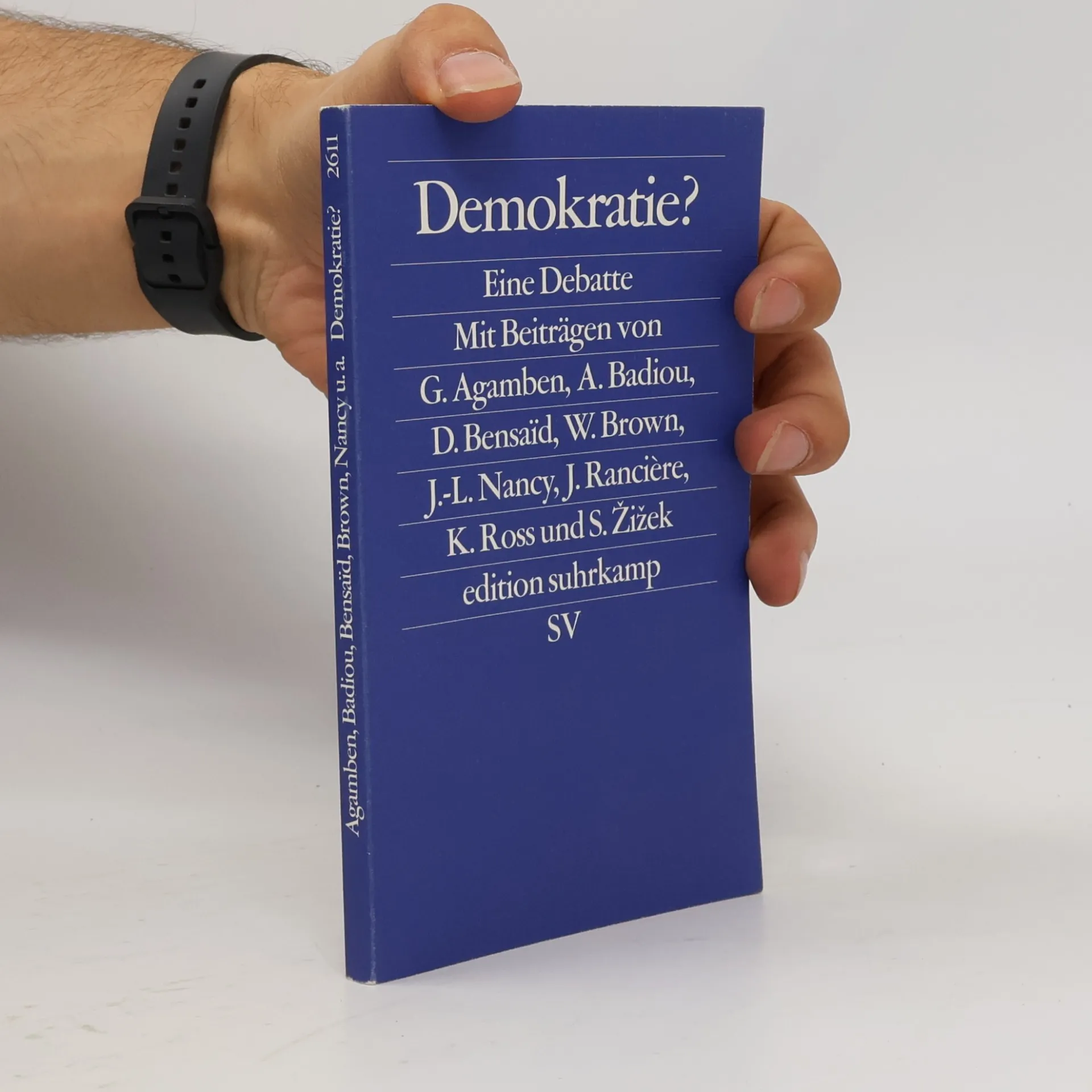
Zu Beginn des dritten Jahrtausends ist die Situation der Demokratie paradox: Einerseits sind mehr Staaten denn jemals zuvor demokratisch verfaßt, andererseits nehmen die Krisensymptome in den Staaten, die einstmals so etwas wie eine demokratische Avantgarde bildeten, zu: Die Wahlbeteiligung sinkt, schillernde Persönlichkeiten wie Silvio Berlusconi oder Nicolas Sarkozy gewinnen an Bedeutung, Wahlkämpfe geraten zu schalen Marketingkampagnen. Colin Crouch hat all diese Trends in dem Band „Postdemokratie“ präzise auf den Punkt gebracht. In diesem Band setzen sich nun acht herausragende politische Denkerinnen und Denker mit dem Zustand und den Perspektiven der am wenigsten schlechten aller Regierungsformen (Winston Churchill) auseinander, die tageszeitung sprach von einem »Who's who der internationalen linken Theorie«. Der Diskussionsband enthält Beiträge von Giorgio Agamben, Alain Badiou, Daniel Bensaïd, Wendy Brown, Jean-Luc Nancy, Jacques Rancière, Kristin Ross und Slavoj Žižek.
The writings that underpinned the Chinese revolution, introduced by Slavoj Zizek.
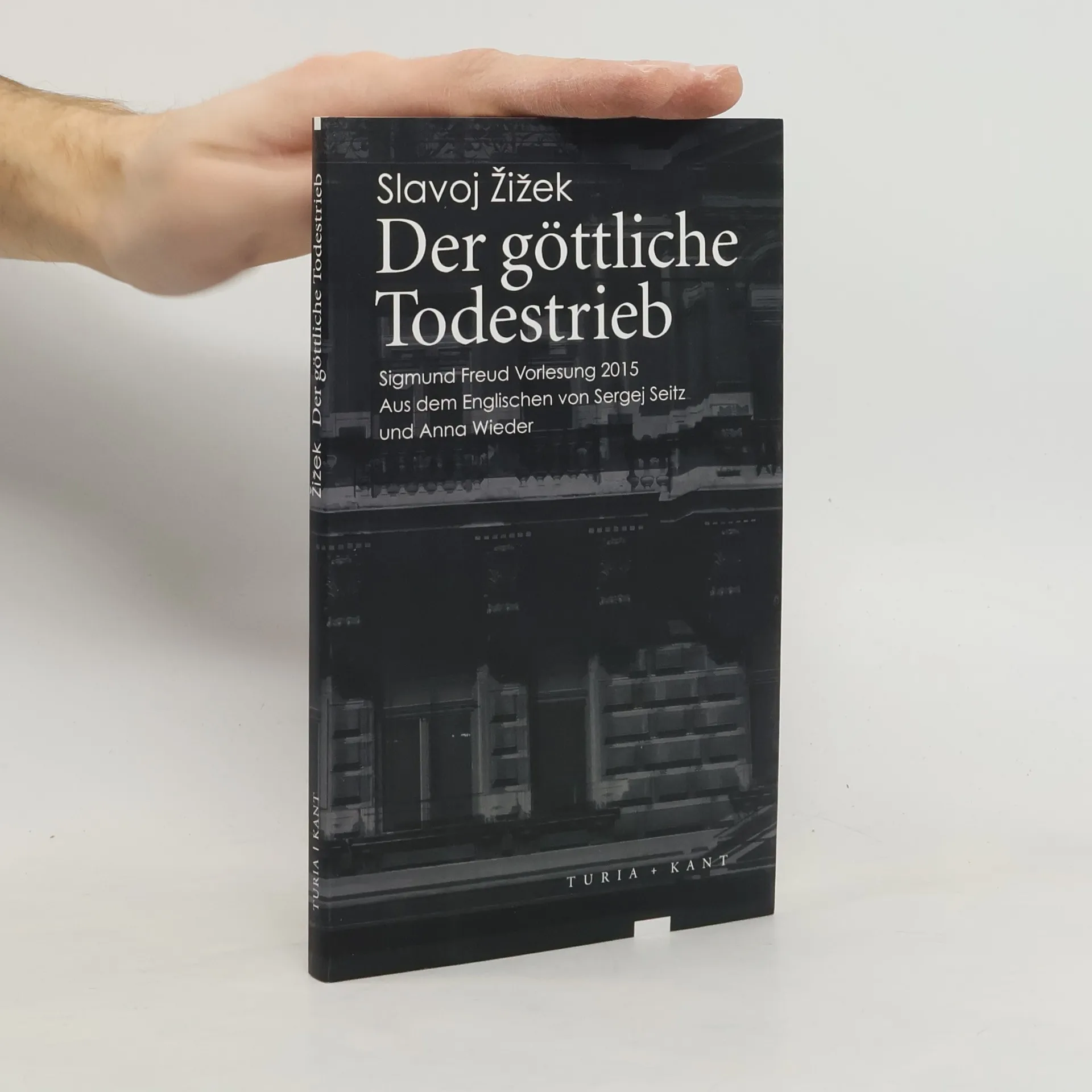
In seiner Sigmund Freud Vorlesung am Wiener Burgtheater interpretiert Slavoj Žižek den Zusammenhang von Religion und Todestrieb nicht so, als wäre die Religion ein Ausdruck des Todestriebes und damit ein Werkzeug dunkler Mächte. Im Gegenteil, Žižek verknüpft Religion und Psychoanalyse in ihren emanzipatorischen Aspekten. Ihnen gemeinsam ist die Kraft der Negation. Die Psychoanalyse findet im Todestrieb einen letzten Abgrund, der keine Akkommodation mit dem Status quo zulässt, und die Religion ist nicht absolute Gewissheit, sondern absoluter Zweifel. Die Erfahrung des Göttlichen ist die Erfahrung, dass unser Leben aus den Fugen ist.
»Lacan mit Hitchcock. Und nicht umgekehrt, denn es handelt sich hier keineswegs um eine psychoanalytische Interpretation Hitchcocks. Viel eher um das Vorhaben, in bestimmte Lacansche Konzepte etwas Licht hineinzubringen, und das mit Hilfe einiger Filmbeispiele zur Illustration. Das Buch ist deshalb in erster Linie didaktisch. Es ist eine Art Lehrbuch (zusammengestellt von der Schule Sigmund Freuds, der Gesellschaft für theoretische Psychoanalyse Jugoslawiens).« Slavoj Žižek einleitende Worte kündigen nicht nur ein höchst originelles didaktisches Projekt an, sondern haben vielmehr einen programmatischen Charakter für das philosophische Projekt Žižeks insgesamt: die Verbindung und wechselseitige Verflechtung von Philosophie, Psychoanalyse und moderner Populärkultur in der Perspektive einer kritischen Gesellschaftstheorie.