In the highly anticipated Thinking, Fast and Slow , Kahneman takes us on a groundbreaking tour of the mind and explains the two systems that drive the way we think. System 1 is fast, intuitive, and emotional; System 2 is slower, more deliberative, and more logical. Kahneman exposes the extraordinary capabilities—and also the faults and biases—of fast thinking, and reveals the pervasive influence of intuitive impressions on our thoughts and behavior. The impact of loss aversion and overconfidence on corporate strategies, the difficulties of predicting what will make us happy in the future, the challenges of properly framing risks at work and at home, the profound effect of cognitive biases on everything from playing the stock market to planning the next vacation—each of these can be understood only by knowing how the two systems work together to shape our judgments and decisions. Engaging the reader in a lively conversation about how we think, Kahneman reveals where we can and cannot trust our intuitions and how we can tap into the benefits of slow thinking. He offers practical and enlightening insights into how choices are made in both our business and our personal lives—and how we can use different techniques to guard against the mental glitches that often get us into trouble. Thinking, Fast and Slow will transform the way you think about thinking.
Daniel Kahneman Boeken
Daniel Kahneman was een Israëlisch-Amerikaanse psycholoog wiens werk zich verdiepte in de cognitieve processen die ten grondslag liggen aan menselijk oordeel en besluitvorming. Samen met Amos Tversky legde hij een cognitieve basis voor veelvoorkomende menselijke fouten, waarbij hij heuristieken en biases onderzocht. Kahneman onderzocht uitvoerig hoe mensen risico's en beloningen waarnemen en ontwikkelde de cruciale Prospect Theory. Zijn onderzoek heeft de gedragseconomie en psychologie aanzienlijk vooruitgeholpen door diepgaande inzichten te bieden in de rationaliteit en irrationaliteit van de menselijke geest.



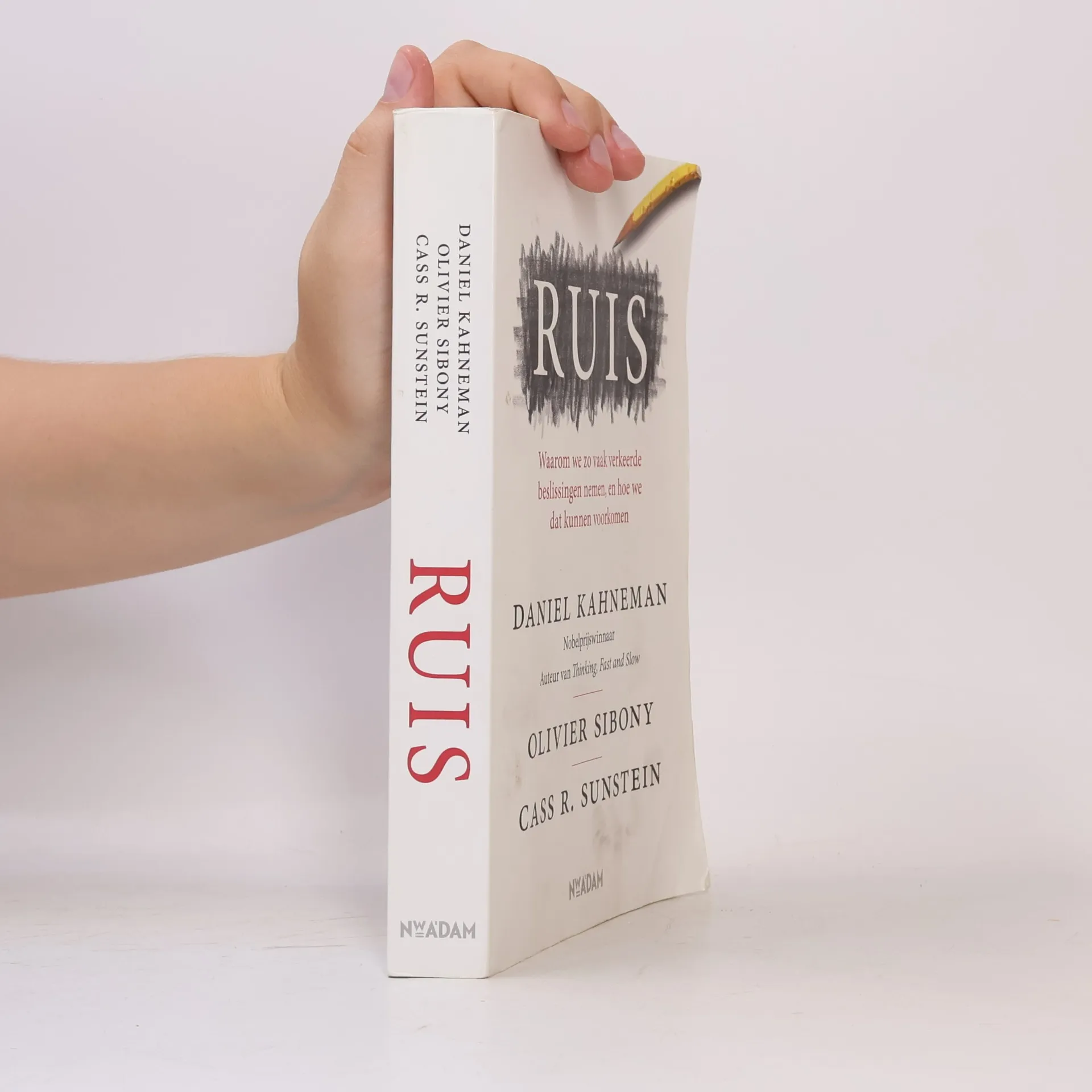

Ruis
Waarom we zo vaak verkeerde beslissingen nemen, en hoe we dat kunnen voorkomen
- 384bladzijden
- 14 uur lezen
Stel je voor dat twee artsen in dezelfde stad verschillende diagnoses stellen over dezelfde patiënten. Dat twee rechters aan hetzelfde hof verschillende straffen geven aan mensen die hetzelfde misdrijf hebben gepleegd. Dat wanneer een bedrijf klachten van klanten behandelt, de uitkomst afhangt van wie de betreffende klacht afhandelt. Stel je nu voor dat deze dokter, rechter of klachtenmedewerker zélf verschillende beslissingen neemt, afhankelijk van het tijdstip van de dag. Dit zijn voorbeelden van ruis: variabiliteit in oordelen die identiek zouden moeten zijn. In RUIS laten Daniel Kahneman, Cass R. Sunstein en Olivier Sibony zien hoe ruis aanzienlijk bijdraagt aan beoordelingsfouten op velerlei gebieden, waaronder geneeskunde, rechtspraak, economische voorspellingen, gedrag van de politie, voedselveiligheid, veiligheidscontroles op luchthavens, bedrijfsstrategie en sollicitatiecommissies. En hoewel ruis overal te vinden is waar mensen beslissingen nemen, zijn personen en organisaties zich gewoonlijk niet bewust van de rol van toeval in hun beoordelingen en in hun handelen. Op basis van de nieuwste bevindingen in de psychologie en gedragseconomie - én met hetzelfde aanstekelijke enthousiasme als in de bestsellers Thinking, Fast and Slow en Nudge - leggen Kahneman, Sibony en Sunstein in RUIS uit hoe en waarom mensen zo vatbaar zijn voor ruis bij het nemen van beslissingen, en wat we eraan kunnen doen.
Psycholoog Daniel Kahneman is de grondlegger van de gedragseconomie en de geluksstudies. Hij maakte korte metten met het idee van de rationeel calculerende mens die in zijn eigen voordeel handelt. Daarvoor in de plaats introduceerde hij de feilbare menselijke psyche in de economie, gekenmerkt door gebrekkig oordeelsvermogen in onzekere omstandigheden. Voor zijn baanbrekend onderzoek won hij in 2002 als eerste psycholoog de Nobelprijs voor de economie. Kahnemans onderzoek heeft grote invloed gehad op auteurs als Malcolm Gladwell (Het beslissende moment), Nassim Taleb (De zwarte zwaan) en Steven Levitt (Freakonomics). Nu verschijnt het langverwachte standaardwerk van Kahneman zelf, dat toegankelijk en verhelderend laat zien hoe ons denken werkt. Hij introduceert in dit boek 'de machinerie van ons denken'. Twee systemen beïnvloeden de manier waarop we denken en beslissen: systeem 1 is snel, intuïtief en emotioneel, systeem 2 is traag, weloverwogen en logisch-rationeel. Hij legt uit wanneer we op onze intuïtie kunnen vertrouwen en wanneer we juist onze ratio moeten aanspreken. Kahneman biedt in een levendige dialoog met de lezer nieuwe en praktische inzichten over de keuzes die we in ons leven maken.
Heuristics and Biases : The Psychology of Intuitive Judgment
- 874bladzijden
- 31 uur lezen
Judgment pervades human experience. Do I have a strong enough case to go to trial? Will the Fed change interest rates? Can I trust this person? This book examines how people answer such questions. How do people cope with the complexities of the world economy, the uncertain behavior of friends and adversaries, or their own changing tastes and personalities? When are people's judgments prone to bias, and what is responsible for their biases? This book compiles psychologists' best attempts to answer these important questions.
The Importance of the Community Rabbi
- 367bladzijden
- 13 uur lezen
The contemporary rabbi is influenced by the modern rabbinic establishments throughout the world, including the rabbinate in Israel. The rabbinate's monopoly on opinions and interpretations prevents rabbis from expressing their individual positions out of fear of delegitimization. The current structure gives the public a negative impression of the rabbinic establishment. The Importance of the Community Rabbi strives to describe and delineate key requirements for a good rabbi, i.e., one who can provide socially acceptable halachic solutions within the parameters of Orthodox thinking. Rabbi Sperber elucidates the halachic techniques and mechanisms that may be used toward this goal. These are further illustrated with stories from rabbinic literature and examples from various responsa.
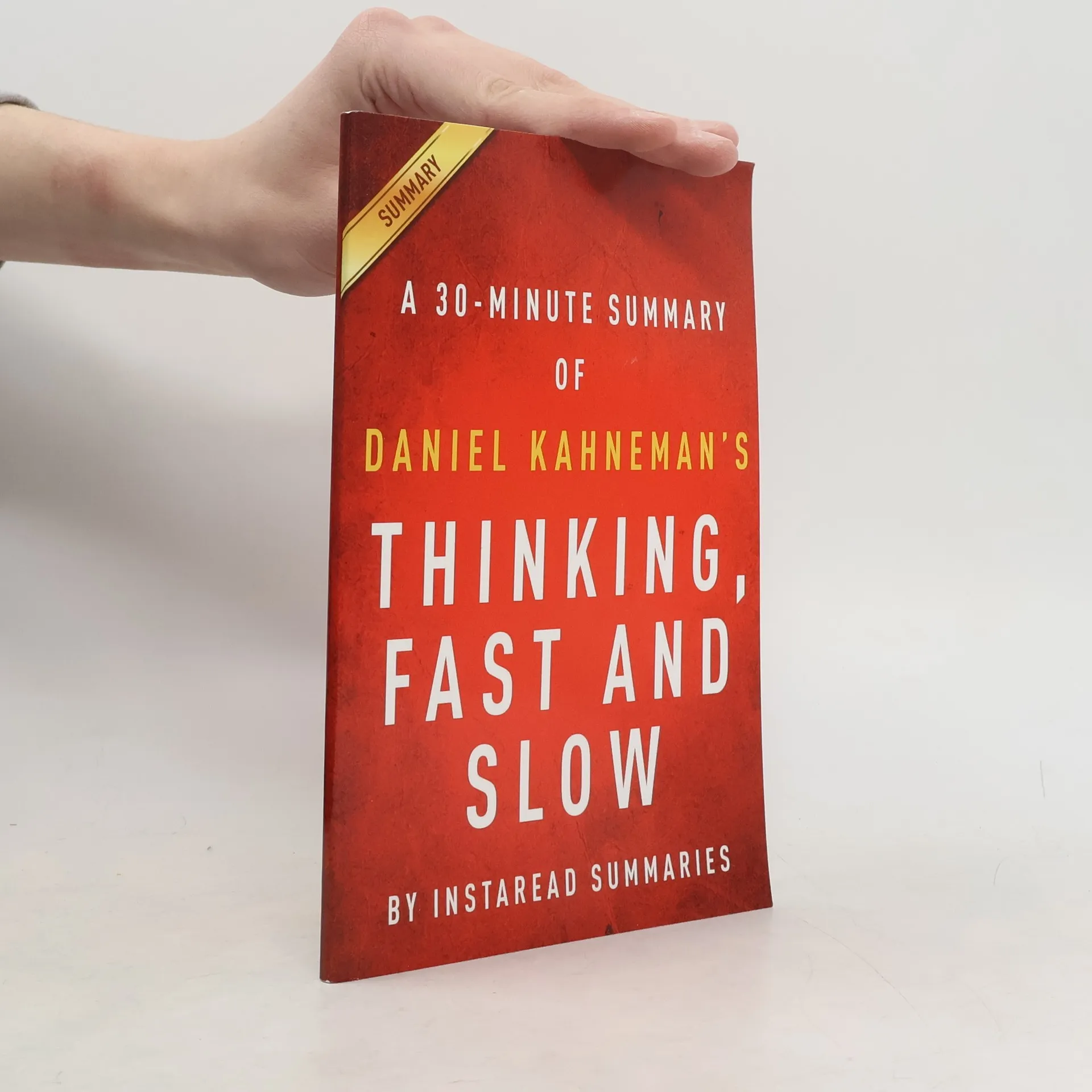
Instaread Summaries: Thinking, Fast and Slow by Daniel Kahneman - A 30-Minute Summary
- 108bladzijden
- 4 uur lezen
With Instaread Summaries, you can get the summary of a book in 30 minutes or less. We read every chapter, summarize and analyze it for your convenience. This is an Instaread Summary of Thinking, Fast and Slow by Daniel Kahneman. Below is a preview of the earlier sections of the summary: In this book, Daniel Kahneman aims to identify and understand errors of judgment and choice, providing a richer vocabulary to discuss these issues. Collaborating with Amos Tversky, they researched intuitive statistics and realized their own intuitions were flawed. Their subjective judgments were biased, leading them to accept research findings based on insufficient evidence and to gather too few observations in their studies. They sought to determine if other researchers faced similar challenges. Their findings revealed that participants often ignored relevant statistical facts, relying instead on resemblance as a heuristic to simplify complex judgments. This reliance led to predictable biases in their predictions. They discovered that people assess the importance of issues based on how easily they can recall them, largely influenced by media coverage. Kahneman offers insights into how the mind operates, highlighting the distinctions between fast (intuitive) and slow (deliberate) thinking. He emphasizes a common limitation: an excessive confidence in what individuals believe they know.
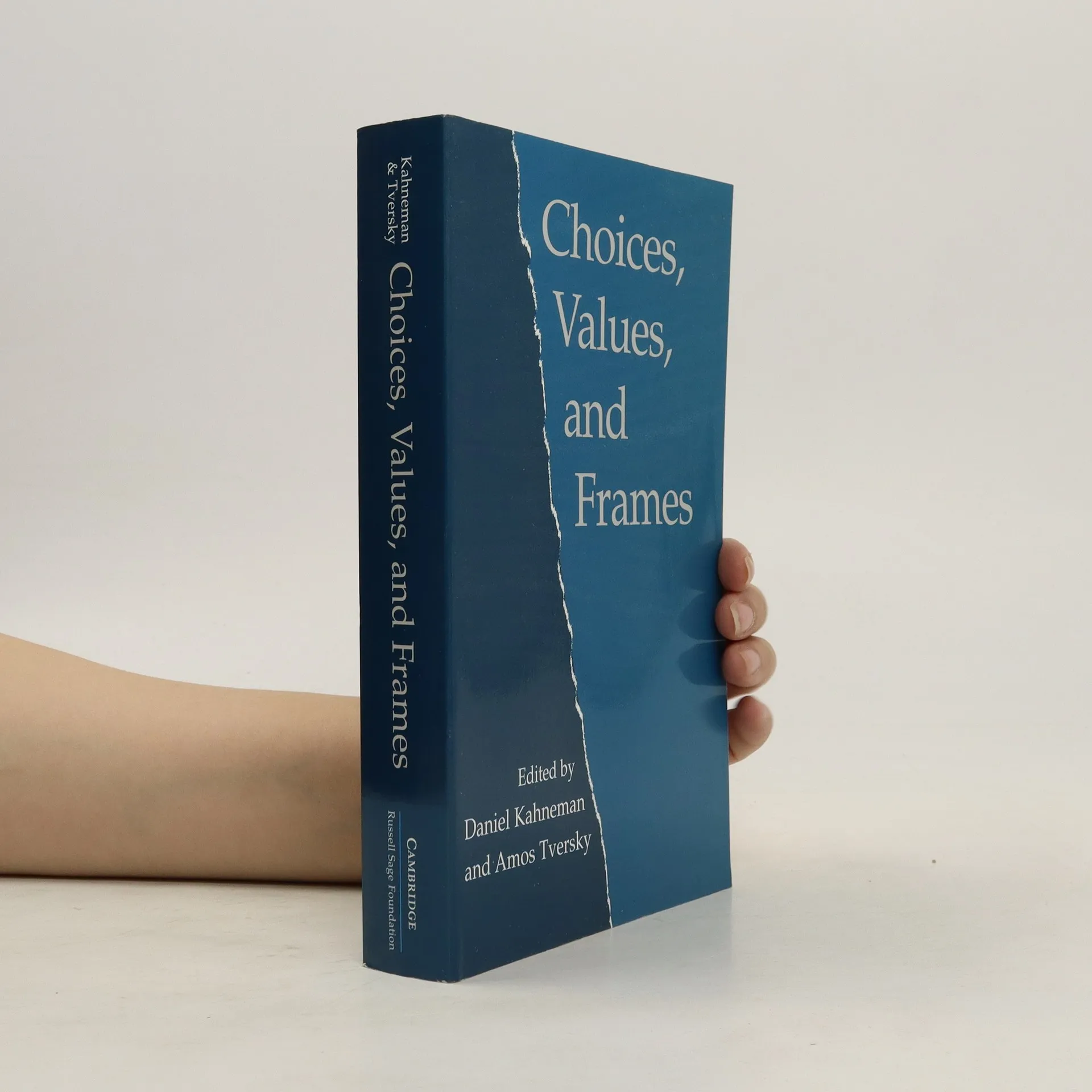
Choices, Values, and Frames
- 860bladzijden
- 31 uur lezen
Choices, Values, and Frames presents an empirical and theoretical challenge to classical utility theory, offering prospect theory as an alternative framework. Extensions and applications to diverse economic phenomena and to studies of consumer behavior are discussed. The book also elaborates on framing effects and other demonstrations that preferences are constructed in context, and it develops new approaches to the standard view of choice-based utility. As with the classic 1982 volume, Judgment Under Uncertainty, this volume is comprised of papers published in diverse academic journals. The editors have written several new chapters and a preface to provide a context for the work.
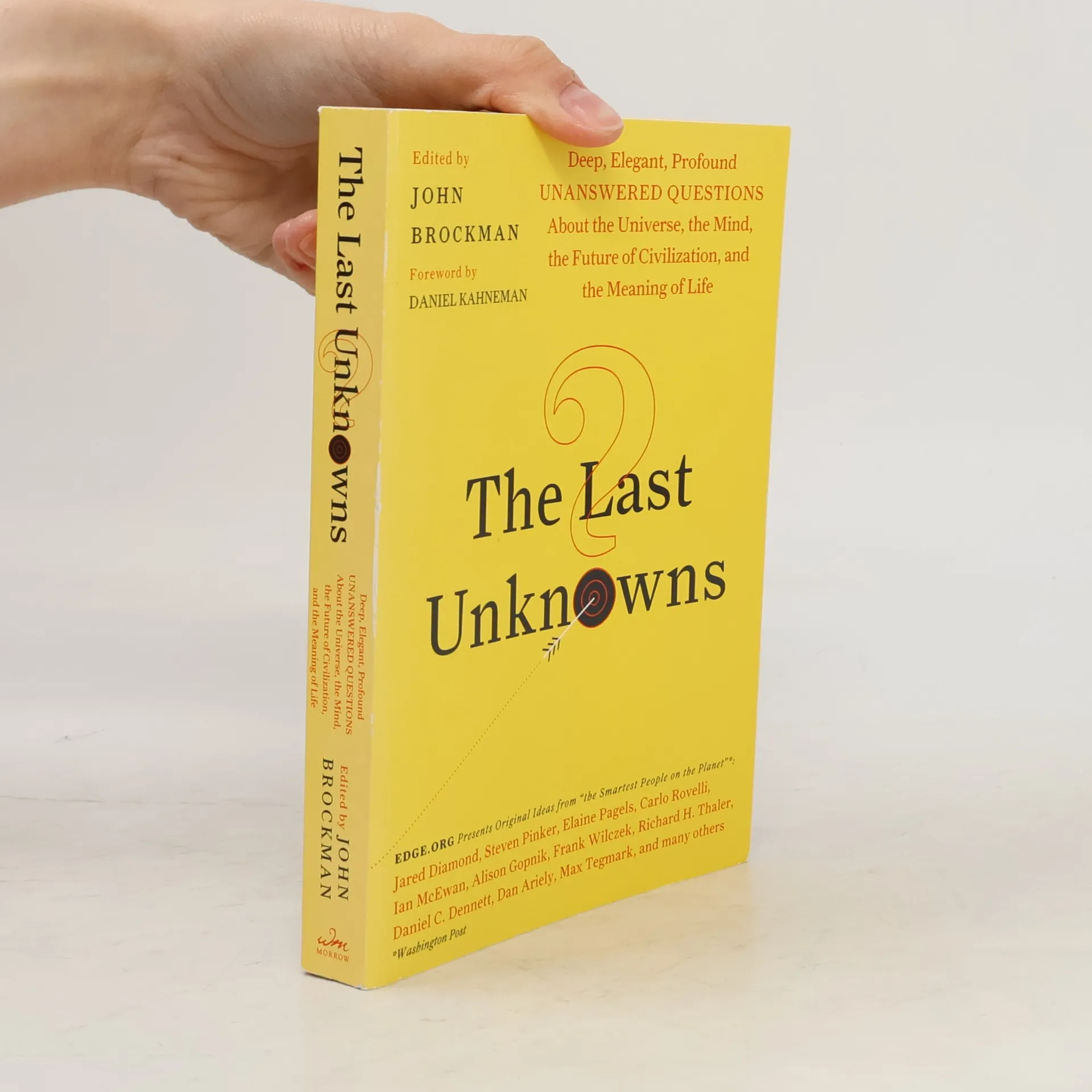
The Last Unknowns
Deep, Elegant, Profound Unanswered Questions About the Universe, the Mind, the Future of Civilization, and the Meaning of Life – Nobel Laureate Essays
- 352bladzijden
- 13 uur lezen
Featuring a foreword by DANIEL KAHNEMAN, Nobel Prize-winning author of Thinking, Fast and Slow THIS IS A LITTLE BOOK OF PROFOUND QUESTIONS —unknowns that address the secrets of our world, our civilization, the meaning of life. Here are the deepest riddles that have fascinated, obsessed, and haunted the greatest thinkers of our time, including Nobel laureates, cosmologists, philosophers, economists, prize-winning novelists, religious scholars, and more than 250 leading scientists, artists, and theorists. In The Last Unknowns, John Brockman asks innovative thinkers: "What is ‘The Last Question,’ your last question, the question for which you will be remembered?" Featuring the Pulitzer Prize–winning author of Guns, Germs, and Steel JARED DIAMOND • Nobel Prize-winning economist RICHARD THALER • Harvard psychologist STEVEN PINKER • religion scholar ELAINE PAGELS • author of Seven Brief Lessons on Physics CARLO ROVELLI • Booker Prize–winning novelist IAN McEWAN • neuroscientist SAM HARRIS • philosopher DANIEL C. DENNETT • MIT theorist SHERRY TURKLE • decoder of the human genome J. CRAIG VENTER • Nobel Prize-winning physicist FRANK WILCZEK • New York Times columnist CARL ZIMMER • Whole Earth founder STEWART BRAND • economist TYLER COWEN • Wired founding editor KEVIN KELLY • Princeton physicist FREEMAN DYSON • musician BRIAN ENO • Duke economist DAN ARIELY • Harvard cosmologist LISA RANDALL , and more than 200 others.
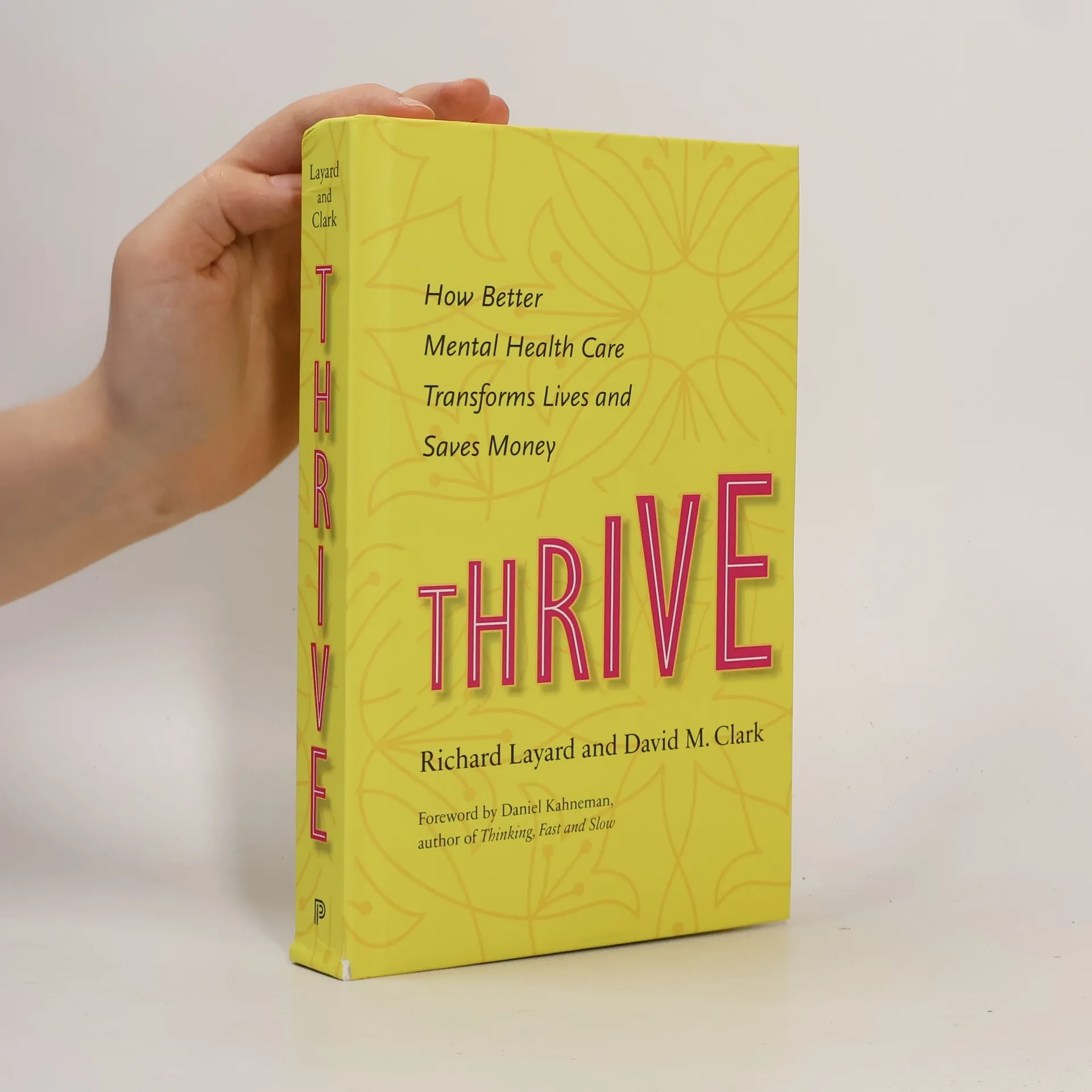
Mental illness is a significant source of suffering, affecting at least 20 percent of individuals in developed countries. It reduces life expectancy comparably to smoking, accounts for nearly half of all disability claims, contributes to worker absenteeism, and impacts educational and income levels. Despite the availability of effective treatments, many individuals remain untreated or inadequately treated. Layard and Clark advocate for innovative policy changes in addressing mental health issues and explore viable solutions to alleviate the associated miseries and injustices. They highlight that modern psychological therapies can be highly effective, potentially transforming the lives of millions at minimal or no cost. Treating mental health issues not only improves individual well-being but also leads to significant savings in physical healthcare and boosts economic productivity through increased workforce participation. The authors outline successful psychological treatments and discuss their effectiveness for different populations. They emphasize the importance of prevention through improved educational systems and societal structures. By illustrating the urgent need to address mental illness, the authors present new options and possibilities for tackling one of the most pressing challenges of our time.
Sociálna inteligencia
- 208bladzijden
- 8 uur lezen
Aký rozdiel je medzi prirodzeným (intuitívnym) a formálno-logickým usudzovaním? Sú všetky logické chyby zlé? Aké postupy (heuristiky) používa intuitívne usudzovanie? Prečo sú hybnou silou rozvoja intelektu sociálne vzťahy? Aké komunikačné riziká sú spojené s informáciami získanými prostredníctvom svedectva? Na základe čoho vieme odhadnúť, čo sa deje v mysli iného? Prečo sa etnické klasifikácie zásadne líšia od iných sociálnych klasifikácií, napríklad profesijných či športových? Práve na tieto otázky hľadajú odpovede autori knihy Sociálna inteligencia. Prvú časť knihy tvoria preklady prác renomovaných zahraničných autorov (D. Kahneman, G. Gigerenzer, N. Humphrey a D. Sperber). Druhá časť knihy obsahuje príspevky domácich autorov (J. Bašnáková, M. Filko, M. Kanovský, V. Kvasnička, E. Pauková, J. Pospíchal a J. Rybár). Sme presvedčení, že kniha môže pomôcť vedeckým pracovníkom a študentom počítačovej vedy, psychológie, antropológie, ekonómie a ďalších prírodných a sociálnych vied zorientovať sa v danej oblasti. Dúfame, že poslúži aj všetkým, ktorí sa chcú bližšie oboznámiť so súvislosťami medzi intuitívnym usudzovaním a sociálnou inteligenciou.
Мышление. Myshleniye
- 480bladzijden
- 17 uur lezen
Эта книга предлагает инновационные идеи от ведущих психологов, нейробиологов и философов, которые радикально увеличивают наше понимание человеческого мышления. Темы, рассматриваемые в книге, могут удивить многих, но в то же время будут непонятны для других. Она содержит термины и концепции, которые могут значительно изменить многие представления о мышлении. Это новое знание решает множество старых загадок и открывает целостный взгляд на все возможности мышления внутри нас.
The Psychology of Stupidity
- 384bladzijden
- 14 uur lezen
"We need books like this one." --Steven Pinker At last, stupidity explained! And by some of the world's smartest people, among them Daniel Kahneman, Dan Ariely, Alison Gopnik, Howard Gardner, Antonio Damasio, Aaron James, and Ryan Holiday. And so I proclaim, o idiots of every stripe and morons of all kinds, this is your moment of glory: this book speaks only to you. But you will not recognize yourselves... Stupidity is all around us, from the coworker who won't stop hitting "reply all" to the former high school classmate posting conspiracy theories on Facebook. But in order to vanquish it, we must first understand it. In The Psychology of Stupidity, some of the world's leading psychologists and thinkers--including a Nobel Prize winner and bestselling authors--will show you... why smart people sometimes believe in utter nonsense; how our lazy brains cause us to make the wrong decisions; why trying to debate fools is a trap; how media manipulation and Internet overstimulation make us dumber; why the stupidest people don't think they're stupid. The wisdom and wit of these experts are a balm for our aggrieved souls and a beacon of hope in a world of morons.
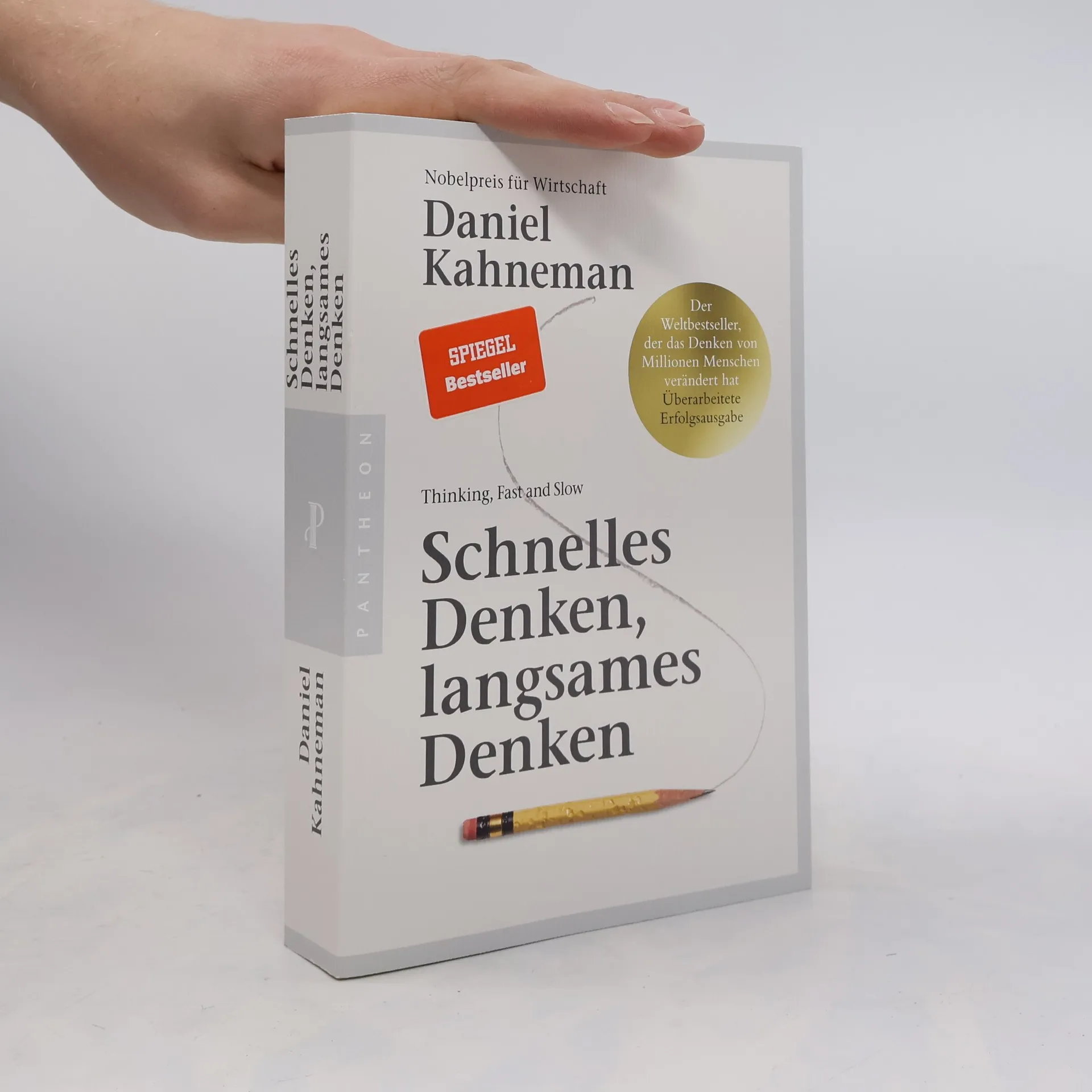
Schnelles Denken, langsames Denken
Thinking Fast and Slow: Der Weltbestseller, der das Denken von Millionen Menschen verändert hat, jetzt in der Erfolgsausgabe: eine Million Exemplare der deutschsprachigen Fassung
- 624bladzijden
- 22 uur lezen
Der Weltbestseller, der das Denken von Millionen Menschen verändert hat - jetzt als hochwertige Erfolgsausgabe Dieses Buch hat die Welt erobert und die Art und Weise, wie wir über unser Verhalten nachdenken, revolutioniert. Ein Kompass für den Alltag, ein Handbuch für Entscheider - ein Bestseller, der von einer jüngeren Generation immer wieder aufs Neue entdeckt wird. Wie treffen wir unsere Entscheidungen? Warum ist Zögern ein überlebensnotwendiger Reflex, und warum ist es so schwer zu wissen, was uns in der Zukunft glücklich macht? Daniel Kahneman, Nobelpreisträger und einer der einflussreichsten Wissenschaftler der Gegenwart, zeigt anhand ebenso nachvollziehbarer wie verblüffender Beispiele, welchen mentalen Mustern wir folgen und wie wir uns gegen verhängnisvolle Fehlentscheidungen wappnen können. Der Weltbestseller jetzt in einer hochwertigen Erfolgsausgabe: Eine Million verkaufte Exemplare der deutschsprachigen Ausgabe!