

Koop 10 boeken voor 10 € hier!
Bookbot

Joanna Zylinska

    Joanna Zylinska richt zich voornamelijk op hoe technologie ons begrip van leven en ethiek vormt. Haar werk onderzoekt hoe het digitale tijdperk traditionele concepten hervormt en hoe we hiermee om kunnen gaan. Zylinska richt zich op de verbinding tussen media, ethiek en nieuwe levensvormen. Haar schrijven nodigt ons uit om na te denken over de toekomst van de mensheid in een voortdurend evoluerend technologisch landschap.

    Ne-lidská fotografie
    The Perception Machine
    Nonhuman Photography
    AI Art
    The Future of Media
    • 2024

      Nonhuman Photography

      • 266bladzijden
      • 10 uur lezen

      Exploring the evolving relationship between photography and nonhuman elements, Joanna Zylinska presents a philosophy that critiques human-centric imaging practices. She highlights how modern photography, influenced by technology like drones and CCTV, often operates without human agency. Zylinska argues that all images, even those created by humans, are shaped by mechanical and cultural algorithms. By examining the interplay of control and creativity in photography, she advocates for new ways of seeing and understanding the medium's role in documenting human existence and envisioning future possibilities.

      Nonhuman Photography
    • 2023

      The Perception Machine

      Our Photographic Future between the Eye and AI

      • 288bladzijden
      • 11 uur lezen

      The book explores the evolution of photography through computational advancements and how algorithm-driven images, such as CGI and AI, alter human perception. By merging media theory with neuroscience, it delves into the implications of living in a world dominated by continuous image streams and machine-generated visuals, offering insights into the intersection of technology and human experience.

      The Perception Machine
    • 2023

      Ne-lidská fotografie

      • 263bladzijden
      • 10 uur lezen
      4,0(1)Tarief

      Kniha hledá koncepční rámec pro takové pochopení obrazových médií, jejich vizuality a percepce, jaké odpovídá situaci, kde člověk nefiguruje jako objekt, aktér ani adresát. V tomto ohledu jsou totiž klasické teorie fotografie, které se zaměřují na indexikalitu nebo pěstují konvenční narativ člověk versus stroj, už bez užitku. Zylinska proto přesouvá pozornost na ne- reprezentativní aspekty fotografické tvorby. S jejich pomocí představuje fotografii jako životodárnou sílu, formativní životní činnost i médium, které má moc adekvátně reagovat na mezní situaci, v níž se lidstvo a tato planeta ocitají.

      Ne-lidská fotografie
    • 2022

      The Future of Media

      • 416bladzijden
      • 15 uur lezen
      3,5(2)Tarief

      An investigation of the future of various media industries and technologies that considers how media shape our future.How do we combat post-truth in the news? Are social media influencers the journalists of today? What is it like to live in a smart city? Does AI really change "everything"? The Future of Media investigates the future of media industries and technologies (journalism, TV, film, photography, radio, publishing, social media), while exploring how media shape our future—on a political, economic, cultural and individual level. Issues of diversity, media reform, labour, activism and art take the discussion into a wider social context. Through this, the book celebrates the importance and vitality of media in the modern world. The Future of Media is also an experiment in collaborative modes of thinking and working. Co-authored by theorists and practitioners from one of the world’s most established media departments, it offers a radical, creative and critical take on media industries—and on world affairs.

      The Future of Media
    • 2020

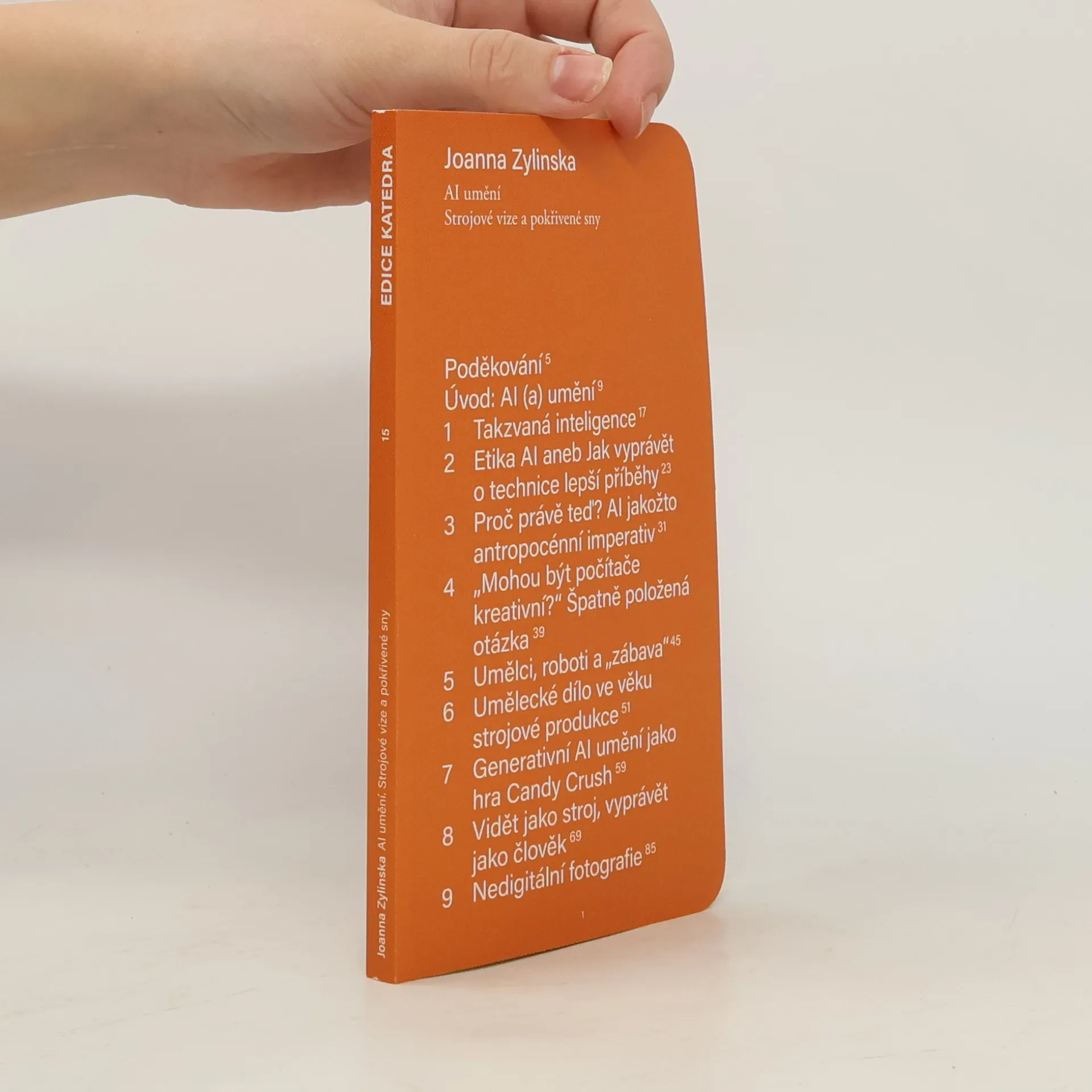
      AI Art

      Machine Visions and Warped Dreams

      • 178bladzijden
      • 7 uur lezen
      3,8(27)Tarief

      Exploring the intersection of art and technology, Joanna Zylinska challenges the perception of AI as merely a tool for creativity. She emphasizes the importance of understanding the human role within the evolving landscape of computation and robotics, addressing critical issues such as labor, robotization, and existential threats. By critiquing the socio-political foundations of artificial intelligence, the book raises essential questions about the nature of art-making and creativity in contemporary society.

      AI Art