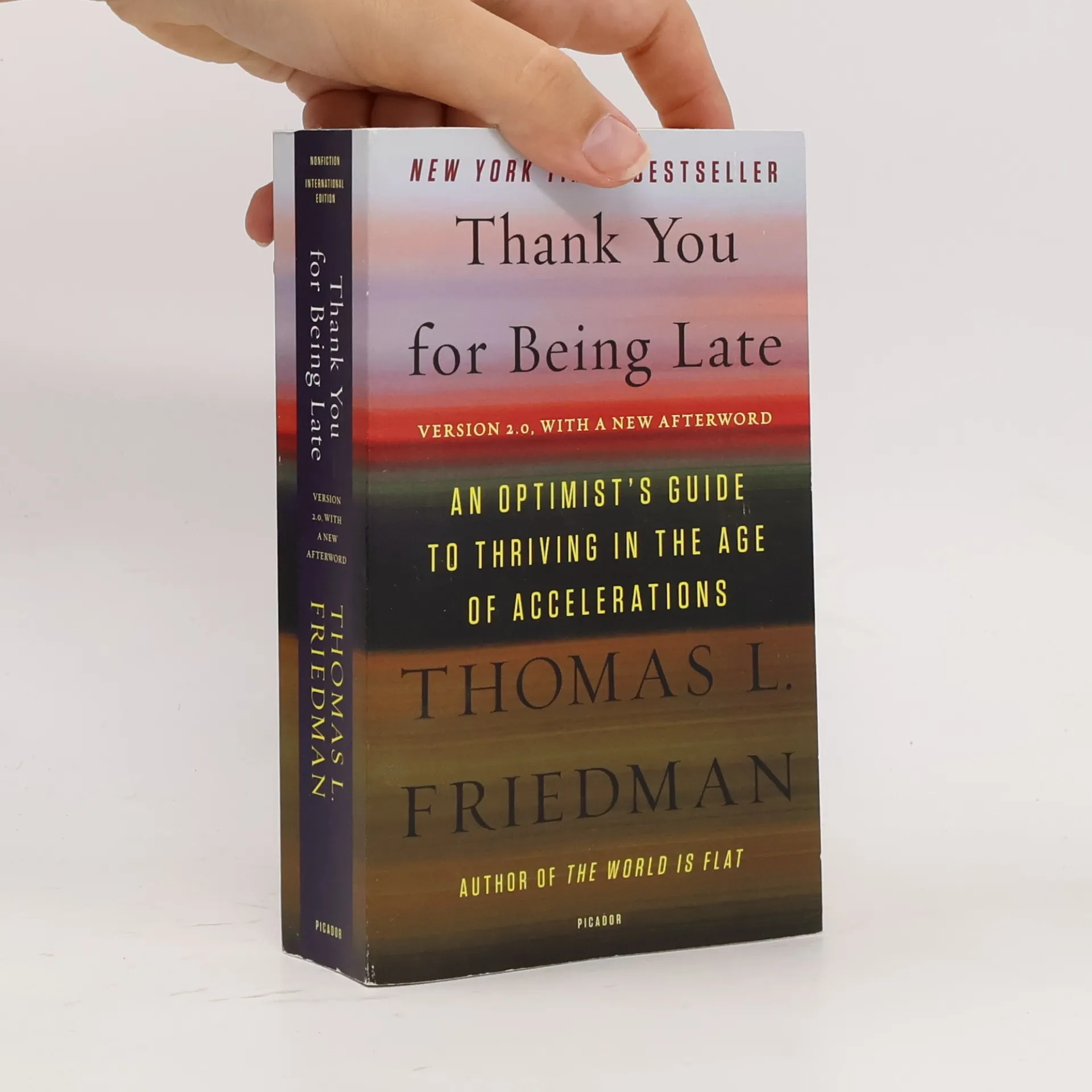
Friedman discusses how the key to understanding the 21st century is understanding that the planet's three largest forces--Moore's law (technology), the market (globalization) and Mother Nature (climate change and biodiversity loss)--are accelerating all at once. And these accelerations are transforming the five key realms: the workplace, politics, geopolitics, ethics, and community. Friedman posits that we should purposely "be late"--We should pause to appreciate the amazing historical epoch we're passing through and to reflect on its possibilities and dangers.--
Thomas Friedman Volgorde van de boeken (chronologisch)
20 juli 1953
Thomas L. Friedman is een bejubeld auteur en journalist wiens werk zich verdiept in internationale aangelegenheden. Hij baseert zijn inzichten op uitgebreide rapportages, met als doel het complexe mondiale landschap toegankelijk te maken voor lezers. Friedman heeft de definitie van buitenlandse zaken verbreed om de impact van financiën, globalisering en technologie te omvatten. Zijn schrijven verkent de wisselwerking tussen blijvende krachten zoals nationalisme en cultuur, en de transformerende effecten van internet en mondiale markten.

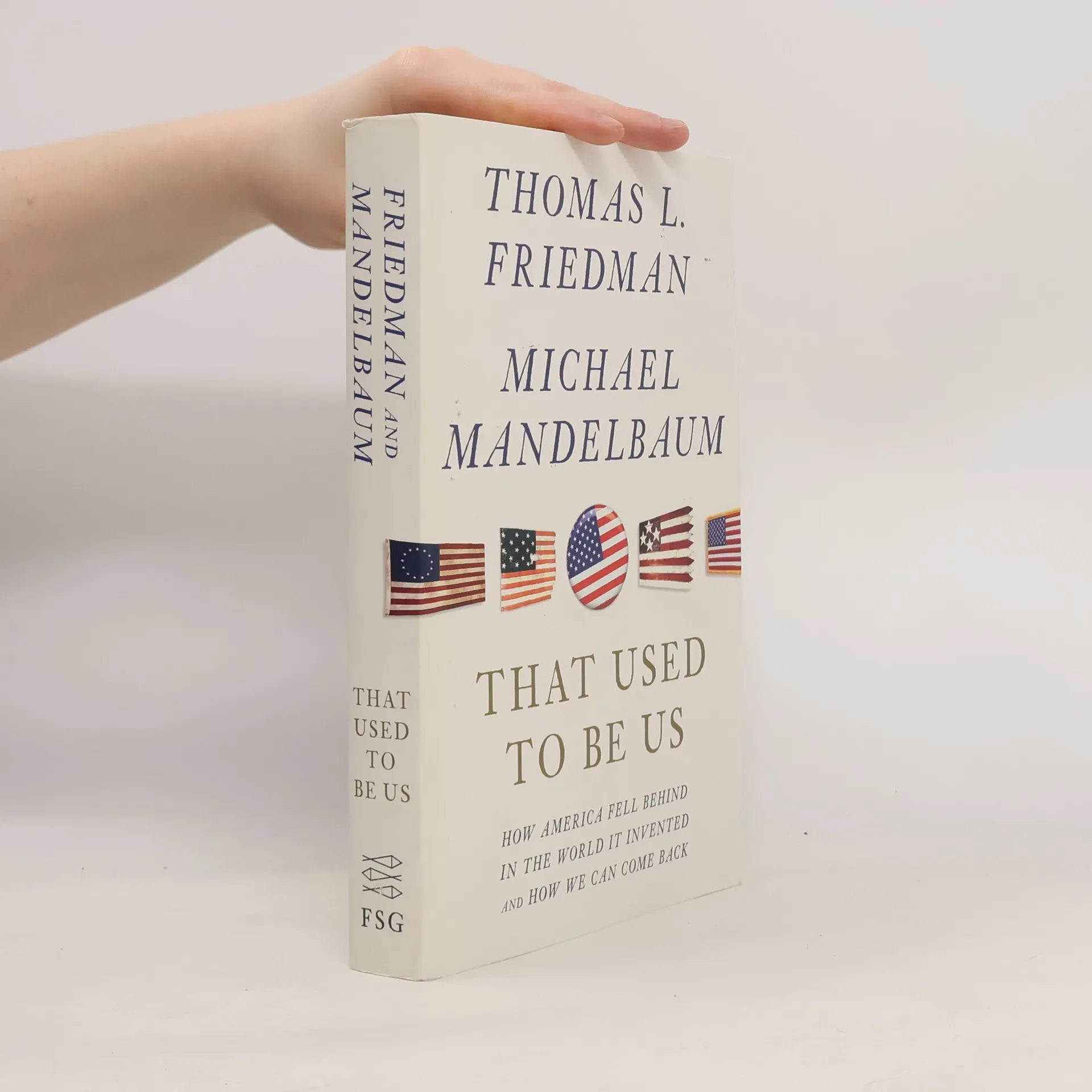
That Used to Be Us
- 388bladzijden
- 14 uur lezen
Originally published: New York: Farrar, Straus, and Giroux, 2011.
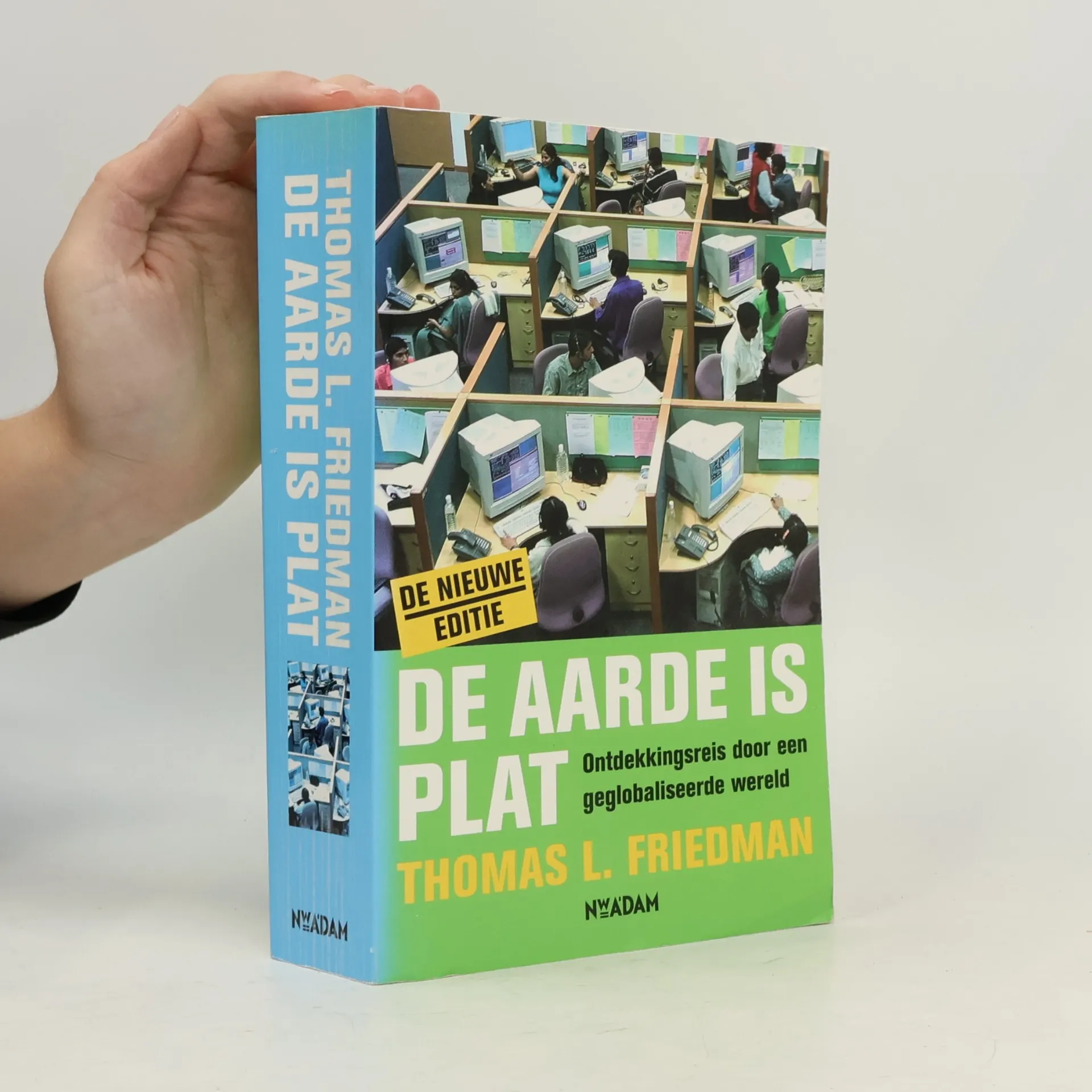
De aarde is plat
Ontdekkingsreis door een geglobaliseerde wereld - De nieuwe editie
- 624bladzijden
- 22 uur lezen
When scholars write the history of the world twenty years from now, and they come to the chapter Y2K to March 2004 , what will they say was the most crucial development? The attacks on the World Trade Center on 9/11 and the Iraq war? Or the convergence of technology and events that allowed India, China, and so many other countries to become part of the global supply chain for services and manufacturing, creating an explosion of wealth in the middle classes of the world's two biggest nations, giving them a huge new stake in the success of globalisation? And with this flattening' of the globe, which requires us to run faster in order to stay in one place, has the world got too small and too fast for human beings and their political systems to adjust in a stable manner?In this brilliant new book, the award-winning New York Times columnist Thomas Friedman demystifies the brave new world for readers, allowing them to make sense of the often bewildering global scene unfolding before their eyes. With his inimitable ability to translate complex foreign policy and economic issues, Friedman explains how the flattening of the world happened at the dawn of the 21st century; what it means to countries, companies, communities and individuals; and how governments and societies can, and must, adapt.
The World is Flat
- 593bladzijden
- 21 uur lezen
The beginning of the twenty-first century will be remembered, Friedman argues, not for military conflicts or political events, but for a whole new age of globalization - a flattening' of the world. The explosion of advanced technologies now means that suddenly knowledge pools and resources have connected all over the planet, levelling the playing field as never before, so that each of us is potentially an equal and competitor of the other. The rules of the game have changed forever but does this death of distance', which requires us all to run faster in order to stay in the same place, mean the world has got too small and too flat too fast for us to adjust? Friedman brilliantly demystifies the exciting, often bewildering, global scene unfolding before our eyes, one which we sense but barely yet understand. The World is Flat is the most timely and essential update on globalization, its successes and its discontents, powerfully illuminated by a world-class writer.
Longitudes and attitudes : the world in the age of terrorism
- 416bladzijden
- 15 uur lezen
From the Pulitzer Prize–winning New York Times columnist and bestselling author of From Beirut to Jerusalem and The Lexus and the Olive Tree comes this smart, penetrating, brilliantly informed book that is indispensable for understanding today’s radically new world and America’s complex place in it. Thomas L. Freidman received his third Pulitzer Prize in 2002 “for his clarity of vision, based on extensive reporting, in commenting on the worldwide impact of the terrorist threat.” In Longitudes and Attitudes he gives us all of the columns he has published about the most momentous news story of our time, as well as a diary of his private experiences and reflections during his post–September 11 travels. Updated for this new paperback edition, with over two years’ worth of Friedman’s columns and an expanded version of his diary, Longitudes and Attitudes is a broadly influential work from our most trusted observer of the international scene.
Longitudes and Attitudes
- 416bladzijden
- 15 uur lezen
This title brings together reportage and reflections on the state of the world leading up to and after September 11, 2001. Thomas Friedman gives voice to our awakening sense of a radically new world and our own complex place in it.
The Lexus and the olive tree
- 512bladzijden
- 18 uur lezen
From a perceptive commentator and National Book Award winner, this work offers a comprehensive exploration of globalization, the international system shaping world affairs today. As a Foreign Affairs columnist for The New York Times, Thomas L. Friedman has traveled extensively, interviewing diverse individuals—from Brazilian peasants to Wall Street financial experts. He presents globalization not merely as a trend but as a transformative system that has replaced the Cold War framework, creating an interconnected global market and, to some extent, a global village. Understanding this system is crucial for interpreting current events and personal investments. For instance, during the Cold War, communication was symbolized by the hot line between superpowers, while today, the Internet represents our interconnectedness, albeit with no single authority in control. Through vivid narratives and original concepts, Friedman provides insights into this new world order, illustrating the conflict between the forces of globalization and enduring cultural traditions. He also addresses the backlash against globalization from those who feel marginalized by it and emphasizes the need for balance. The struggle between modernity and tradition is the central theme of this provocative work, essential for anyone interested in the dynamics of the contemporary world.
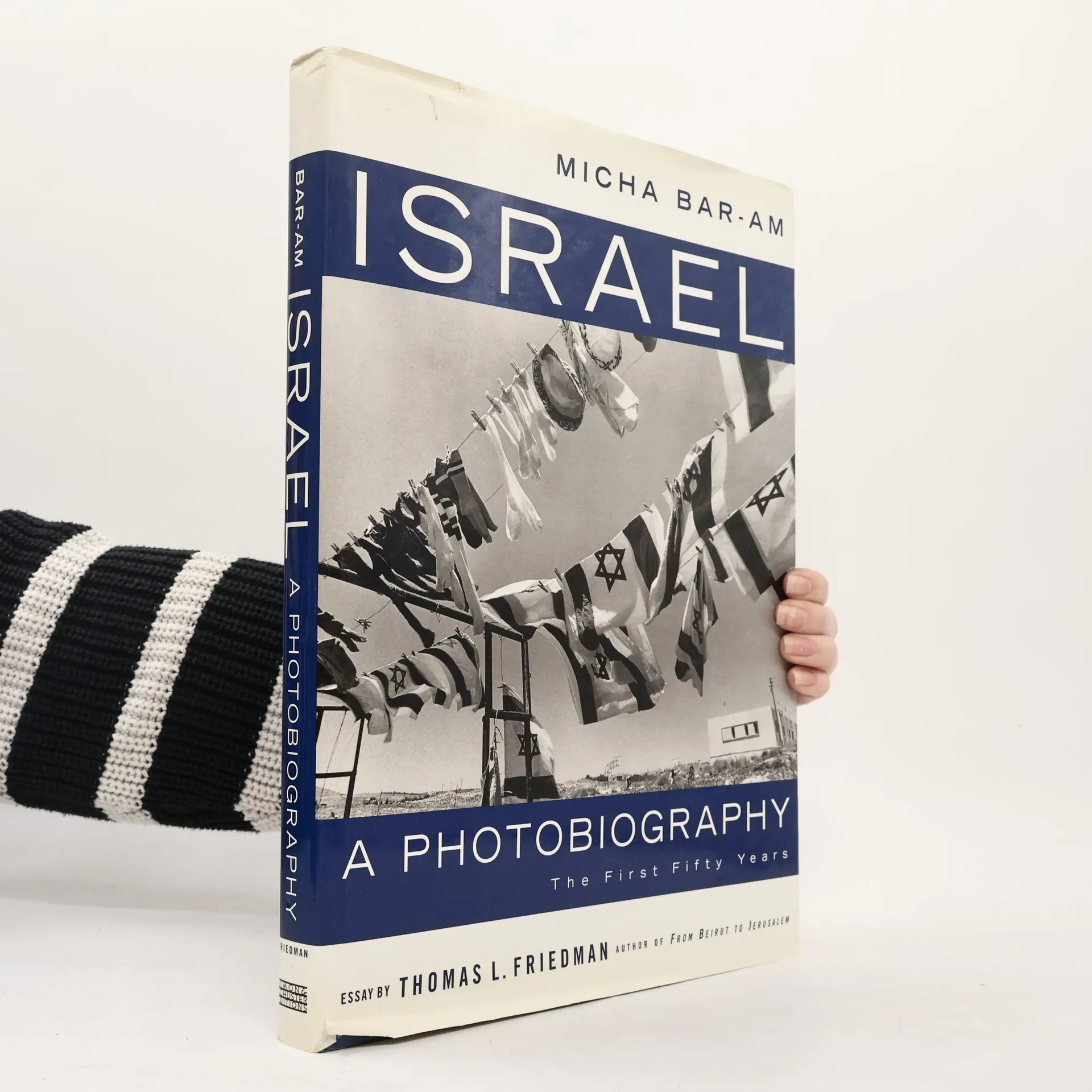
As spectacular and moving as Bar-Am's photos are, Thomas L. Friedman's compelling essay provides an anchor in the form of an eloquent reflection on the unfolding of the first fifty years. Israel's contributions to politics and culture, to religion and commerce, have made a tremendous mark on the world, and these issues Friedman addresses with the perception of an outsider who has spent almost a quarter of his life in the area. While Bar-Am's photos show us the events that have shaped Israel's path, Friedman's essay explores the implications of Israel's first fifty years and the nation's powerful struggle between its past and its future.
From Beirut to Jerusalem
- 560bladzijden
- 20 uur lezen
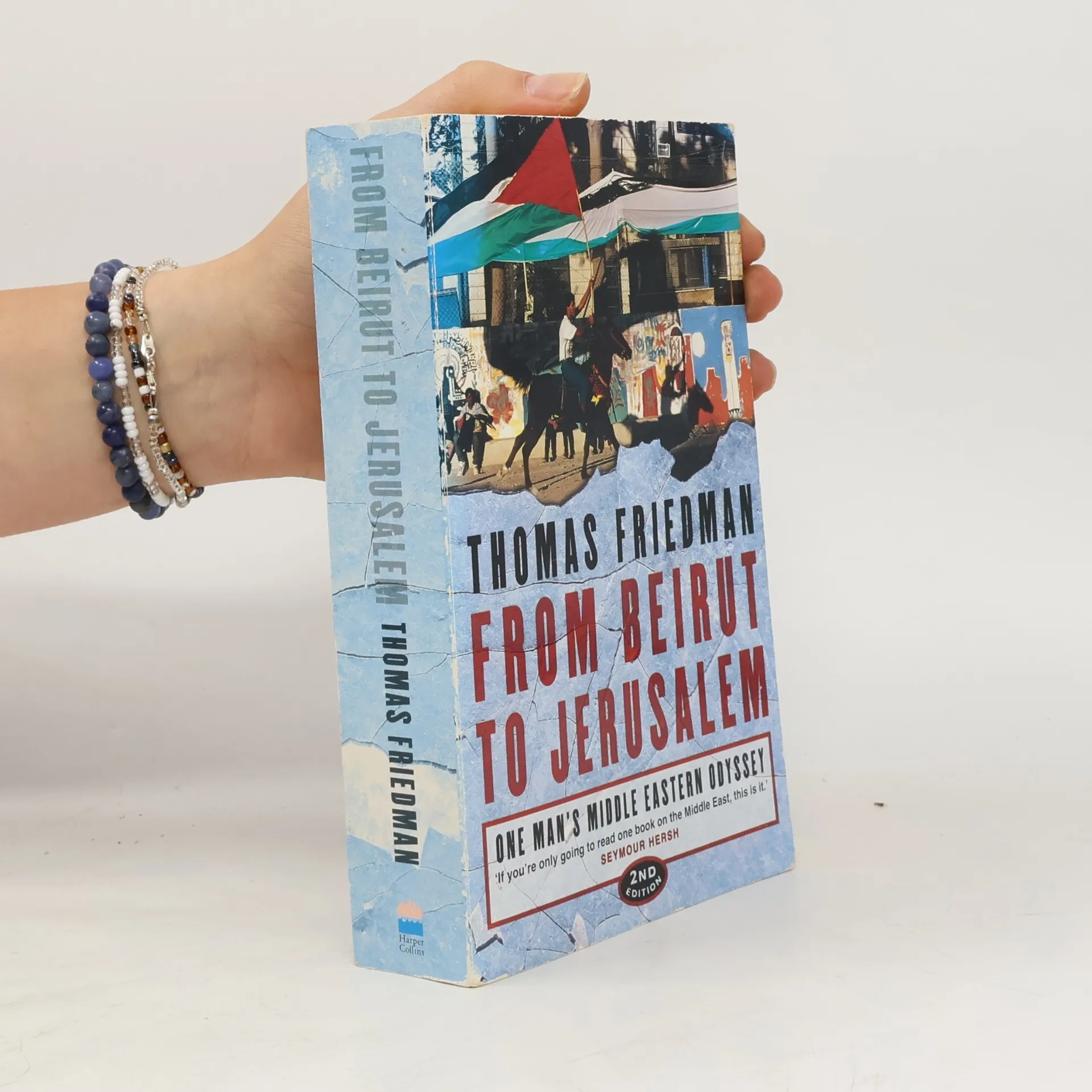
A Second Edition of Thomas Friedman's stunning book, the first edition of which won the American National Book Award. číst celé