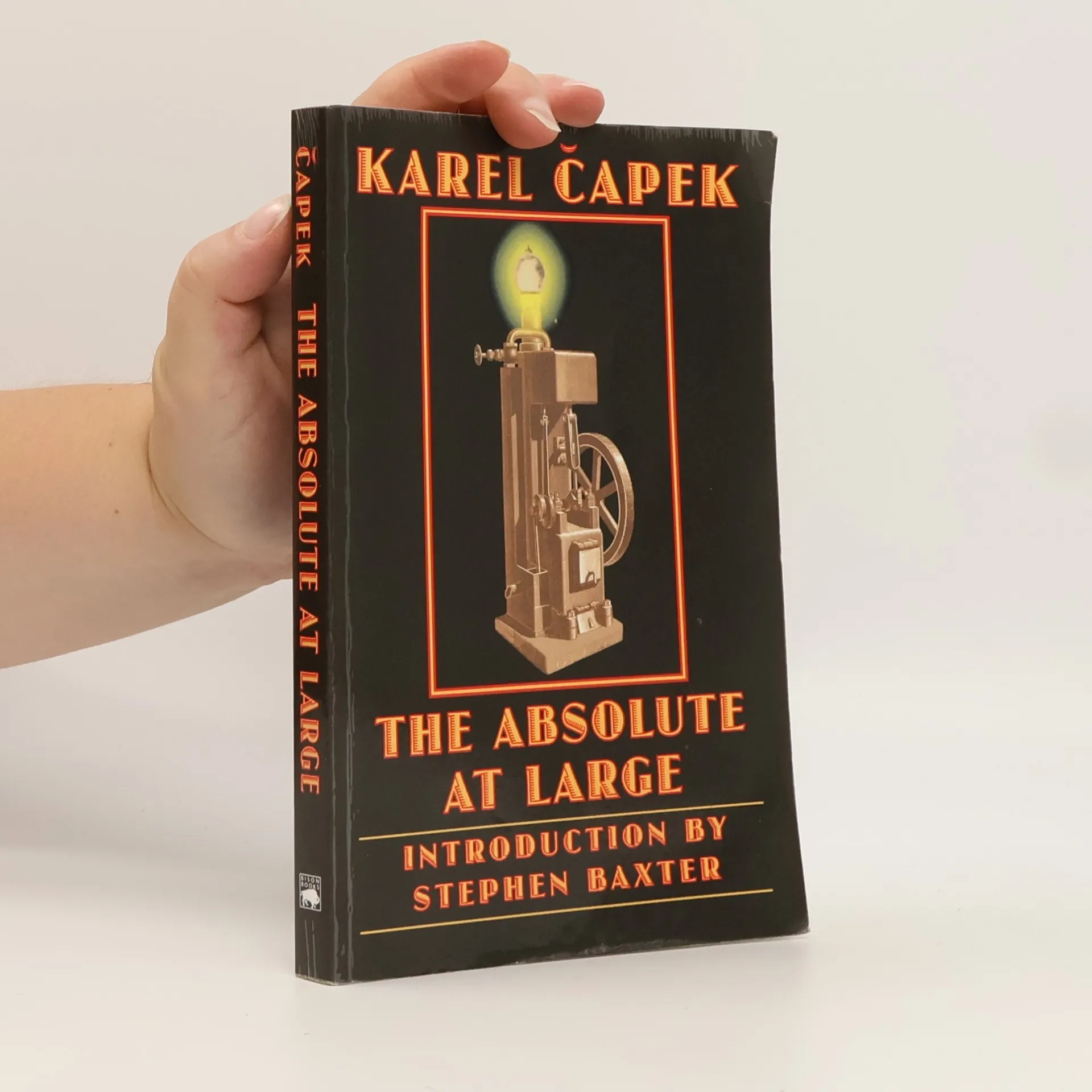
A brilliant scientist invents the Karburator, a reactor that can create abundant and practically free energy. However, the Karburator's super- efficient energy production also yields a powerful by-product the Absolute, the spiritual essence held within all matter, into the world.
All too often, this brilliant novel of thwarted love and revenge miscarried has been read for its political implications. Now, a quarter century after The Joke was first published and several years after the collapse of the Soviet-imposed Czechoslovak regime, it becomes easier to put such implications into perspective in favor of valuing the book (and all Kundera 's work) as what it truly is: great, stirring literature that sheds new light on the eternal themes of human existence. The present edition provides English-language readers an important further means toward revaluation of The Joke. For reasons he describes in his Author's Note, Milan Kundera devoted much time to creating (with the assistance of his American publisher-editor) a completely revised translation that reflects his original as closely as any translation possibly can: reflects it in its fidelity not only to the words and syntax but also to the characteristic dictions and tonalities of the novel's narrators. The result is nothing less than the restoration of a classic.
"Die Soziologie des 20. Jahrhundertshatdie langfristigen Transformationen der Gesellschafts- und Persönlichkeitsstukturen weitgehend aus den Augen verloren. Im Werk von Norbert Elias sind gerade diese langfristigen Prozesse das zentrale Thema: Wie ging eigentlich die »Zivilisation« im Abendlande vor sich? Worin bestand sie? Und welches waren ihre Antriebe, ihre Ursachen oder Motoren? Bei Elias' Arbeit handelt es sich weder um eine Untersuchung über eine »Evolution« im Sinne des 19. Jahrhunderts noch um eine Untersuchung über einen unspezifischen »sozialen Wandel« im Sinne des 20.; seine Arbeit ist grundlegend für eine undogmatische, empirisch fundierte soziologische Theorie sozialer Prozesse."
In this book, Claude Lévi-Strauss presents and applies the structural method to the study of ideas, arts, and societies. He addresses major questions of structural anthropology and discusses methodological issues. The work defines and illustrates his ambition to conduct a genuine scientific analysis of human phenomena without distorting them, preserving their concrete richness and the subtle nuances reflected in their diversity.