
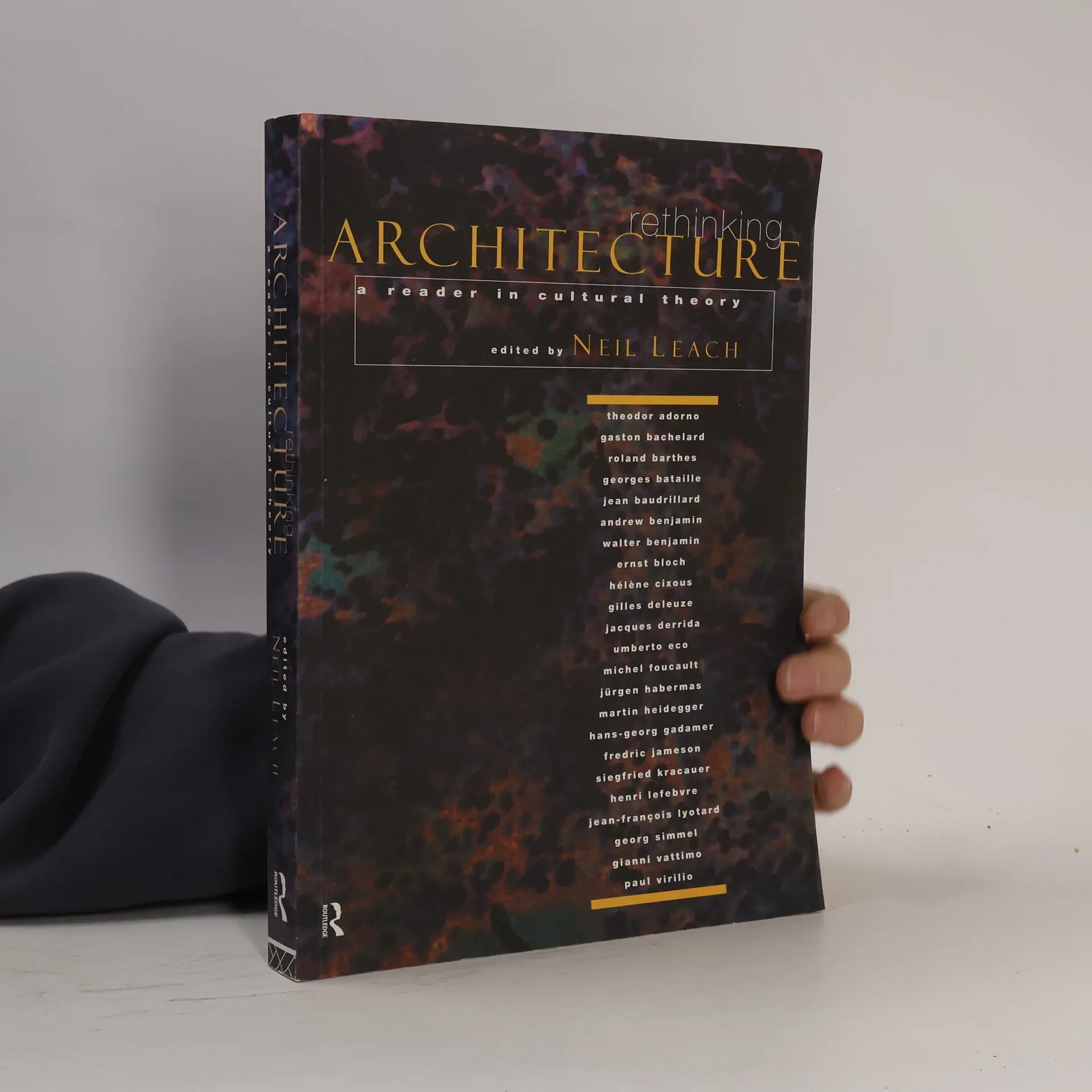

Aesthetics and Politics
- 224bladzijden
- 8 uur lezen
An intense and lively debate on literature and art between thinkers who became some of the great figures of twentieth-century philosophy and literature
Ernst Bloch geldt als een van de grote filosofen en politieke denkers van twintigste-eeuws Duitsland. Zijn werk kenmerkt zich door een diepgaande verkenning van hoop en utopie, die hij beschouwde als fundamentele drijfveren voor menselijke vooruitgang en vrijheid. Bloch's filosofische benadering, hoewel beïnvloed door het marxisme, oversteegde dit door de nadruk te leggen op de transcendente en spirituele dimensies van het menselijk bestaan. Zijn denken tracht een materialistisch wereldbeeld te verbinden met een voortdurende zoektocht naar een betere toekomst.


An intense and lively debate on literature and art between thinkers who became some of the great figures of twentieth-century philosophy and literature
The Spirit of Utopia, written mostly in 1915-16, published in its first version just after the First World War, republished five years later, 1923, in this version is presented for the first time in English translation. schovat popis
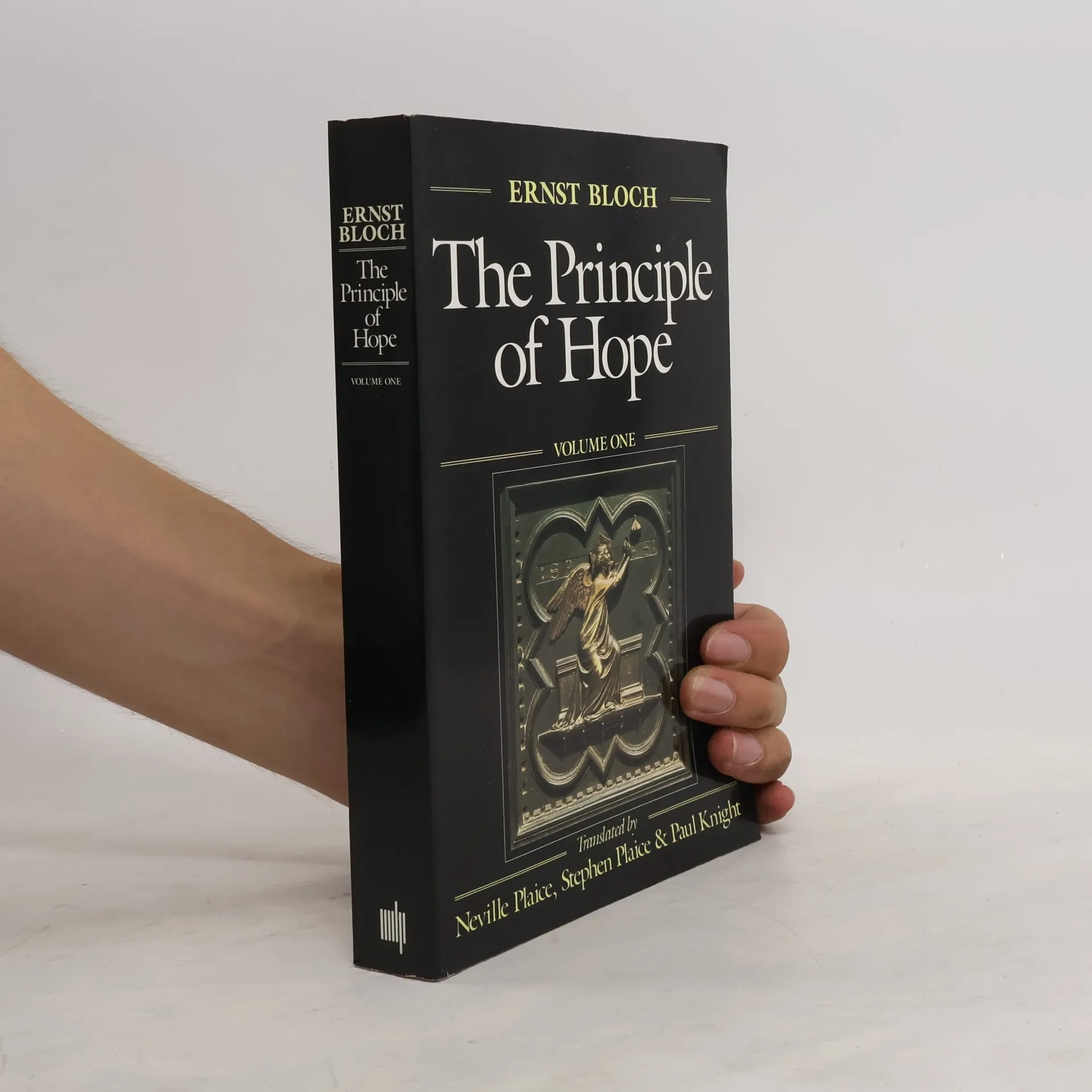
The Principle of Hope is one of the great works of the human spirit. It is a critical history of the utopian vision and a profound exploration of the possible reality of utopia. Even as the world has rejected the doctrine on which Bloch sought to base his utopia, his work still challenges us to think more insightfully about our own visions of a better world.The Principle of Hope is published in three volumes: Volume 1 lays the foundations of the philosophy of process and introduces the idea of the Not-Yet-Conscious - the anticipatory element that Bloch sees as central to human thought. It also contains a remarkable account of the aesthetic interpretations of utopian "wishful images" in fairy tales, popular fiction, travel, theater, dance, and the cinema. Volume 2 presents "the outlines of a better world." It examines the utopian systems that progressive thinkers have developed in the fields of medicine, painting, opera, poetry, and ultimately, philosophy. It is nothing less than an encyclopedic account of utopian thought from the Greeks to the present. Volume 3 offers a prescription for ways in which humans can reach their proper "homeland," where social justice is coupled with an openness to change and to the future.
Ernst Bloch je klasickým filosofem 20. století, kterého proslavila především práce Princip naděje. Jeho myšlení mělo zásadní vliv na tradici neortodoxního marxismu, ale také např. na československý marxisticko-křesťanský dialog. V češtině dosud nebyly dostupné žádné překlady Blochových textů, proto chce výbor tuto mezeru zaplnit. Cílem je zprostředkovat autorovy myšlenky ze zásadních oblastí jeho zájmu, jakými jsou ontologie, náboženství, politická teorie a estetika. Výbor je doplněn úvodní studií, která uvede do základů Blochova myšlení a zasadí vybrané texty do kontextu jeho díla.
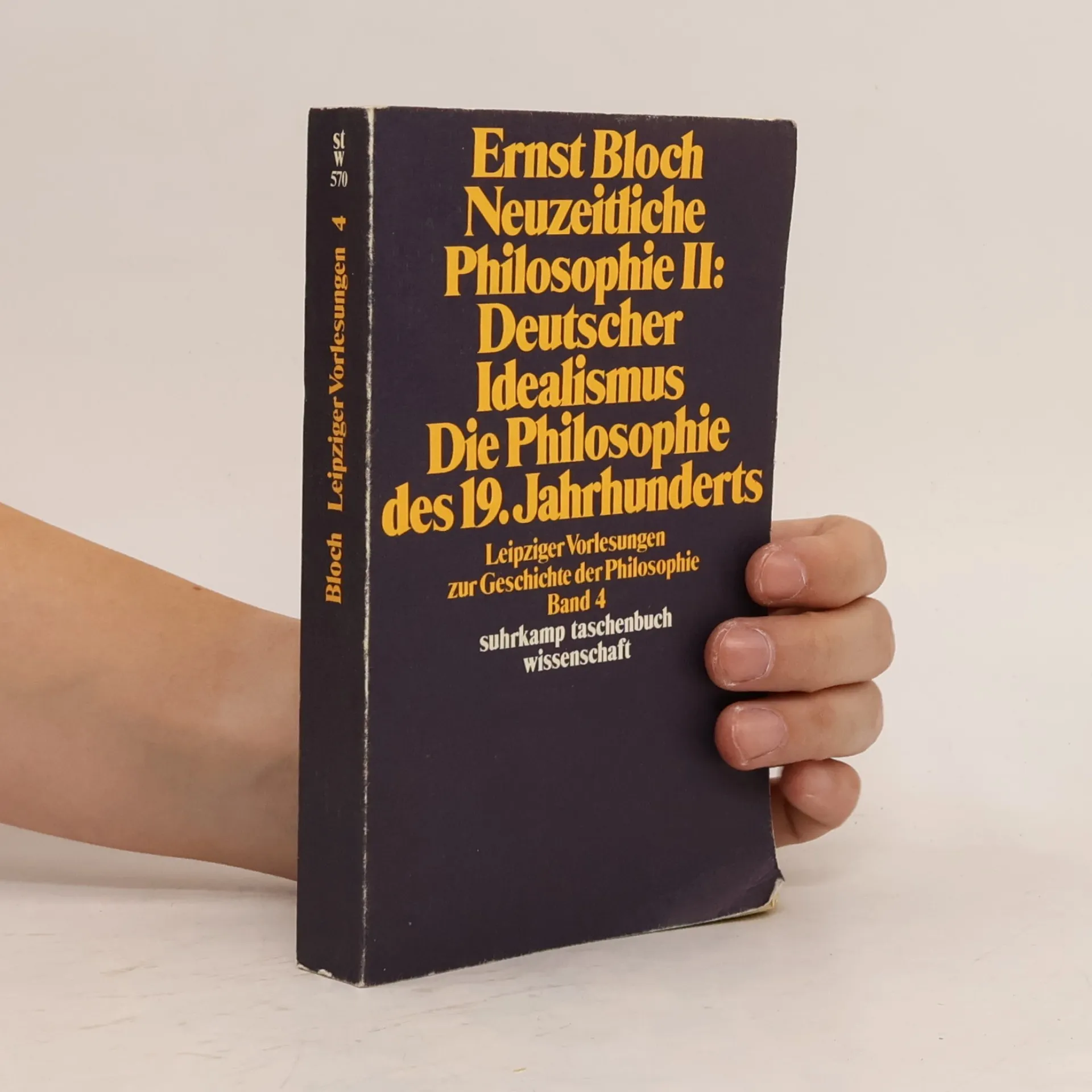
Wissenschaft 253 / / Philosophy / Duits / German / Allemand / Deutsch / Pocket / Poche / Taschenbuch / 11 x 18 cm / 376 .pp /
Absicht Die Selbstbegegnung 1. Ein alter Krug 2. Die Erzeugung des Ornaments 3. Der komische Held 4. Philosophie der Musik 5. Über die Gedankenatmosphäre dieser Zeit 6. Die Gestalt der unkonstruierbaren Frage Karl Marx, der Tod und die Apokalypse