

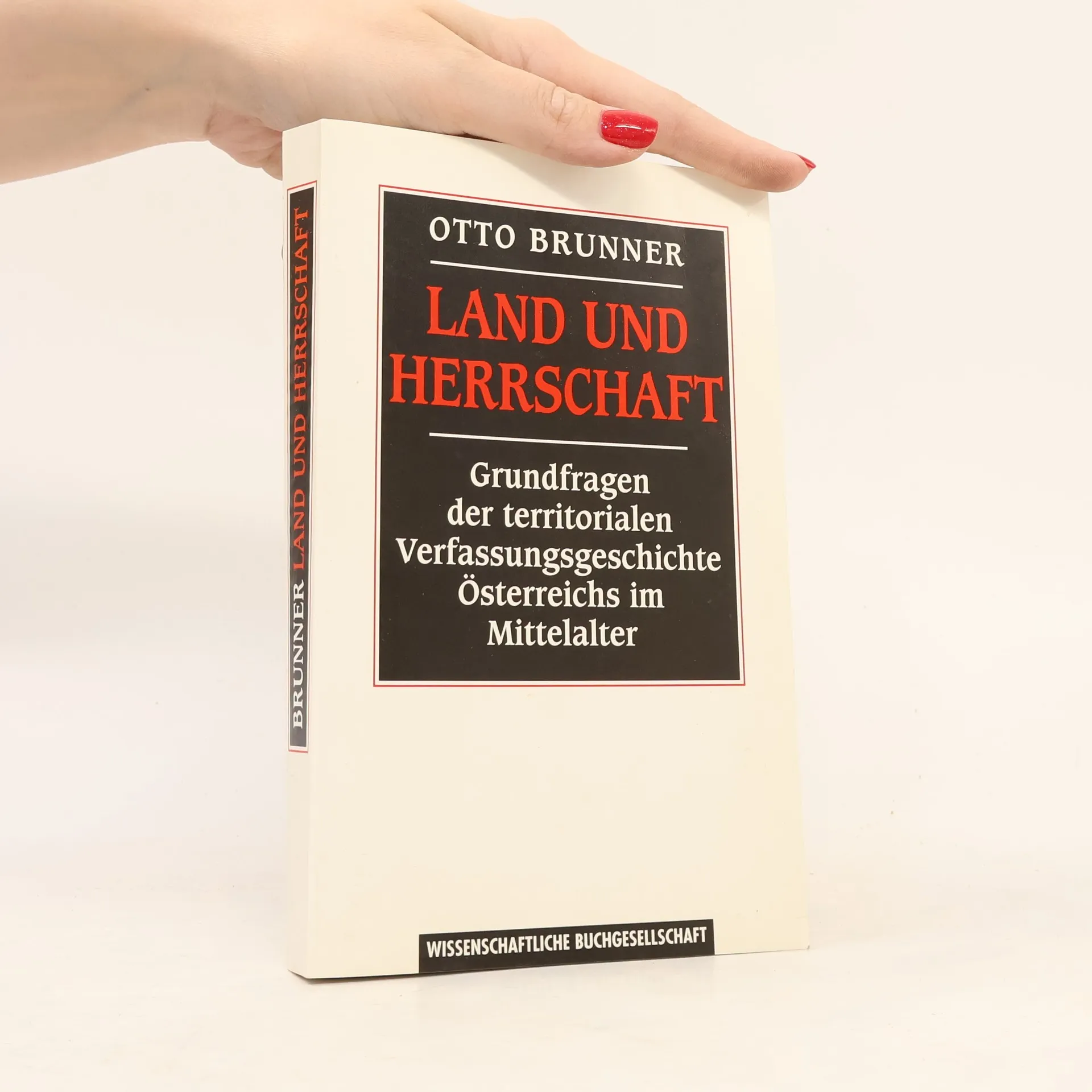


Land und Herrschaft
Grundfragen der territorialen Verfassungsgeschichte Österreichs im Mittelalter
Auteurs
Boekbeoordeling
Meer over het boek
Otto Brunner contends that prevailing notions of medieval social and constitutional history had been shaped by the nineteenth-century nation state and its "liberal" order. Whereas a sharp distinction between the public and the private might be appropriate to descriptions of contemporary society, such a dichotomy could not be projected back onto the Middle Ages. Focusing particularly on forms of lordship in late medieval Austria, Brunner found neither a "state" in the modern sense nor any distinction between the public and private spheres. Behind the apparent disorder of late medieval political life, however, Brunner discovered a coherent legal and constitutional order rooted in the the rights and obligations of noble lordship. In carefully reconstructing this order, Brunner's study weaves together social, legal, constitutional, and intellectual history.

Uitgave


Een boek kopen
Land und Herrschaft, Otto Brunner
- Taal

- Jaar van publicatie
- 1965
- product-detail.submit-box.info.binding
- (Paperback)
Betaalmethoden
We missen je recensie hier.
- Titel
- Land und Herrschaft
- Ondertitel
- Grundfragen der territorialen Verfassungsgeschichte Österreichs im Mittelalter
- Taal
- Duits
- Auteurs
- Otto Brunner
- Jaar van publicatie
- 1965
- Formaat
- Paperback
- Aantal pagina's
- 463
- ISBN10
- 3534094662
- ISBN13
- 9783534094660
- Reeks
- Oorspronkelijke titel
- Land und Herrschaft
- Beoordeling
- 3,7 van 5
- Aantekening
- Otto Brunner contends that prevailing notions of medieval social and constitutional history had been shaped by the nineteenth-century nation state and its "liberal" order. Whereas a sharp distinction between the public and the private might be appropriate to descriptions of contemporary society, such a dichotomy could not be projected back onto the Middle Ages. Focusing particularly on forms of lordship in late medieval Austria, Brunner found neither a "state" in the modern sense nor any distinction between the public and private spheres. Behind the apparent disorder of late medieval political life, however, Brunner discovered a coherent legal and constitutional order rooted in the the rights and obligations of noble lordship. In carefully reconstructing this order, Brunner's study weaves together social, legal, constitutional, and intellectual history.