


Meer over het boek
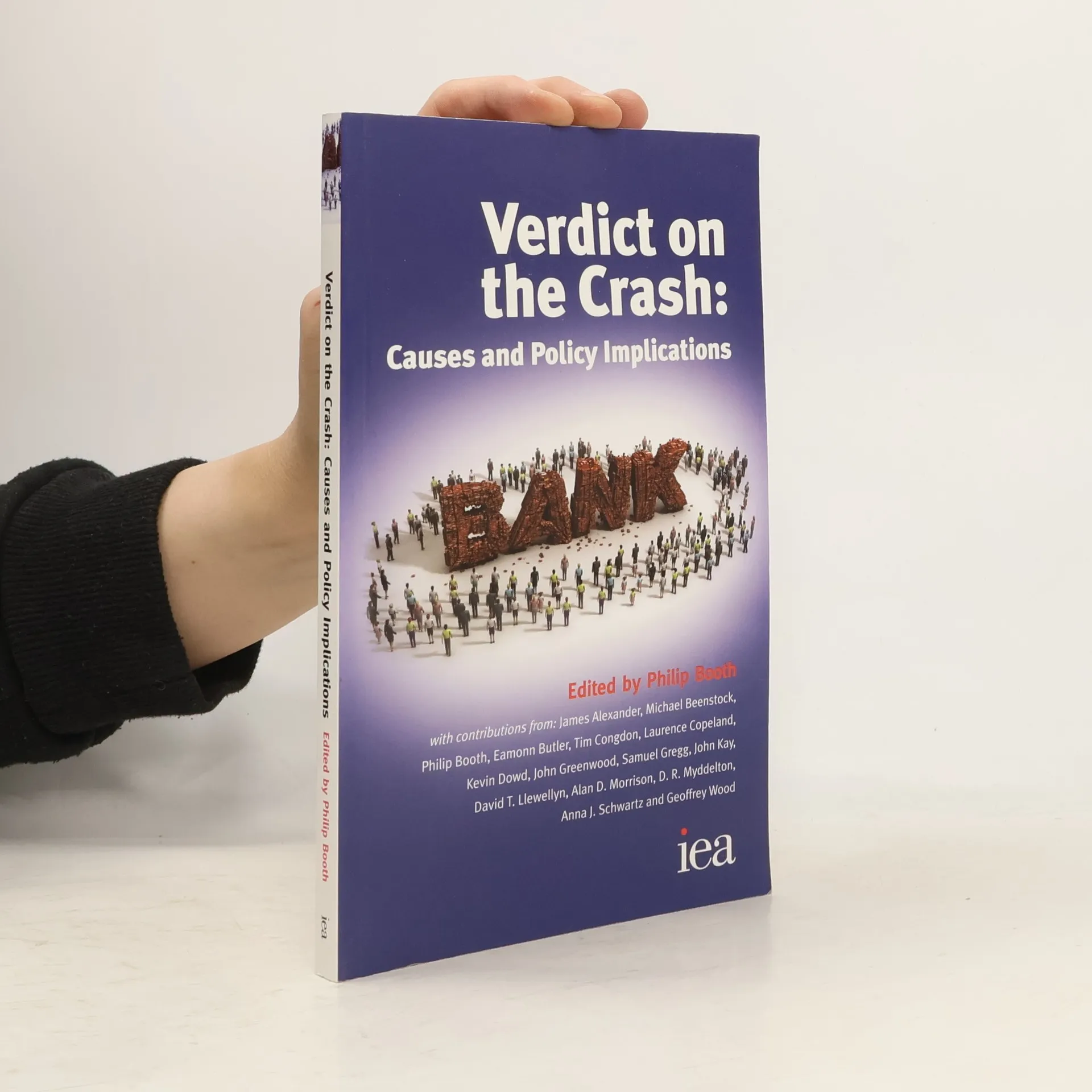
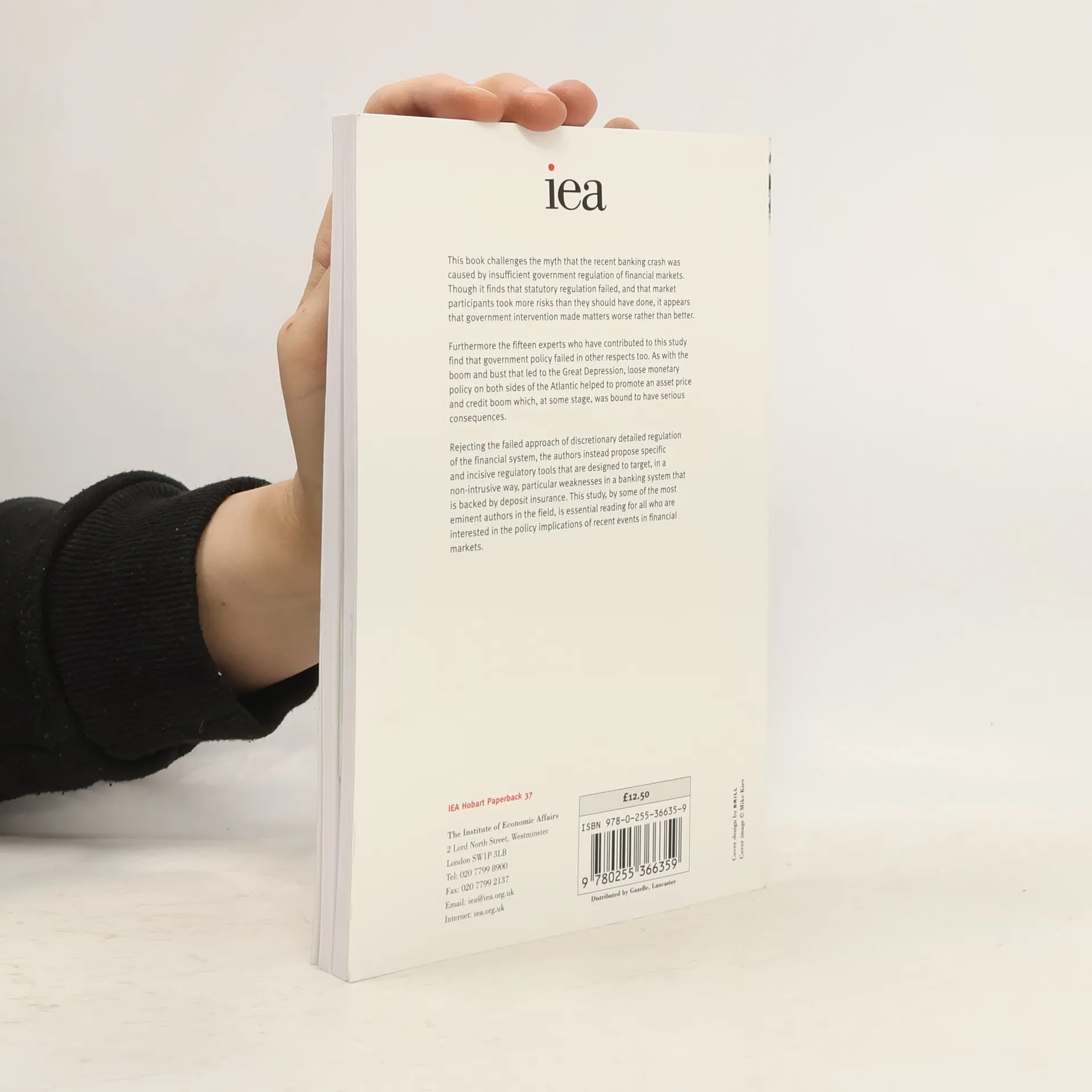
Challenging the belief that the banking crisis stemmed from inadequate regulation, this book argues that regulatory measures may have worsened the situation. The contributors, noted experts in finance, reveal that both statutory regulation and government policies failed, exacerbating risks and fostering an asset bubble through loose monetary policy. They advocate for targeted, non-intrusive regulatory tools to address specific banking weaknesses, making this work crucial for understanding the implications of recent financial events.
Een boek kopen
IEA Hobart - 37: Verdict on the Crash, Michael Beenstock, John Greenwood, David T. Llewellyn, Philip Booth, Alan D. Morrison, D. R. Myddelton, Geoffrey Wood, Anna J. Schwartz, Tim Congdon, Kevin Dowd, James Alexander, Laurence S. Copeland, Samuel Gregg, Eamonn Butler, John Kay
- Taal

- Jaar van publicatie
- 2009
- Bindwijze
- (Paperback)
Betaalmethoden
We missen je recensie hier.
- Titel
- IEA Hobart - 37: Verdict on the Crash
- Taal
- Engels
- Auteurs
- Michael Beenstock, John Greenwood, David T. Llewellyn, Philip Booth, Alan D. Morrison, D. R. Myddelton, Geoffrey Wood, Anna J. Schwartz, Tim Congdon, Kevin Dowd, James Alexander, Laurence S. Copeland, Samuel Gregg, Eamonn Butler, John Kay
- Jaar van publicatie
- 2009
- Formaat
- Paperback
- ISBN10
- 0255366353
- ISBN13
- 9780255366359
- Reeks
- Categorieën
- Beoordeling
- 4 van 5
- Aantekening
- Challenging the belief that the banking crisis stemmed from inadequate regulation, this book argues that regulatory measures may have worsened the situation. The contributors, noted experts in finance, reveal that both statutory regulation and government policies failed, exacerbating risks and fostering an asset bubble through loose monetary policy. They advocate for targeted, non-intrusive regulatory tools to address specific banking weaknesses, making this work crucial for understanding the implications of recent financial events.