



Meer over het boek
Renaud Barbaras's De l'etre du phenomene: l'ontologie de Merleau-Ponty, published in 1991, is considered one of the most powerful and complete elaborations of Maurice Merleau-Ponty's thought. Almost single-handedly, Barbaras has been responsible for reviving current interest in Merleau-Ponty's works. In the first English translation of this important and influential work, Ted Toadvine and Leonard Lawlor present Barbaras's rich and profound analysis of the history of Merleau-Ponty's philosophical development from Phenomenology of Perception to The Visible and the Invisible. Toadvine and Lawlor's translation communicates the subtle thought of the original with accuracy and elegance. A translators' introduction situates Barbaras in contemporary philosophical debates and develops his guiding insights into Merleau-Ponty's thought. The Being of the Phenomenon opens European post-structuralism to further study and is certain to inspire new thinking about the origins of Merleau-Ponty's phenomenology.
Een boek kopen
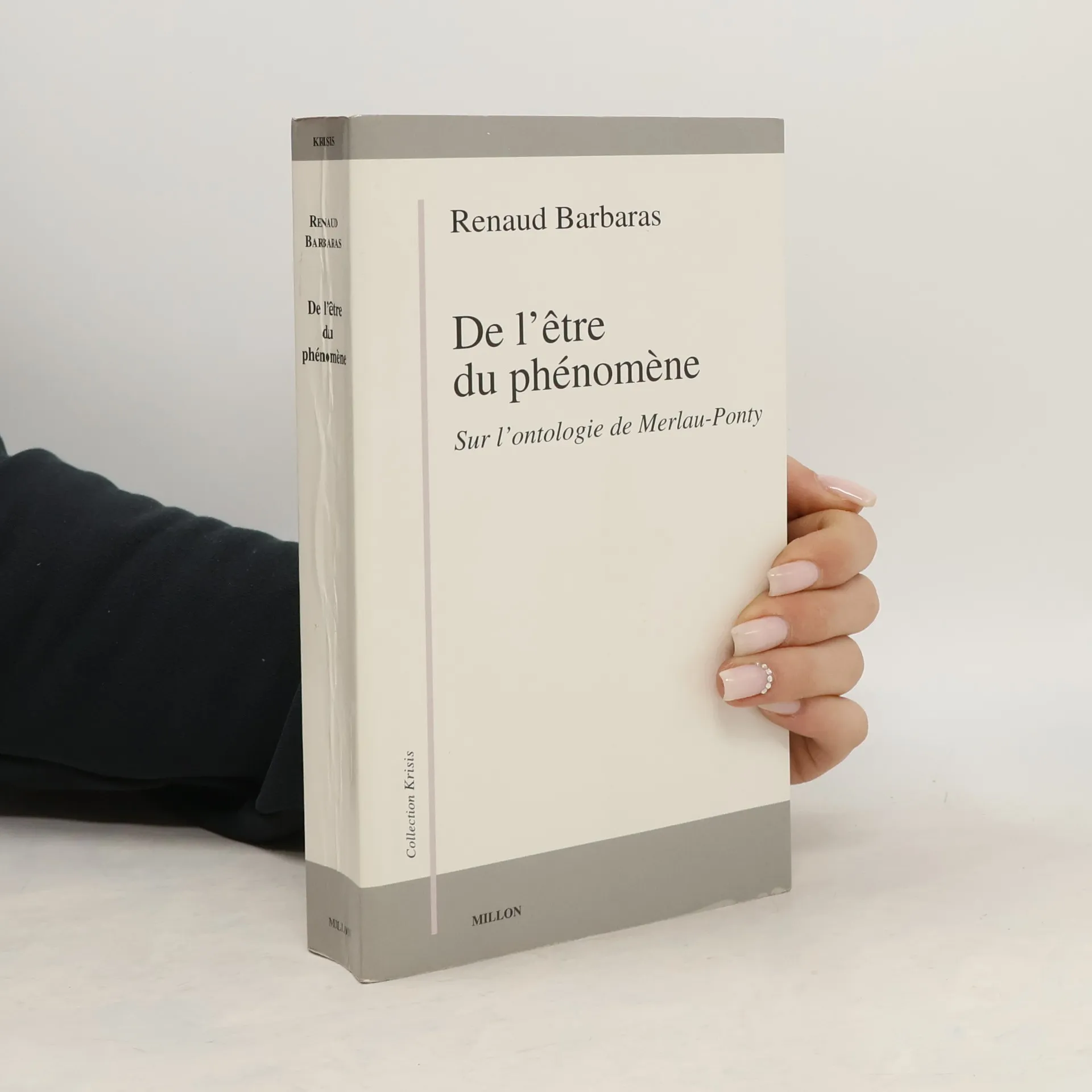
De l'être du phénomène, Renaud Barbaras
- Taal

- Jaar van publicatie
- 1991
- Bindwijze
- (Paperback)
Betaalmethoden
Nog niemand heeft beoordeeld.
- Titel
- De l'être du phénomène
- Ondertitel
- Sur l'ontologie de Merleau-Ponty
- Taal
- Frans
- Auteurs
- Renaud Barbaras
- Uitgever
- Millon
- Jaar van publicatie
- 1991
- Formaat
- Paperback
- Aantal pagina's
- 388
- ISBN10
- 290561451X
- ISBN13
- 9782905614513
- Reeks
- Categorieën
- Aantekening
- Renaud Barbaras's De l'etre du phenomene: l'ontologie de Merleau-Ponty, published in 1991, is considered one of the most powerful and complete elaborations of Maurice Merleau-Ponty's thought. Almost single-handedly, Barbaras has been responsible for reviving current interest in Merleau-Ponty's works. In the first English translation of this important and influential work, Ted Toadvine and Leonard Lawlor present Barbaras's rich and profound analysis of the history of Merleau-Ponty's philosophical development from Phenomenology of Perception to The Visible and the Invisible. Toadvine and Lawlor's translation communicates the subtle thought of the original with accuracy and elegance. A translators' introduction situates Barbaras in contemporary philosophical debates and develops his guiding insights into Merleau-Ponty's thought. The Being of the Phenomenon opens European post-structuralism to further study and is certain to inspire new thinking about the origins of Merleau-Ponty's phenomenology.