

Levering voor Kerstmis kan nog 0 dagen en 13 uren
Bookbot

Adaptieve Berekening en Machinaal Leren

Deze serie duikt in de complexe wereld van adaptieve berekeningen en machinaal leren. Het verkent diverse technieken die systemen in staat stellen om van ervaring te leren en zich aan te passen aan nieuwe omgevingen. Lezers krijgen inzicht in theoretische kaders en innovaties in algoritmische ontwikkeling. De collectie bevordert een dieper begrip en praktische toepassing van dit snel evoluerende vakgebied.

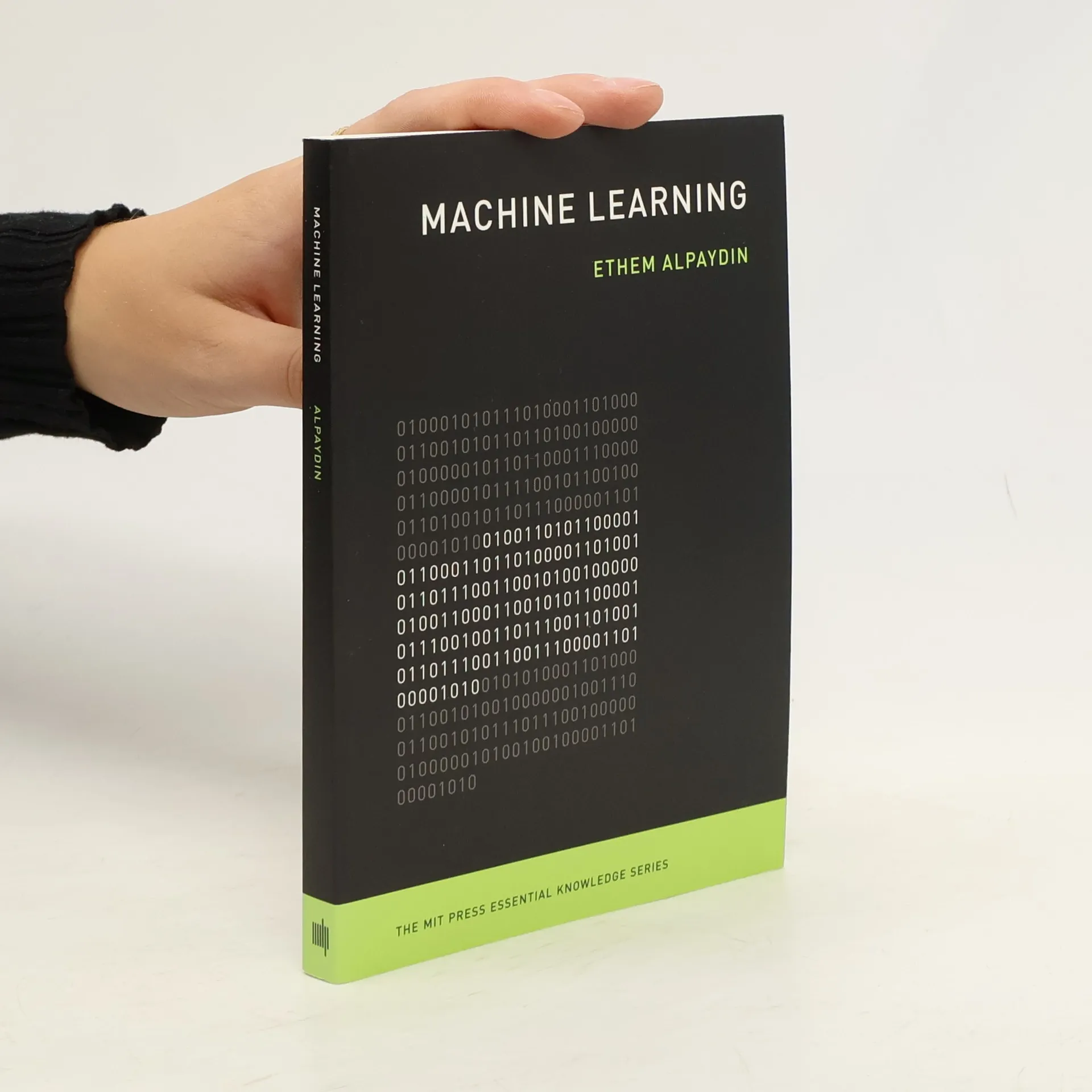
Machine Learning
Reinforcement Learning
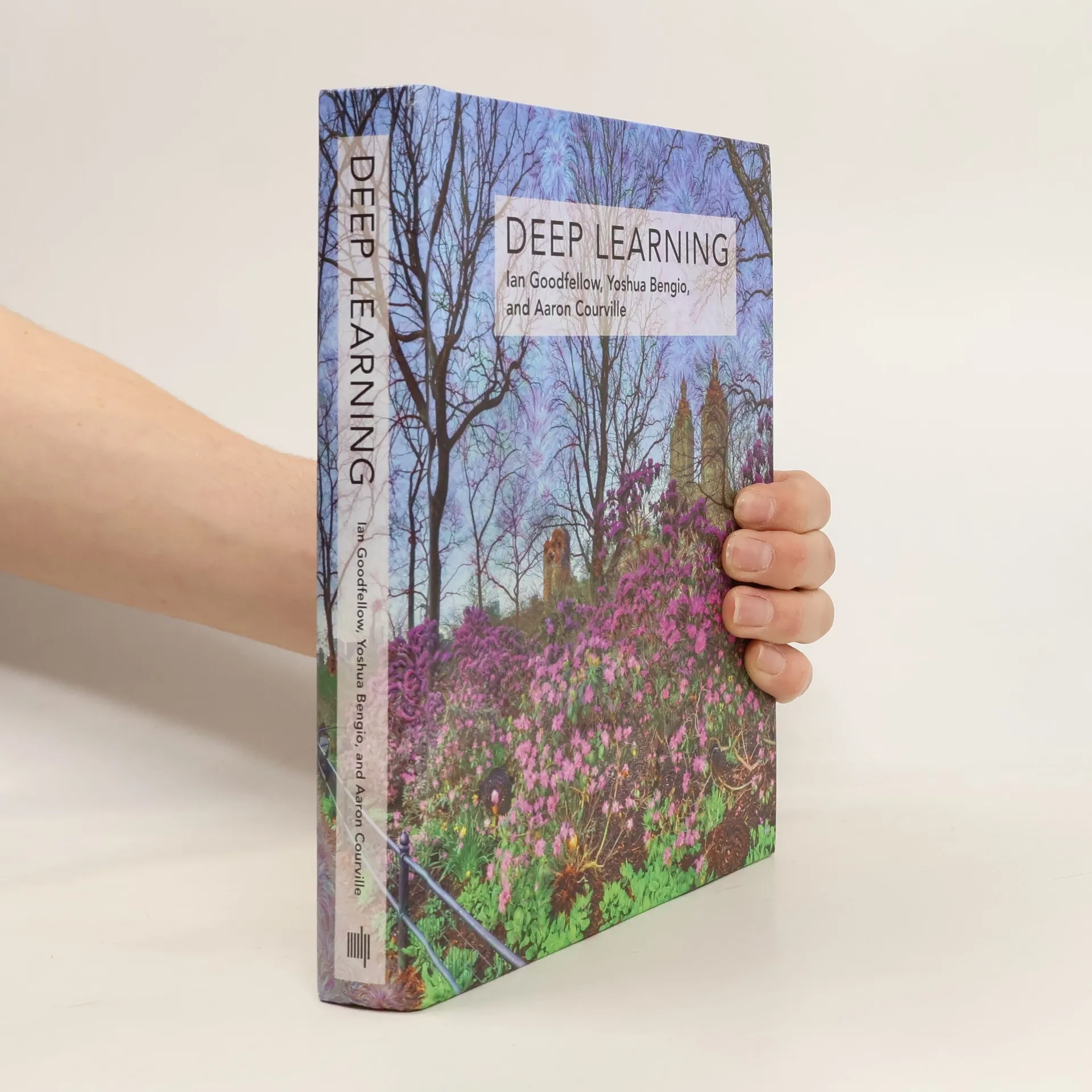
Deep learning
Principles of Data Mining
Maschinelles Lernen
DEEP LEARNING WSPÓŁCZESNE SYSTEMY UCZĄCE SIĘ
  • Deep learning to rodzaj systemu uczącego się, który pozwala komputerom na naukę na podstawie doświadczeń i zrozumienie świata w sennie hierarchii pojęć. Ponieważ komputer gromadzi wiedzę na podstawie doświadczeń, nie potrzebny jest nadzór człowieka w celu określenia całej wiedzy potrzebnej komputerowi. Hierarchia pojęć pozwala komputerowi uczyć się skomplikowanych pojęć rozbudowując je na podstawie prostszych elementów. Graf takich hierarchii będzie miał głębokość wielu warstw. Książka wprowadza szeroki zakres tematów z zakresu deep learning. Informacja o autorze/ redaktorze: Ian Goodfellow jest naukowcem w OpenAI. Yoshua Bengio, pracuje na stanowisku profesora informatyki na uniwersytecie w Monteralu. Aaron Courville adiunktem informatyki na tej samej uczelni.

    DEEP LEARNING WSPÓŁCZESNE SYSTEMY UCZĄCE SIĘ
  • Maschinelles Lernen heißt, Computer so zu programmieren, dass ein bestimmtes Leistungskriterium anhand von Beispieldaten und Erfahrungswerten aus der Vergangenheit optimiert wird. Das vorliegende Buch diskutiert diverse Methoden, die ihre Grundlagen in verschiedenen Themenfeldern haben: Statistik, Mustererkennung, neuronale Netze, Künstliche Intelligenz, Signalverarbeitung, Steuerung und Data Mining. In der Vergangenheit verfolgten Forscher verschiedene Wege mit unterschiedlichen Schwerpunkten. Das Anliegen dieses Buches ist es, all diese unterschiedlichen Ansätze zu kombinieren, um eine allumfassende Behandlung der Probleme und ihrer vorgeschlagenen Lösungen zu geben.

    Maschinelles Lernen
  • Principles of Data Mining

    • 578bladzijden
    • 21 uur lezen
    3,8(28)Tarief

    The first truly interdisciplinary text on data mining, blending the contributions of information science, computer science, and statistics.The growing interest in data mining is motivated by a common problem across disciplines: how does one store, access, model, and ultimately describe and understand very large data sets? Historically, different aspects of data mining have been addressed independently by different disciplines. This is the first truly interdisciplinary text on data mining, blending the contributions of information science, computer science, and statistics.The book consists of three sections. The first, foundations, provides a tutorial overview of the principles underlying data mining algorithms and their application. The presentation emphasizes intuition rather than rigor. The second section, data mining algorithms, shows how algorithms are constructed to solve specific problems in a principled manner. The algorithms covered include trees and rules for classification and regression, association rules, belief networks, classical statistical models, nonlinear models such as neural networks, and local memory-based models. The third section shows how all of the preceding analysis fits together when applied to real-world data mining problems. Topics include the role of metadata, how to handle missing data, and data preprocessing.

    Principles of Data Mining
  • Deep learning

    • 800bladzijden
    • 28 uur lezen
    4,5(566)Tarief

    Deep learning, a subset of machine learning, allows computers to learn from experience and understand concepts hierarchically, eliminating the need for exhaustive human input. This book covers a wide array of topics in deep learning, providing essential mathematical and conceptual foundations in linear algebra, probability theory, information theory, numerical computation, and machine learning. It details industry-relevant techniques such as deep feedforward networks, regularization, optimization algorithms, convolutional networks, and sequence modeling, while also exploring applications in natural language processing, speech recognition, computer vision, online recommendation systems, bioinformatics, and video games. Additionally, it presents research perspectives on theoretical topics like linear factor models, autoencoders, representation learning, structured probabilistic models, Monte Carlo methods, the partition function, approximate inference, and deep generative models. This resource is suitable for undergraduate and graduate students pursuing careers in industry or research, as well as software engineers looking to implement deep learning in their products. A dedicated website provides supplementary material for both readers and instructors.

    Deep learning
  • An account of key ideas and algorithms in reinforcement learning. The discussion ranges from the history of the field's intellectual foundations to recent developments and applications. Areas studied include reinforcement learning problems in terms of Markov decision problems and solution methods.

    Reinforcement Learning
  • Machine Learning

    A Probabilistic Perspective

    • 1104bladzijden
    • 39 uur lezen

    A comprehensive introduction to machine learning that uses probabilistic models and inference as a unifying approach. Today's Web-enabled deluge of electronic data calls for automated methods of data analysis. Machine learning provides these, developing methods that can automatically detect patterns in data and then use the uncovered patterns to predict future data. This textbook offers a comprehensive and self-contained introduction to the field of machine learning, based on a unified, probabilistic approach. The coverage combines breadth and depth, offering necessary background material on such topics as probability, optimization, and linear algebra as well as discussion of recent developments in the field, including conditional random fields, L1 regularization, and deep learning. The book is written in an informal, accessible style, complete with pseudo-code for the most important algorithms. All topics are copiously illustrated with color images and worked examples drawn from such application domains as biology, text processing, computer vision, and robotics. Rather than providing a cookbook of different heuristic methods, the book stresses a principled model-based approach, often using the language of graphical models to specify models in a concise and intuitive way. Almost all the models described have been implemented in a MATLAB software package—PMTK (probabilistic modeling toolkit)—that is freely available online. The book is suitable for upper-level undergraduates with an introductory-level college math background and beginning graduate students.

    Machine Learning